The primary distinction lies in the mechanics of separation and the impact on the honeycomb structure.
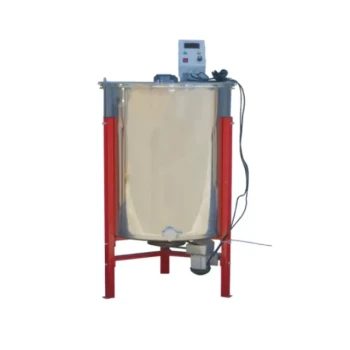
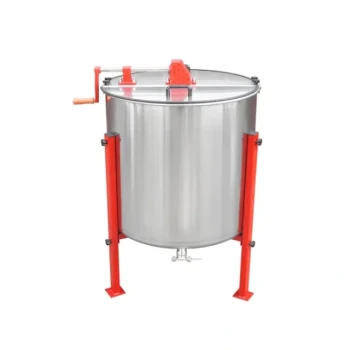
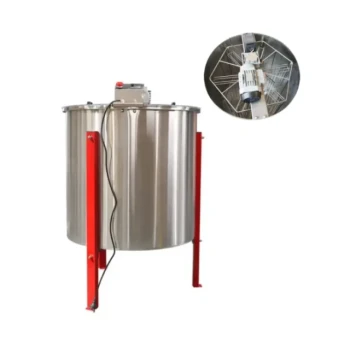
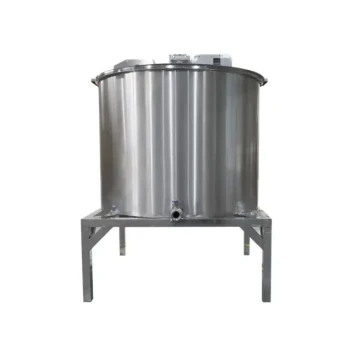
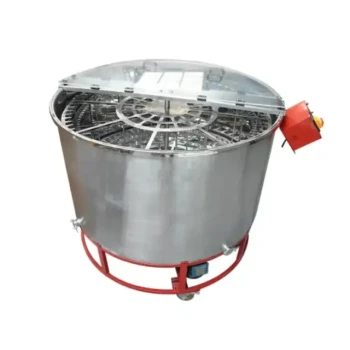
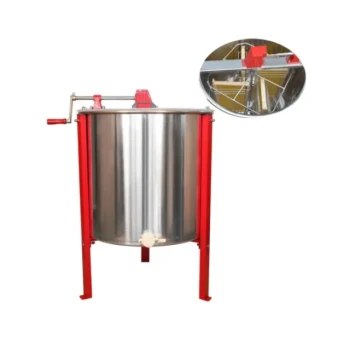
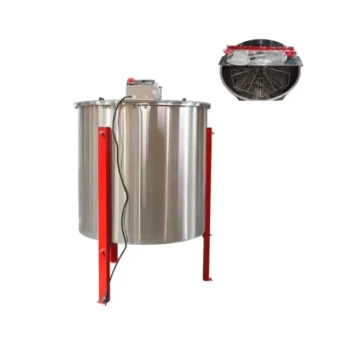
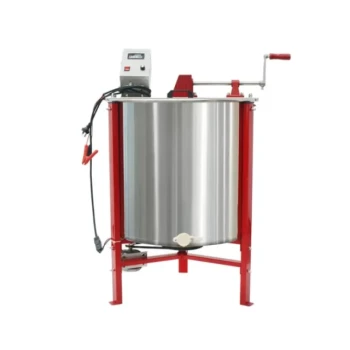
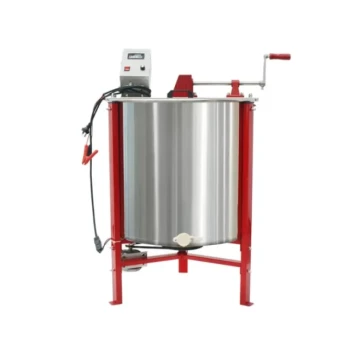
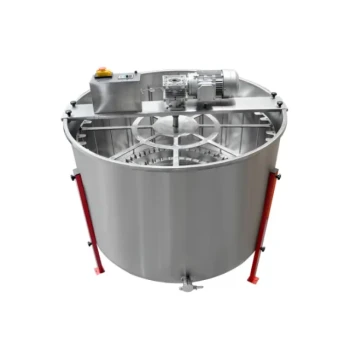
Centrifugal honey extractors utilize high-speed rotational force to fling liquid honey out of the cells, leaving the wax comb intact for reuse. Conversely, manual filtration and pressing equipment rely on physically squeezing or crushing the comb to extract the honey, a method that creates a specific texture but necessitates the destruction of the wax structure.
Core Takeaway Centrifugal extraction is the industry standard for efficiency because it preserves the comb, allowing bees to focus their energy on honey production rather than rebuilding wax. Manual filtration is a destructive, labor-intensive process reserved for traditionalists seeking a specific high-viscosity texture at the cost of lower overall yields.
Operating Principles and Mechanisms
Centrifugal Extraction
This method uses rotational physics. Frames are loaded into a drum and spun at high speeds. The centrifugal force pulls the liquid honey out of the comb cells and against the extractor walls, where it drains down for collection.
Manual Filtration and Pressing
This traditional approach uses compression. The honeycomb is removed from the frame (or harvested from top-bar hives) and physically pressed or squeezed through a filtration medium. This forces the honey out by collapsing the wax cells entirely.
Impact on Hive Management and Yield
Comb Preservation vs. Destruction
The most critical operational difference is the state of the comb after harvest. Centrifugal extractors are designed specifically to maintain the structural integrity of the honeycomb. Filtration and pressing methods invariably destroy the comb to release the honey.
The Energy Cost of Wax
When combs are preserved via centrifugal extraction, they can be returned to the hive. This is a massive physiological advantage for the colony. It saves the bees significant energy and time that would otherwise be spent consuming honey to secrete new wax.
Production Cycles
Because the bees do not need to rebuild the comb after a centrifugal harvest, they can immediately switch back to nectar collection. This significantly shortens the production cycle and increases the overall honey yield per season.
Quality and Texture Implications
Viscosity and Texture
Manual filtration and pressing are often employed to achieve a specific product profile. By crushing the comb, this method tends to produce honey with higher viscosity and potentially more suspended solids (pollen and fine wax particles), which is preferred in certain niche markets.
Purity and Hygiene
Centrifugal extraction is generally associated with higher standards of hygiene and purity. By separating the liquid using force rather than contact pressure, it yields a cleaner liquid product without the need for heavy subsequent filtering that might strip beneficial properties.
Understanding the Trade-offs
The "Cost" of Tradition
While manual pressing requires less expensive equipment upfront, the "hidden cost" is in the biological labor of your bees. You are essentially trading honey yield for wax production every time you harvest.
Equipment Complexity
Centrifugal extractors, even manual hand-cranked versions, are more mechanically complex than simple presses. They require distinct loading techniques (radial or tangential) and maintenance of moving parts like bearings and gears.
Scalability Limits
Pressing is inherently unscalable. It requires significant physical effort and time per pound of honey. Centrifugal extractors, particularly when motorized, allow for the rapid processing of large volumes with minimal manual intervention.
Making the Right Choice for Your Goal
The choice between these methods defines your product identity and your apiary's workflow.
- If your primary focus is maximum yield and efficiency: Choose a Centrifugal Extractor. It preserves the drawn comb, allowing your bees to produce honey faster and reducing the colony's workload.
- If your primary focus is artisanal texture or traditional methods: Choose Manual Filtration/Pressing. This is ideal for top-bar hives or if you market a specific "crushed comb" honey with a thicker consistency, accepting that your overall volume will be lower.
Select the equipment that aligns with your available labor and whether you prioritize the volume of honey or the preservation of traditional textures.
Summary Table:
| Feature | Centrifugal Extraction | Manual Filtration/Pressing |
|---|---|---|
| Mechanism | High-speed rotational force | Physical compression/crushing |
| Comb Integrity | Preserved for reuse | Destroyed during process |
| Honey Yield | High (bees save energy on wax) | Lower (bees must rebuild wax) |
| Texture | Clean, clear liquid | Higher viscosity, more solids |
| Scalability | High (motorized options) | Low (labor-intensive) |
| Best For | Commercial efficiency & volume | Artisanal & traditional niche markets |
Optimize Your Apiary with Professional Extraction Solutions
Choosing the right equipment is critical to your honey yield and operational efficiency. HONESTBEE specializes in supporting commercial apiaries and distributors with high-performance honey production tools.
Whether you need motorized centrifugal extractors to maximize your production cycle or specialized honey-filling and hive-making machinery, we provide the full spectrum of equipment and consumables tailored to your needs.
Ready to scale your honey business? Contact HONESTBEE Today to discuss our wholesale offerings and discover how our specialized hardware and beekeeping tools can enhance your bottom line.
References
- Ahmed Alghamdi, Nuru Adgaba. Beekeeping in the Kingdom of Saudi Arabia Past and Present Practices. DOI: 10.1080/0005772x.2013.11417527
This article is also based on technical information from HonestBee Knowledge Base .
Related Products
- electric honey extractor honey centrifuge 3 frame honey extractor stainless steel honey frame extractor
- Manual Hand Crank 4 Frame Honey Extractor Centrifuge for Beekeeping
- Professional 4 Frame Self Reversing Electric Honey Extractor for Beekeeping
- Electric 4 Frame Tangential Honey Extractor
- 24 Frame Honey Extractor Commercial Radial Honey Frame Extraction Machine
People Also Ask
- What are the characteristics of electric honey extractors? Boost Your Apiary Efficiency with Automated Technology
- What are the disadvantages of using an electric honey extractor? Weighing Cost, Power, and Comb Safety
- What are the advantages of an electric honey extractor? Boost Efficiency and Scale Your Honey Production
- What are the technical advantages of electric honey extractors? Maximize Yield and Protect Your Bee Colony
- How does an electric honey extractor affect the quality of honey? Preserve Flavor & Purity with Precision Extraction