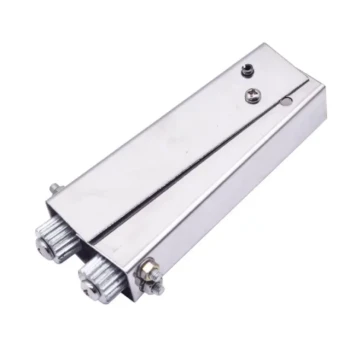
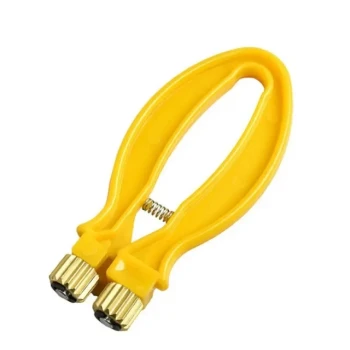
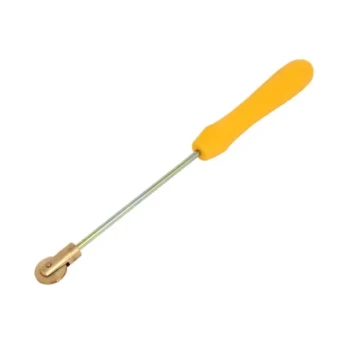
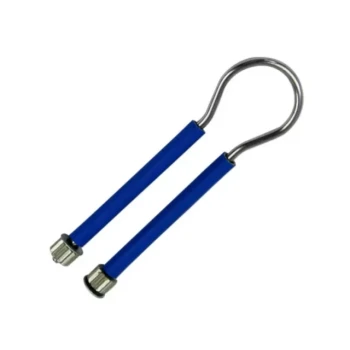
At its most fundamental level, the primary function of a professional metal grafting tool is the delicate, physical transfer of worker bee larvae into artificial queen cups. These precision instruments are designed to lift extremely young larvae—specifically those less than 24 hours old—along with a cushion of royal jelly, ensuring the organism is moved without sustaining physical damage or drying out.
Success in queen rearing is defined by the survival and health of the larvae during the graft. Metal grafting tools provide the specific tip flexibility and tactile precision required to manipulate microscopic, fragile organisms that are otherwise impossible to handle by hand.
The Mechanics of Precision Grafting
Handling Microscopic Fragility
The target for a successful graft is a worker bee larva that has hatched within the last 24 hours. At this stage, the larva is incredibly soft and susceptible to injury.
A professional metal tool is engineered to slide beneath this larva. It acts as a specialized scoop that supports the larva's body structure during the transition from the brood frame to the queen cup.
The Royal Jelly Buffer
Crucially, these tools do not just lift the larva; they lift the environment around it.
The tool is designed to collect a small amount of royal jelly along with the insect. This ensures the larva remains hydrated and fed during the transfer, significantly reducing transplant shock.
Why Tool Design Matters
Specific Flexibility
The primary reference highlights that these tools require tips with specific flexibility.
Rigid tools can crush the larva against the cell wall. A professional metal tip offers enough "give" to conform to the curvature of the honeycomb cell, allowing the operator to slide under the larva rather than scraping over it.
Enabling Standardization
As noted in the supplementary references, utilizing standardized professional equipment converts complex biological tasks into technical workflows.
By using uniform, high-quality grafting tools, beekeepers can scientifically address variables like queen quality. This consistency is vital for stabilizing the genetic output of the hive.
Common Pitfalls to Avoid
The Risk of Mechanical Damage
While metal tools offer precision, they are harder than the wax comb and the larva.
An unsteady hand or improper angle can easily pierce the larva or the base of the comb. The operator must develop a tactile "feel" for the tool to avoid turning a precision instrument into a destructive one.
The "Output-to-Time" Balance
Professional tools are designed to increase the output-to-time ratio, enabling scalable commercial models.
However, rushing the process with a metal tool often leads to damaged larvae. Speed comes from the efficiency of the tool's design, not from the haste of the operator.
Applying This to Your Apiary
Whether you are managing a few hives or a commercial operation, the grafting tool dictates your success rate.
- If your primary focus is Queen Quality: Prioritize a tool with high tip flexibility to ensure you can lift <24-hour-old larvae without inducing physical trauma.
- If your primary focus is Scalability: Implement standardized metal tools across your team to create a uniform, manageable workflow that reduces output variability.
Ultimately, the metal grafting tool is not just a piece of hardware; it is the bridge that allows a beekeeper to intervene in the hive's biology with surgical precision.
Summary Table:
| Feature | Function & Benefit | Importance in Beekeeping |
|---|---|---|
| Tip Flexibility | Conforms to honeycomb cell curves | Prevents physical trauma to larvae |
| Larva Selection | Targeted at larvae <24 hours old | Ensures optimal queen development |
| Jelly Buffer | Lifts royal jelly with the larva | Prevents dehydration and transplant shock |
| Precision Scoop | Delicate physical transfer mechanism | Maximizes survival rates during grafting |
| Standardization | Uniform technical workflow | Stabilizes genetic output for commercial use |
Elevate Your Queen Rearing with HONESTBEE Precision Equipment
At HONESTBEE, we understand that the success of your commercial apiary depends on the surgical precision of your tools. As a dedicated partner to commercial beekeepers and distributors, we provide a comprehensive wholesale range of high-performance beekeeping machinery and essential consumables.
Whether you are scaling your operation with hive-making and honey-filling machines or seeking the finest professional metal grafting tools to ensure superior queen quality, our portfolio is designed to optimize your workflow.
Ready to boost your apiary's productivity? Contact HONESTBEE today to explore our wholesale solutions and discover how our expertise can drive your business forward.
References
- Celia A. Contreras-Martinez, Ernesto Guzmán‐Novoa. Effect of Different Substrates on the Acceptance of Grafted Larvae in Commercial Honey Bee (Apis Mellifera) Queen Rearing. DOI: 10.1515/jas-2017-0019
This article is also based on technical information from HonestBee Knowledge Base .
Related Products
- Stainless Steel Queen Grafting Tool for Beekeeping and Bee Queen Grafting
- Retractable Chinese Queen Rearing Grafting Tools Equipment
- Plastic Beekeeping Honey Bee Larvae Grafting Tools for Queen Rearing and Chinese Grafting
- Double Head Beekeeping Grafting Tools for Beekeepers
- Plastic Chinese Queen Grafting Tool for Bee Queen Rearing
People Also Ask
- What are the steps involved in using a queen grafting tool? A Guide to Successful Queen Rearing
- What are the benefits of using a queen grafting tool for queen rearing? Master Precision for Superior Bee Genetics
- What is grafting in queen rearing? Take Control of Your Apiary's Genetics
- What is the step-by-step process for using a queen grafting tool? Master Larva Transfer for Better Queen Rearing
- What is the primary function of a queen grafting tool? Master Precise Larval Transfer for High Queen Acceptance