The primary steps for harvesting honey involve a strict sequence of inspection, bee removal, and extraction. You must first inspect frames to ensure the colony has sufficient winter stores, then remove the surplus frames, clear them of bees by shaking or brushing, and finally transport them to a dedicated processing area for extraction.
The goal of harvesting is not simply to maximize yield, but to identify and take only the true surplus. Prioritizing the colony's winter food stores over your harvest is the single most important factor in the long-term survival of your bees.
Evaluating the Colony Before Harvest
The Winter Survival Check
Before removing a single drop of honey, you must inspect the entire colony. Do not limit your inspection to the honey supers (the upper boxes); you must verify the brood boxes (lower boxes) are stocked.
If the brood boxes are empty or light on resources, the honey in the supers is not surplus—it is their survival reserve. Removing honey in this scenario will likely cause the colony to starve during the winter.
Expectations for New Hives
Adjust your expectations based on the age of the colony. It is standard for a first-year colony to produce little to no harvestable surplus.
Young colonies expend significant energy building wax comb and establishing their population. In these cases, patience is required to ensure the hive survives to its second year.
Removing and Clearing Frames
Separating Bees from Honey
Once you have identified a frame as safe to harvest, you must remove it from the hive and clear it of insects. The primary reference suggests shaking the frame sharply to dislodge the majority of the bees.
For any remaining bees, use a bee brush to gently sweep them off. It is critical that the frames are completely bee-free before moving to the next step.
Preventing Robbing Behavior
During this process, the scent of open honey acts as a beacon for "robber" bees from other colonies and pests. To mitigate this, keep hive entrances reduced and cover the hive with a cloth inner cover when not actively manipulating frames.
Once a frame is cleared of bees, place it immediately into a bee-proof covered box. Never leave equipment with honey residue exposed in the bee yard.
Processing and Extraction
The Centrifugal Method (Langstroth Hives)
For standard hives, the goal is often to preserve the wax comb. This involves using a heated knife to slice off the wax cappings that seal the honey cells.
The uncapped frames are placed in a honey extractor, which spins them at high speed. The centrifugal force pulls the honey out, allowing you to filter and bottle it while keeping the wax foundation intact.
The Crush and Strain Method (Top-Bar Hives)
If you are using top-bar hives, the process is destructive to the comb. You cut the comb entirely from the top bar.
The comb is then crushed and strained through a filter. This method results in honey with a higher pollen content, but it destroys the structure the bees built.
Understanding the Trade-offs
Comb Preservation vs. Wax Production
The method of extraction forces a choice between efficiency and byproducts. Spinning (Centrifugal) preserves the drawn comb, which allows bees to refill it immediately without expending energy to rebuild wax.
Crushing destroys the comb, forcing bees to rebuild from scratch next season. However, this method yields significant amounts of beeswax as a byproduct, which is valuable for other uses.
Equipment Complexity
Spinning requires specialized, often expensive equipment like extractors and uncapping knives. It is a capital-intensive process suited for larger harvests.
Crushing is low-tech and requires minimal investment (buckets and strainers). It is accessible for beginners but labor-intensive for large quantities.
Making the Right Choice for Your Goal
When planning your harvest, align your methods with your resources and the colony's needs:
- If your primary focus is colony efficiency: Prioritize the centrifugal method to preserve drawn comb, allowing bees to focus on honey production rather than wax building.
- If your primary focus is low-cost entry: Utilize the crush and strain method to avoid purchasing expensive extraction machinery, accepting that the bees must rebuild comb later.
- If your primary focus is hive health: Skip the harvest entirely if inspections reveal the brood boxes are light on resources.
Your harvest is a privilege provided by the bees' labor; take only what they can spare.
Summary Table:
| Harvesting Phase | Key Actions | Tools Required |
|---|---|---|
| Colony Inspection | Check brood box stores; ensure surplus exists. | Hive Tool, Smoker |
| Bee Removal | Shake or brush bees off frames; prevent robbing. | Bee Brush, Covered Box |
| Uncapping | Remove wax seals from honeycomb cells. | Heated Knife, Uncapping Fork |
| Extraction | Spin honey out or crush/strain the comb. | Centrifuge Extractor or Strainer |
| Final Processing | Filter debris and bottle the raw honey. | Honey Sieve, Food-grade Buckets |
Maximize Your Honey Yield with Professional Equipment
At HONESTBEE, we specialize in empowering commercial apiaries and distributors with high-performance beekeeping solutions. Whether you need industrial-grade honey extractors for centrifugal efficiency or specialized honey-filling machines to streamline your production, our comprehensive wholesale catalog has you covered.
From hive-making hardware to essential industry consumables and cultural merchandise, we provide the tools you need to scale your operations and protect your colonies. Contact us today to discover how our tailored equipment solutions can enhance your harvest and grow your business.
Related Products
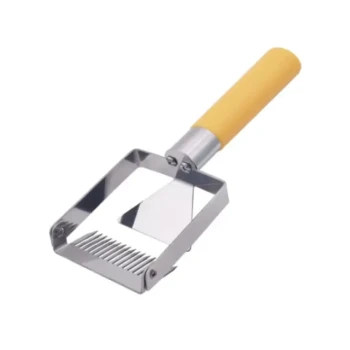
- All-Stainless Steel Pivoting Honey Uncapping Fork for Beekeeping
- Stainless Steel Pivoting Honey Uncapping Fork with Plastic Handle
- Professional Wide Blade Honey Scraper for Beekeeping and Honey Processing
- Professional Stainless Steel Pry-Bar Hive Tool
- HONESTBEE 2 Frame Manual Acrylic Honey Extractor Beekeeping Equipment
People Also Ask
- How does a honey uncapping fork supplement the use of an uncapping knife? Boost Your Honey Yield and Extraction Efficiency
- What is the design purpose of honey uncapping forks and honey uncapping tanks? Maximize Your Harvest Efficiency
- What are the essential tools for uncapping honey frames? Choose the Right Tool for Your Apiary
- What are the tools used for uncapping honeycombs? Expert Guide to Tools & Functions for Maximum Yield
- What is the primary function of specialized honey uncapping tools? Maximize Your Extraction Yield and Efficiency