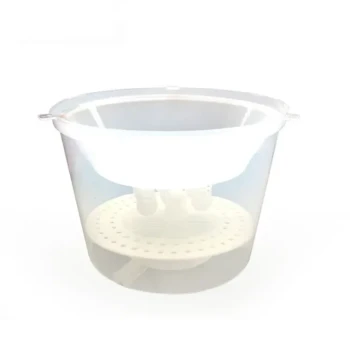
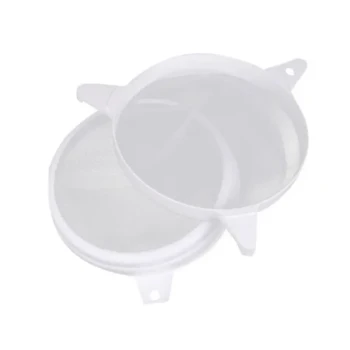
Implementing insect-proof nets and high-precision filtration systems provides a critical, dual-layer defense against contamination during the honey packaging process. Together, these measures secure the production environment by blocking pests at the source and physically refining the honey to remove bee fragments and debris, ensuring the final product meets rigorous food safety and sensory standards.
By combining environmental barriers with particulate filtration, producers move beyond simple extraction to industrial-grade quality control. This approach isolates the product from biological threats and physical impurities, guaranteeing a level of purity essential for regulatory compliance and consumer trust.
Establishing Source Control with Insect-Proof Nets
The first stage of process improvement focuses on the environment surrounding the honey. Before the product is even touched, the workspace must be secured against external biological threats.
Blocking Specific Biological Vectors
The primary function of fine-mesh insect-proof nets is to prevent the entry of flying pests, specifically from the orders Diptera (flies) and Psocoptera (booklice).
By physically barring these insects from entering the extraction workshop, you eliminate a major vector for biological contamination.
Preventing Contamination at the Source
Unlike reactive measures that try to clean the product later, nets act as a preventative "source control."
Stopping insects at the perimeter prevents them from interacting with equipment or the honey itself, significantly lowering the bio-load in the processing area.
Refining Product Purity via High-Precision Filtration
Once the environment is secure, the focus shifts to the liquid honey itself. High-precision filtration is the mechanical step that transforms raw harvest into a market-ready product.
Removal of Particulate Matter
Raw honey naturally contains foreign materials introduced during collection and transport.
Filtration systems are designed to remove bee body fragments, plant debris, and packaging material particles. This ensures the honey is physically clean before it reaches the final container.
Enhancing Sensory Quality
Beyond safety, filtration directly impacts the consumer experience.
By removing suspended solids, the clarity and texture of the honey are improved. This results in a product that looks professional and appeals to consumers seeking premium quality.
Protection for Downstream Equipment
High-precision filtration protects the sophisticated machinery used in later stages, such as filling and sealing units.
Removing debris prevents clogging in sensitive metering nozzles and anti-drip mechanisms found in industrial filling machines, ensuring consistent flow rates and reducing downtime.
Understanding the Operational Trade-offs
While these systems are essential for quality, they introduce new operational variables that must be managed to maintain efficiency.
Maintenance and Cleaning Protocols
Filters entrap debris, meaning they will eventually restrict flow if not maintained.
Operators must implement strict cleaning schedules—often utilizing Cleaning-in-Place (CIP) protocols—to prevent the filters themselves from becoming a source of microbial contamination or bottlenecks.
Impact on Flow Rates
High-precision filtration increases flow resistance (pressure drop) in the piping system.
To maintain production speed, pumps must be adequately sized to handle the viscosity of honey against fine-mesh resistance without overheating or aerating the product, which could damage quality.
Making the Right Choice for Your Goal
Implementing these systems is an investment in the longevity and legality of your operation. Here is how to prioritize based on your current objectives:
- If your primary focus is Regulatory Compliance: Prioritize the installation of insect-proof nets to meet hygiene codes regarding pest control, and use filtration to ensure zero physical contaminants breach the final package.
- If your primary focus is Brand Positioning: Lean heavily into high-precision filtration to maximize the visual clarity and texture of the honey, ensuring it competes visually with top-tier commercial brands.
Ultimately, integrating these physical barriers transforms honey packaging from an agricultural activity into a controlled, sanitary manufacturing process.
Summary Table:
| Feature | Primary Function | Key Process Advantage |
|---|---|---|
| Insect-Proof Nets | Biological Source Control | Prevents Diptera/Psocoptera entry, reducing bio-load at the perimeter. |
| High-Precision Filtration | Particulate Removal | Eliminates bee fragments and debris, enhancing honey clarity and texture. |
| Equipment Protection | Mechanical Preservation | Prevents nozzle clogging in filling machines, reducing maintenance downtime. |
| Regulatory Compliance | Quality Assurance | Meets hygiene codes for pest control and zero physical contaminant standards. |
Elevate Your Honey Production with HONESTBEE
Transition from basic agricultural extraction to industrial-grade quality control with HONESTBEE’s comprehensive solutions. As a dedicated partner to commercial apiaries and global distributors, we provide the specialized tools and machinery needed to master the honey packaging stage.
Our Value to Your Business:
- Precision Machinery: From honey-filling machines with anti-drip technology to advanced filtration systems.
- Total Supply Chain: High-quality hive-making hardware, processing equipment, and essential industry consumables.
- Brand Growth: Enhance your product's market appeal with our honey-themed cultural merchandise and professional-grade finishing tools.
Ready to scale your operation and ensure the highest standards of purity? Contact us today to discuss your wholesale needs and see how HONESTBEE can streamline your beekeeping business.
References
- Angelo Canale, Giovanni Benelli. Survey of Italian honeys for the presence of foreign matter using the filth test. DOI: 10.1080/19440049.2014.893590
This article is also based on technical information from HonestBee Knowledge Base .
Related Products
- Professional Multi-Component Bucket Wasp Trap
- Conical Nylon Honey Strainer Filter Bag for Beekeeping and Honey Filtration
- Professional Honey Filter with Tripod Support Stand
- Stainless Steel Double Layer Honey Strainer Sieve Filters
- Professional Bucket Style Wasp and Moth Pheromone Trap
People Also Ask
- How do professional wasp traps function? Master Physical Control of Oriental Hornets to Protect Your Apiary
- What are the practical advantages of using professional wasp traps and protective equipment in apiary management? Scale Up
- Why replace sugar syrup bait in wasp traps every three days? Ensure Maximum Attraction and Catch Rates
- How can commercial apiary operators mitigate wasp predation around hives using specialized trapping equipment? Effective strategies for wasp control
- What is the primary function of specialized traps used to defend against wasps? Protect Your Hive and Queen Today