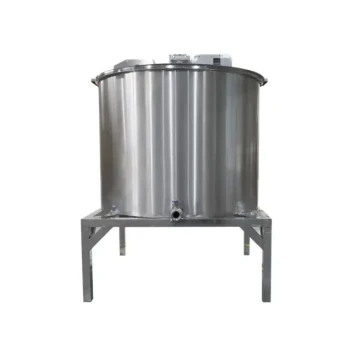
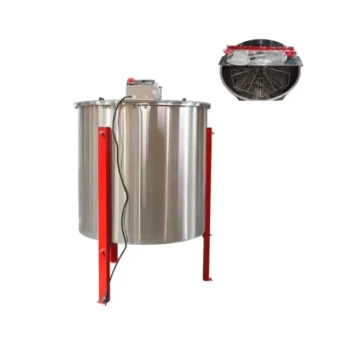
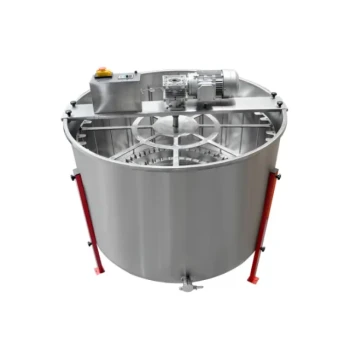
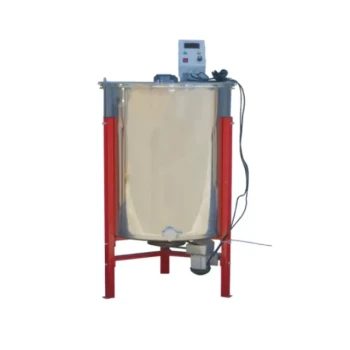
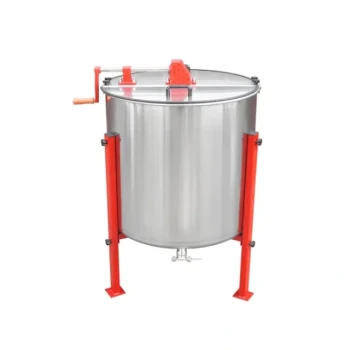
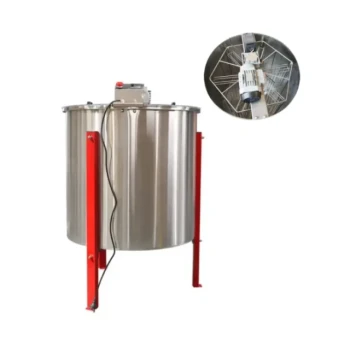
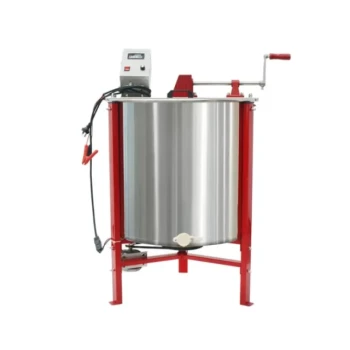
Industrial-grade honey extractors offer a fundamental shift in processing mechanics by utilizing centrifugal force rather than destructive pressure. Unlike traditional manual squeezing, which extracts honey by crushing the honeycomb, these machines spin the honey out of the cells, significantly improving extraction efficiency while preserving the structural integrity of the wax frames.
By moving from crushing to centrifugal extraction, you not just harvest honey faster; you preserve the honeycomb for reuse. This creates a sustainable cycle that reduces the energy burden on the colony, minimizes contamination, and elevates the commercial stability of the final product.
Preserving the Structural Integrity of the Comb
The Non-Destructive Advantage
Traditional squeezing methods require the complete destruction of the beeswax structure to release the honey. In contrast, industrial extractors use centrifugal force to pull liquid honey from the cells without damaging the walls of the comb. This mechanical difference is the foundation of all subsequent processing benefits.
Energy Savings for the Colony
Because the honeycomb remains intact during centrifugal extraction, the frames can be immediately returned to the hive for reuse. This saves the colony the significant amount of energy and time required to secrete new wax and rebuild the comb. By eliminating the need for reconstruction, the bees can focus entirely on honey production, effectively shortening the production cycle and increasing yield.
Elevating Product Purity and Stability
Reduction of Physical Impurities
Manual crushing inevitably mixes honey with debris, including larvae, soil, bee fragments, and broken wax. Industrial extraction isolates the honey from these contaminants naturally. This results in a product with higher clarity and significantly fewer impurities, reducing the need for aggressive filtering later.
Moisture Control and Shelf Life
A critical advantage of the industrial process is the reduction of moisture absorption during extraction. As noted in your primary data, the mechanized process minimizes the honey's exposure to humidity. This control is vital for preventing fermentation and spoilage, directly improving the commercial grade and extending the shelf life of the honey.
Preservation of Sensory Qualities
Advanced extractors often operate within closed chambers. This reduces the time the honey is exposed to the open environment, minimizing the risk of oxidation. This containment helps preserve the natural floral aromas that define high-quality honey, which can be lost during the prolonged exposure typical of manual processing.
Understanding the Trade-offs
Equipment Maintenance and Complexity
While manual squeezing requires zero overhead, industrial extractors introduce mechanical complexity. Operators must adhere to strict cleaning protocols to prevent cross-contamination between batches. Furthermore, the machinery requires maintenance of moving parts, such as the motor and rotational basket, to ensure consistent performance.
The Need for Precise Control
Industrial extraction is not a "set and forget" process. Operators must manage rotation speeds carefully; spinning too fast initially can fracture delicate wax combs due to the weight of the honey. Variable speed control is essential to balance extraction efficiency with comb preservation.
Making the Right Choice for Your Goal
To decide if upgrading to industrial extraction fits your operation, consider your specific end goals:
- If your primary focus is Production Volume: Switch to industrial extractors to reuse combs, which allows bees to skip wax building and focus solely on filling cells with nectar.
- If your primary focus is Product Quality: Use centrifugal extraction to lower moisture content and eliminate the risk of fermentation, ensuring a shelf-stable commercial product.
- If your primary focus is Byproduct Diversification: Leverage the cleaner separation process to harvest high-quality raw beeswax for secondary products like creams and soaps.
The transition to industrial extraction is ultimately an investment in the biology of the hive, converting the bees' energy from reconstruction into pure production.
Summary Table:
| Feature | Traditional Manual Squeezing | Industrial Centrifugal Extractor |
|---|---|---|
| Comb Condition | Destroyed (Crushed) | Preserved (Intact & Reusable) |
| Honey Purity | High debris (larvae, wax bits) | High clarity (low impurities) |
| Honey Production | Slow (bees must rebuild wax) | Fast (shorter production cycle) |
| Moisture Control | High exposure to humidity | Controlled (low fermentation risk) |
| Aroma Preservation | Low (potential for oxidation) | High (closed chamber processing) |
| Effort Level | High physical labor | Efficient mechanical automation |
Maximize Your Harvest with HONESTBEE Beekeeping Solutions
Are you ready to transition from manual labor to commercial efficiency? HONESTBEE specializes in empowering commercial apiaries and distributors with the highest-grade beekeeping tools and machinery. From high-capacity honey extractors and honey-filling machines to specialized hive-making equipment, we provide the hardware you need to scale your operations.
By partnering with HONESTBEE, you gain access to a comprehensive wholesale portfolio designed to lower your costs and elevate your product quality. Whether you are stocking essential consumables or investing in industrial-scale machinery, our team is here to support your growth.
Ready to elevate your honey production?
Contact Us Today for a Wholesale Quote
References
- Nashon K.R. Mushimba, Elijah M. Mutungi. The Socio-Economics, Culture and Ecology of Bee-Keeping Among the Akamba Community of Southern Kenya. DOI: 10.1080/09709274.2001.11907604
This article is also based on technical information from HonestBee Knowledge Base .
Related Products
- HONESTBEE 72 Frame Industrial Electric Honey Extractor for Beekeeping
- Commercial Electric 12 Frame Honey Extractor Spinner Motorized Honey Extractor
- 32 Frame Commercial Electric Honey Extractor for Beekeeping and Honey Production
- 8-Frame Electric Self-Reversing Honey Extractor Spinner for Commercial Honey Extraction Equipment
- electric honey extractor honey centrifuge 3 frame honey extractor stainless steel honey frame extractor
People Also Ask
- What is the importance of balancing honeycomb frames within a honey extractor? Ensure Stability and Protect Machinery
- How is honey separated from the frames after they are uncapped? Efficient Extraction Methods for High Yields
- What are the main benefits of using a honey extractor? Maximize Yields and Protect Your Honeycomb
- What are the recommended methods for removing honey from the honeycomb? Top Extraction Techniques for Maximum Efficiency
- How do manual honey extractors compare to electric honey extractors? Choosing the Right Tool for Your Apiary Growth