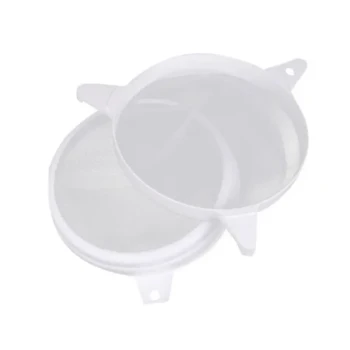
The primary processing value of honey filtering and filling equipment in the context of potentially contaminated sources is its ability to enforce a strict quality control checkpoint. This machinery does not merely package the product; it integrates fine filtration to remove particulate pollutants while establishing a system for batch management, allowing producers to isolate, test, and discard specific lots of honey contaminated by heavy metals or environmental dust before they reach the market.
Core Takeaway Automated processing equipment transforms risk management into a standard operating procedure. By combining closed-loop physical filtration with precise batch traceability, producers can surgically identify and screen out non-compliant honey harvested from polluted regions, ensuring the remaining commercial stock meets rigorous food safety regulations.
Managing Contamination Risks
The transition from raw harvest to retail product involves specific mechanical interventions designed to mitigate environmental risks.
Precise Batch Isolation and Screening
According to the primary technical guidelines, the most critical function of this equipment when handling honey from polluted areas is traceability. Automated systems allow for distinct batch management. This capability enables producers to submit specific extraction lots for laboratory testing. If a batch tests positive for heavy metals or excessive pollutants, it can be isolated and rejected without compromising the safety of the entire production run.
Physical Filtration of Environmental Pollutants
Honey collected near industrial zones may contain dust or lead-containing particles. Integrated fine filtration systems utilize corrosion-resistant materials to physically separate these impurities from the liquid honey. By removing these suspended solids, the equipment reduces the total load of contaminants, addressing both hygiene standards and physical purity.
Prevention of Secondary Contamination
Manual handling of honey introduces risks of foreign object contamination (such as glass, metal fasteners, or biological contaminants). Industrial-grade, fully enclosed production lines eliminate human contact. These systems provide a clean, hermetic environment that prevents the re-introduction of impurities during the critical filling and sealing stages.
Enhancing Product Value and Consistency
Beyond safety, industrial equipment ensures that honey from variable sources can be standardized for high-end markets.
Preservation of Active Nutrients
Advanced processing equipment employs precise temperature controls during filtration and filling. This ensures that while impurities are removed, the honey's active nutritional components are not degraded by overheating. This balance is vital for maintaining the product's market value despite the rigorous processing required to ensure safety.
Standardization of Output
Raw honey production varies significantly by region. Automated filling machines standardize the final presentation, offering high-precision quantitative filling regardless of viscosity changes. This uniformity transforms a variable raw material into a consistent commercial product, enhancing competitiveness even for operations in regions with lower raw output.
Understanding the Trade-offs
While automated equipment significantly mitigates risk, it is not a cure-all for severe contamination.
Filtration vs. Chemical Purification
It is critical to understand the distinction between filtration and purification. While fine filtration systems remove particulate matter (dust, debris, lead particles), they generally cannot remove chemically dissolved toxins or molecular-level contaminants. The equipment facilitates safety through batch rejection (testing and tossing bad honey), not by chemically cleaning the honey itself.
Maintenance and Contamination Risks
Complex pumping and filling systems feature food-grade contact surfaces, but they require rigorous cleaning protocols. If the machinery is not properly maintained, the "closed system" can become a trap for bacteria or fermentation, potentially causing the very cross-contamination it is designed to prevent.
Making the Right Choice for Your Goal
When selecting equipment for potentially compromised honey sources, prioritize features that support rigorous testing and physical separation.
- If your primary focus is Food Safety Compliance: Prioritize equipment with advanced batch tracking software integration and easy sampling ports to facilitate frequent laboratory testing of isolated lots.
- If your primary focus is Purity: Select systems with multi-stage fine filtration and fully enclosed, corrosion-resistant piping to maximize the physical removal of environmental particulate matter.
- If your primary focus is Market Expansion: Choose machinery with precise temperature control and quantitative filling to ensure your safe, filtered product maintains the consistent quality required for high-end retail distribution.
Successful processing of at-risk honey relies not just on cleaning the product, but on the ability to verify its safety through segmented production.
Summary Table:
| Feature | Processing Value | Impact on Safety/Quality |
|---|---|---|
| Batch Traceability | Isolates specific harvest lots | Enables surgical rejection of contaminated batches |
| Fine Filtration | Removes physical particulates | Eliminates dust, debris, and lead-containing particles |
| Enclosed Systems | Hermetic production environment | Prevents secondary contamination from human contact |
| Thermal Control | Precise temperature management | Preserves active nutrients while ensuring flowability |
| Quantitative Filling | High-precision volume control | Ensures product consistency and high-end market appeal |
Secure Your Honey Purity with HONESTBEE
As a global leader in professional apiculture solutions, HONESTBEE empowers commercial apiaries and distributors to overcome environmental challenges. Our comprehensive range of beekeeping tools, honey-making machinery, and precision filling equipment is designed to transform variable raw harvests into premium, market-ready products.
Whether you need industrial-grade filtration systems to ensure food safety or specialized hive-making machinery to scale your operation, we provide the hardware and consumables necessary for success. Contact our experts today to discover how our wholesale solutions can optimize your production line and protect your brand's reputation.
References
- Priyanka Yadav, Manju Lata. Toxicological effect of environmental pollution on honeybees. DOI: 10.53550/eec.2023.v29i02.008
This article is also based on technical information from HonestBee Knowledge Base .
Related Products
- Automatic Honey Filling and Filtering Machine for Beekeeping Bottle Filling
- Small Honey Filling Machine Sachet Packing Equipment Single Nozzle
- Double Nozzle Small Honey Filling Machine Honey Sachet Packing Packaging Equipment
- Precision Durable Efficient HONESTBEE Rotary Honey Filling Machine
- Economy Small Honey Filling Machine Honey Bottle Filler Packaging Machine
People Also Ask
- What process advantages do professional honey filtering and filling machines provide? Optimize Your Organic Honey Output
- How do honey filling and filtering machines increase product value? Turn Raw Honey into Premium Export-Grade Goods
- How do honey filtration and filling machinery contribute to industrialization? Scale Your Commercial Honey Production
- What specific issues do industrial filtration and automated filling machinery address? Ensure Honey Quality & Compliance
- How does the use of professional honey filtration and filling machinery facilitate international honey exports?