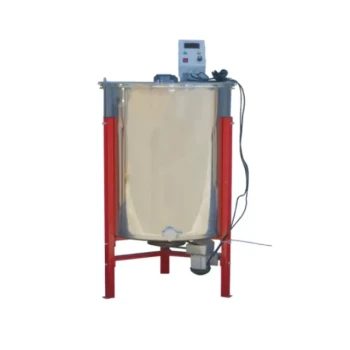
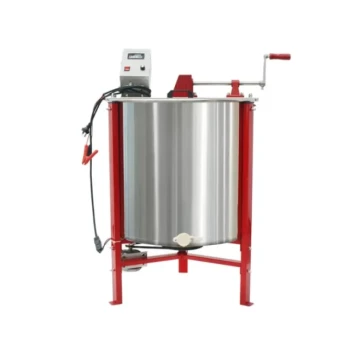
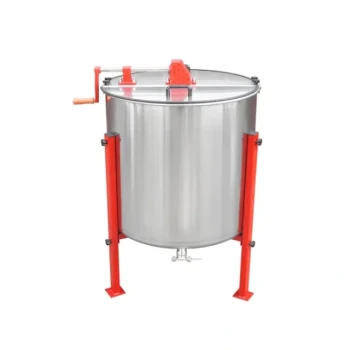
As a general guideline, the right size honey extractor directly correlates with the number of hives you manage. For 1-2 hives, a simple 2-frame extractor is sufficient. As you scale up to 10-15 hives, a 6-frame model becomes more appropriate, and for 15 or more hives, an 8-frame or larger extractor is recommended to handle the volume efficiently.
Choosing an extractor isn't just about matching a number; it's about making a long-term investment in your time and labor. The key is to select a machine that not only fits your current apiary but also accommodates your goals for the next three to five years.
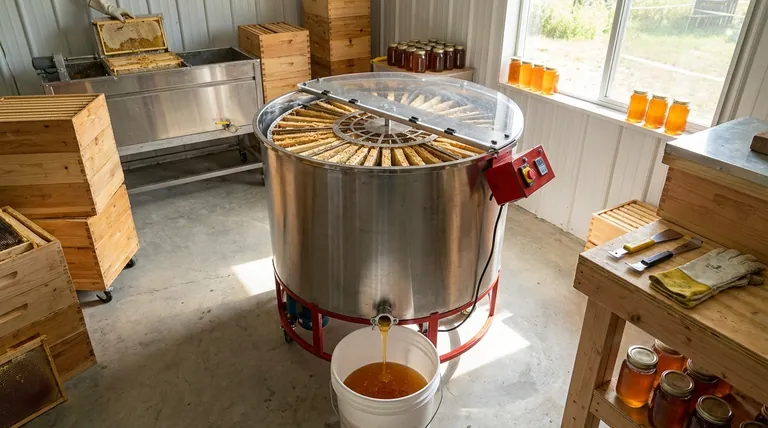
The Core Decision: Matching Extractor to Your Scale
Your hive count is the best starting point for determining the right class of equipment. The goal is to minimize the hours and physical effort spent in the honey house.
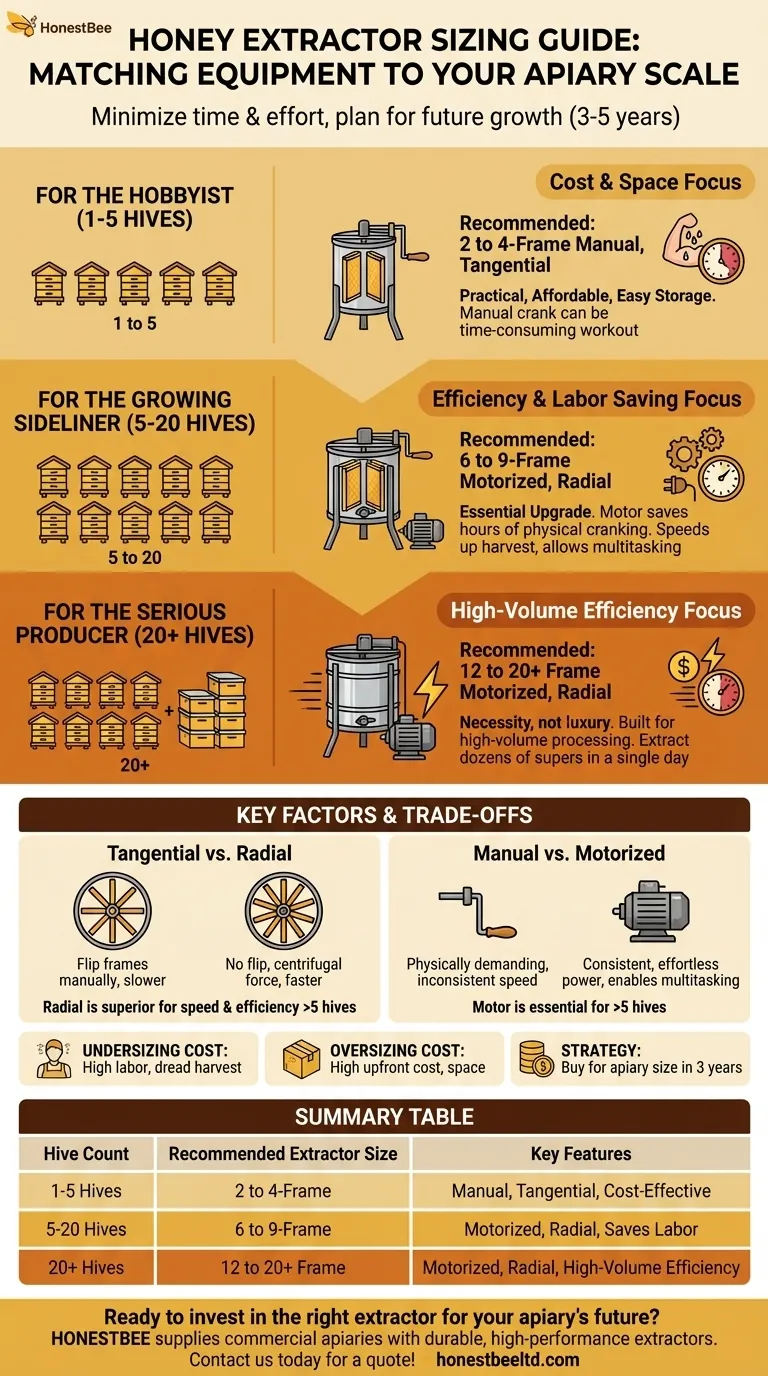
For the Hobbyist (1-5 Hives)
At this scale, your primary concerns are cost and space. A 2-frame or 4-frame manual extractor is typically the most practical choice.
These smaller, hand-cranked units are affordable and easy to store. While processing honey from a few hives with a 2-frame extractor is manageable, it can become a time-consuming workout as you approach five hives.
For the Growing Sideliner (5-20 Hives)
This is where the trade-off between cost and efficiency becomes critical. A small manual extractor will quickly become a bottleneck, turning your harvest into an exhausting multi-day event.
This is the ideal range for a 6- to 9-frame motorized extractor. The investment in a motor pays for itself immediately by saving you from hours of physical cranking, dramatically speeding up the entire process.
For the Serious Producer (20+ Hives)
At this level, efficiency is everything. Time is money, and your extractor is the heart of your operation. A large motorized, radial extractor capable of holding 12 to 20 frames or more is no longer a luxury—it's a necessity.
These machines are built for high-volume processing, allowing you to extract dozens of honey supers in a single day rather than a full weekend.
Key Factors Beyond Hive Count
While hive count provides a baseline, a few technical distinctions determine an extractor's true performance and suitability for your needs.
Tangential vs. Radial Extraction
This is the most important technical difference. A "6/3 frame" extractor notation means it can hold 6 frames tangentially or 3 frames radially (often deep frames).
- Tangential: Holds frames like spokes in a wheel, with the top bar facing out. It extracts honey from one side of the frame at a time. You must manually flip the frames to extract the other side. This is common in smaller, less expensive models.
- Radial: Holds frames with the top bar facing toward the center. It uses centrifugal force to pull honey from both sides of the frame simultaneously. This is significantly faster and requires less handling.
For anyone with more than a few hives, a radial extractor is the superior choice for speed and efficiency.
Manual vs. Motorized Power
The choice between hand-cranking and a motor comes down to labor.
A manual crank is simple, requires no electricity, and is cheaper. However, it is physically demanding, and maintaining consistent speed can be difficult.
A motor provides consistent, effortless power. It frees you up to perform other tasks like uncapping the next batch of frames while the machine runs, making it an essential upgrade for anyone managing more than 5 hives.
Understanding the Trade-offs
An extractor is a purchase you will likely make only once or twice in your beekeeping career. It pays to understand the consequences of your choice.
The Cost of Undersizing
Choosing an extractor that is too small for your apiary is a common mistake. The initial savings are quickly erased by the immense amount of time and physical labor required on extraction day. It can turn a joyful harvest into a dreaded chore.
The Cost of Oversizing
The primary downside of buying too large an extractor is the upfront financial cost and the physical space it requires for use and storage. A massive, 20-frame extractor is simply unnecessary and impractical for a beekeeper with two hives.
Planning for Future Growth
The most prudent strategy is to buy for the apiary you plan to have in three years. If you currently have 4 hives but plan to expand to 10, investing in a 9-frame motorized extractor now will save you from having to buy a second, larger one later.
Making the Right Choice for Your Goal
Base your decision on your primary objective, whether it's minimizing initial cost or maximizing long-term efficiency.
- If your primary focus is keeping costs minimal for 1-3 hives: A 2-frame or 4-frame manual tangential extractor is the most economical starting point.
- If your primary focus is balancing cost and time for a growing apiary (4-15 hives): Invest in a 6-to-9-frame motorized radial extractor to save significant labor and accommodate future growth.
- If your primary focus is maximum efficiency for a serious operation (15+ hives): A large, motorized radial extractor (holding 12+ frames) is the essential tool for processing your harvest effectively.
Ultimately, choosing the right extractor is an investment in making your beekeeping journey more productive and enjoyable.
Summary Table:
| Hive Count | Recommended Extractor Size | Key Features |
|---|---|---|
| 1-5 Hives (Hobbyist) | 2 to 4-Frame | Manual, Tangential, Cost-Effective |
| 5-20 Hives (Sideliner) | 6 to 9-Frame | Motorized, Radial, Saves Labor |
| 20+ Hives (Producer) | 12 to 20+ Frame | Motorized, Radial, High-Volume Efficiency |
Ready to invest in the right extractor for your apiary's future?
At HONESTBEE, we supply commercial apiaries and beekeeping equipment distributors with the durable, high-performance extractors needed for a productive harvest. Our wholesale-focused operations ensure you get the best value on equipment that grows with your business.
Contact us today to discuss your needs and get a quote on the perfect extractor for your scale. Let's make your next harvest your most efficient one yet.
Get Your Custom Quote & Expert Advice
Visual Guide
Related Products
- HONESTBEE 72 Frame Industrial Electric Honey Extractor for Beekeeping
- Commercial Electric 12 Frame Honey Extractor Spinner Motorized Honey Extractor
- HONESTBEE 6 Frame Self Reversing Electric Honey Extractor for Beekeeping
- HONESTBEE 3-Frame Manual Acrylic Honey Extractor
- Stainless Steel Manual 8 Frame Radial Honey Extractor Machine for Beehives
People Also Ask
- What is the importance of balancing honeycomb frames within a honey extractor? Ensure Stability and Protect Machinery
- How is honey separated from the frames after they are uncapped? Efficient Extraction Methods for High Yields
- What are the main benefits of using a honey extractor? Maximize Yields and Protect Your Honeycomb
- What are the recommended methods for removing honey from the honeycomb? Top Extraction Techniques for Maximum Efficiency
- How do manual honey extractors compare to electric honey extractors? Choosing the Right Tool for Your Apiary Growth