Specialized market containers for royal jelly are critical preservation tools designed to maintain the product's chemical integrity. Their primary requirements are superior sealing capabilities and absolute chemical stability to safely house the substance during direct contact. Functionally, these containers facilitate the immediate transfer of the harvest into a refrigerated environment to halt degradation.
The value of royal jelly lies in its active components, which are highly sensitive to environmental factors. The correct container acts as a barrier against air and heat, ensuring the product meets the rigorous standards required for pharmaceutical and health supplement applications.
Critical Container Requirements
Achieving Superior Sealing
The most fundamental requirement for royal jelly packaging is an airtight seal.
Because the product is harvested and stored in these containers, the seal must prevent any exchange of air. This isolation is necessary to stop oxidative processes that can begin immediately after harvest.
Ensuring Chemical Stability
Royal jelly is a bioactive substance that is placed in direct contact with the container walls.
Therefore, the container material must be chemically inert. It cannot react with the jelly, nor can it leach substances into the product, which would compromise its purity for health applications.
The Role of Packaging in Preservation
Facilitating Immediate Refrigeration
The functional design of the container must allow for rapid cooling.
Once the jelly is collected, it must be placed in the container and moved immediately to a refrigerated environment. The container serves as the handling unit that bridges the gap between the hive and cold storage.
Preventing Environmental Degradation
Exposure to room temperature is the primary enemy of royal jelly quality.
The container’s primary function is to shield the product from the ambient environment. By doing so, it prevents the breakdown of active components that occurs when the substance is left exposed to heat.
Understanding the Risks of Improper Storage
Degradation of Active Components
If a container fails to seal properly or is not refrigerated immediately, the active biological elements in the jelly begin to degrade.
This degradation renders the product less effective. For pharmaceutical and health supplement sectors, this loss of potency can result in the rejection of the entire batch.
Spoilage and Contamination
Without specific sealing and immediate temperature control, royal jelly is susceptible to spoilage.
Standard containers that lack superior sealing allow air exposure, which accelerates spoilage and bacterial growth, destroying the commercial value of the harvest.
Ensuring Quality Through Proper Packaging
To ensure your royal jelly retains its value and efficacy, consider the following based on your production goals:
- If your primary focus is Pharmaceutical Application: Prioritize containers with certified chemical stability to ensure zero interaction between the packaging and the bioactive product.
- If your primary focus is Preventing Volume Loss: Focus on superior sealing mechanisms that eliminate air exposure to prevent spoilage and waste.
The right container is the bridge between a raw harvest and a high-quality commercial product.
Summary Table:
| Requirement/Function | Key Feature | Impact on Quality |
|---|---|---|
| Superior Sealing | Airtight closure | Prevents oxidation and microbial spoilage |
| Chemical Stability | Inert materials | Ensures zero leaching or chemical reaction |
| Temperature Control | Rapid cooling design | Facilitates immediate refrigeration to halt degradation |
| Material Integrity | Food-grade/Pharma-grade | Maintains bioactive potency for high-end markets |
Elevate Your Bee Product Quality with HONESTBEE
Protecting the delicate bioactive components of royal jelly requires more than just a bottle; it requires precision-engineered solutions. At HONESTBEE, we specialize in supporting commercial apiaries and distributors with high-performance beekeeping tools and equipment. From specialized market containers that ensure chemical stability to advanced honey-filling machines and comprehensive wholesale consumables, our portfolio is designed to maximize your harvest value.
Ready to scale your production and meet pharmaceutical-grade standards?
Contact us today to explore our wholesale offerings
References
- A. Hussain, Amr Badwy. Effect of Different Seasons on the Royal Jelly Production Under Nasr City Conditions – Cairo - Egypt. DOI: 10.21608/eajbsa.2020.110603
This article is also based on technical information from HonestBee Knowledge Base .
Related Products
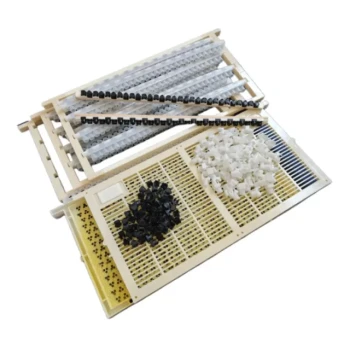
- No Grafting Queen Rearing Kit: System for Royal Jelly Production and Queen Rearing
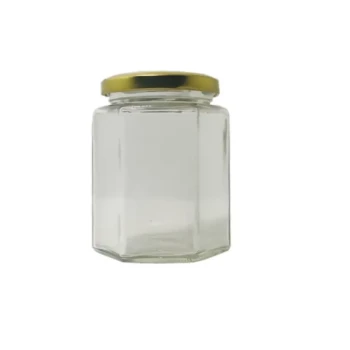
- Hexagonal Glass Honey Jars with Metal Lug Caps Elegant Versatile Packaging
People Also Ask
- What is the primary function of a queen rearing kit? Eliminate Manual Grafting for Superior Bee Breeding
- How do specialized queen rearing kits and queen management tools improve the success rate of bee colony expansion?
- What are some alternative methods to grafting for queen cell production? Discover Graft-Free Queen Rearing Systems
- Are queen rearing systems generally suitable for all honeybee species? Master Efficient Breeding Methods
- Are queen rearing systems suitable for all beekeepers? Modern Tools for Every Experience Level