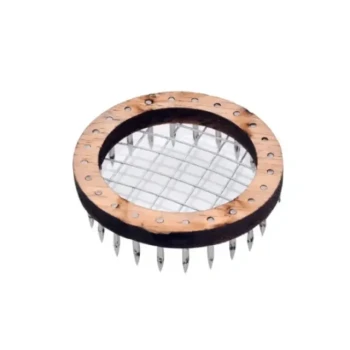
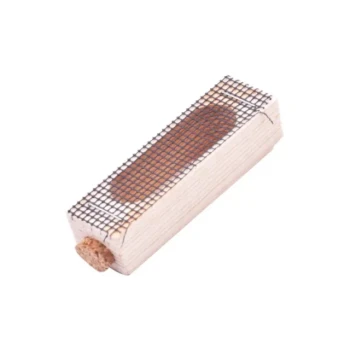
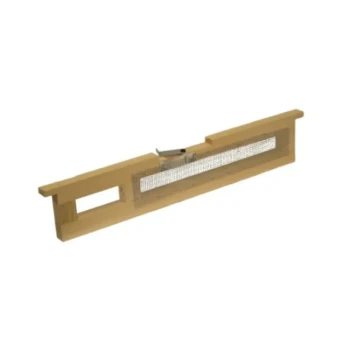
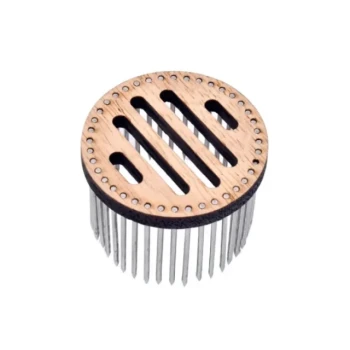
The defining structural advantage of wooden mesh cages lies in their integration of a metal wire mesh body with glass viewing panels. This hybrid design creates an optimal environment that balances necessary ventilation with high visibility, ensuring researchers can conduct continuous, all-weather observation without the risk of honeybee escape.
By combining breathable mesh with transparent access points, these cages solve the critical laboratory challenge of maintaining colony health while allowing for invasive procedures. The design enables precise feeding and medication without disrupting the colony's internal order or skewing physiological data.
Optimizing the Observation Environment
Balancing Airflow and Security
The core innovation in these cages is the use of metal wire mesh. This material provides the high levels of ventilation required for bee survival in a confined space.
Simultaneously, the structure is robust enough to prevent escape. This containment is vital for maintaining the integrity of the laboratory environment and the safety of the colony.
Uninterrupted Visual Access
To complement the mesh, the inclusion of glass panels allows for unimpeded visual monitoring.
This feature supports "all-weather observation," meaning data collection can continue regardless of fluctuations in the surrounding environment. Researchers can track behavioral changes in real-time without needing to open the cage or disturb the subjects.
Precision in Maintenance and Care
The structural design specifically facilitates the insertion of feeding devices through the top of the cage.
This access point allows for the precise administration of food and medication. It enables researchers to maintain the health of the bee population without direct handling, which minimizes the risk of accidental release or injury.
Enhancing Data Accuracy
Reducing the Stress Response
Beyond basic containment, the physical structure of these cages—specifically when using lightweight mesh variants—plays a significant role in bee welfare.
By utilizing lightweight materials, the cages help reduce the stress response often observed in captured insects. Lower stress levels are critical for ensuring that the bees behave as normally as possible within a laboratory setting.
Preserving Natural Physiological States
The structural approach ensures that biological measurements remain accurate.
When bees are less stressed by their enclosure, parameters such as honey or pollen load reflect a true "natural state" foraging effort. This validity is essential for studies attempting to map laboratory findings back to real-world hive behavior.
Understanding the Trade-offs
Complexity of Interaction
While the top-insertion design facilitates feeding, it introduces a mechanical complexity to the cage structure.
Researchers must ensure that feeding ports fit perfectly to prevent gaps. Poorly fitted insertion points can compromise the "escape-proof" nature of the cage or interrupt the internal ventilation currents.
Material Durability vs. Hygiene
The combination of wood, metal mesh, and glass requires careful maintenance.
Wood is porous and may be more difficult to sterilize completely compared to synthetic alternatives, potentially harboring pathogens between experiments if not cleaned rigorously. Additionally, the glass panels require constant cleaning to maintain the visibility advantages mentioned earlier.
Making the Right Choice for Your Research
To select the most effective equipment for your study, consider your specific data requirements:
- If your primary focus is long-term behavioral study: Prioritize cages with high-quality glass panels and robust metal mesh to ensure maximum visibility and ventilation over time.
- If your primary focus is physiological measurement: Select lightweight mesh designs that minimize subject stress to ensure data on pollen or honey loads remains accurate to the natural state.
Ultimately, the right enclosure serves as a silent partner in your research, keeping the subject healthy and the data pure.
Summary Table:
| Feature | Structural Benefit | Research Impact |
|---|---|---|
| Metal Wire Mesh | High ventilation & security | Colony survival and escape prevention |
| Glass Panels | Unimpeded visual access | Real-time, all-weather behavioral monitoring |
| Top-Insertion Ports | Precise feeding & medication | Reduced colony disruption and handling |
| Lightweight Body | Reduced stress response | Accurate physiological and foraging data |
Elevate Your Research with HONESTBEE Solutions
Maximize your data accuracy and colony health with precision-engineered equipment from HONESTBEE. We cater to commercial apiaries and global distributors with a comprehensive wholesale offering, including everything from specialized laboratory cages and beekeeping tools to advanced honey-filling machines.
Ready to upgrade your facility with professional-grade hardware and industry consumables? Contact our wholesale experts today to discuss how our portfolio can support your large-scale operations and research goals.
References
- Dalal M. Aljedani. EVALUATION OF THE POTENTIAL TOXICITY OF TAUFLUVALINATE ON ADULT HONEYBEES APIS MELLIFERA, UNDER LABORATORY CONDITIONS. DOI: 10.15666/aeer/2001_055067
This article is also based on technical information from HonestBee Knowledge Base .
Related Products
- HONESTBEE Wooden Bee Escape Board with Triangle Mesh Design for Beekeeping
- Wood and Mesh Push-In Queen Cage
- Classic Wooden and Mesh California Queen Cage
- Assembled Wooden Bee Frames with Plastic Foundation for Durability and Convenience by HONESTBEE
- Assembled Wooden Bee Frames with Beeswax Foundation Ready to Use by HONESTBEE
People Also Ask
- How is a bee escape board used to clear a hive body for honey harvesting? Optimize Your Chemical-Free Harvest
- What is a bee escape board and what problem does it solve? Simplify Your Honey Harvest with Passive Clearing
- How is a bee escape board used and how does it function? Master This Gentle Honey Harvesting Tool
- What are the proper steps for using a bee escape board for honey harvesting? Master the Passive Clearing Technique
- What tools and methods are used to clear honey bees from honey supers? Efficient Harvesting for Commercial Beekeepers