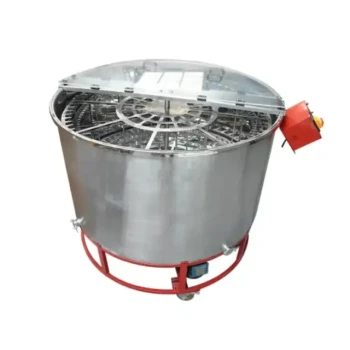
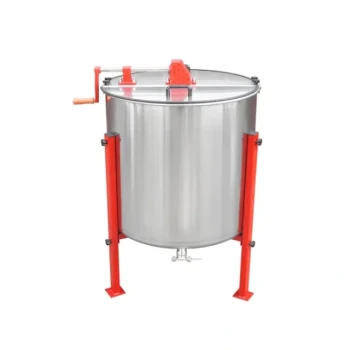
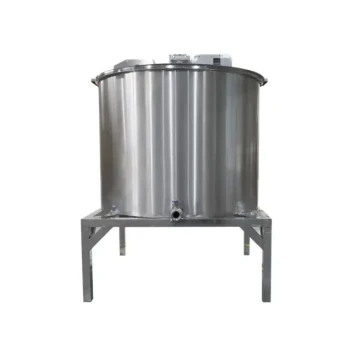
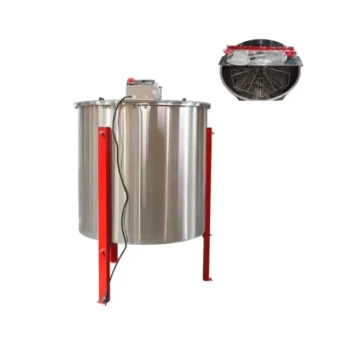
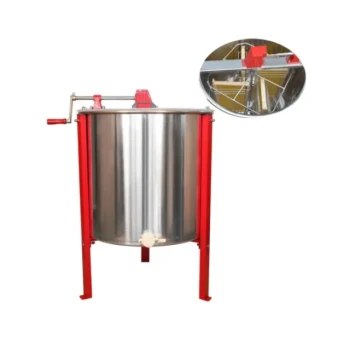
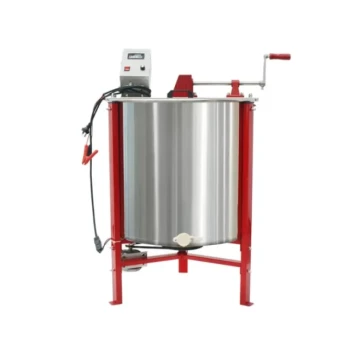
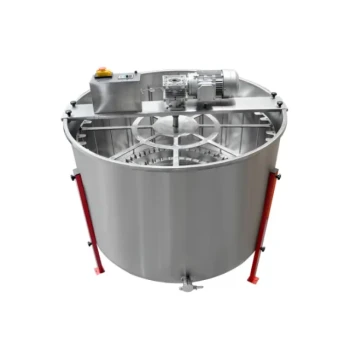
The primary technical advantage of a Mechanical Honey Extractor is the utilization of centrifugal force to separate honey from the comb without destroying the wax structure. Unlike manual crushing or squeezing, this method preserves the honeycomb for immediate reuse, significantly reducing the biological energy burden on the colony while ensuring a cleaner, contaminant-free harvest in a controlled environment.
By preserving the physical integrity of the honeycomb, mechanical extraction shifts the colony's energy focus from wax production to nectar collection. This not only increases immediate harvest speed but exponentially boosts long-term honey yields by eliminating the biological cost of rebuilding the hive.
The Principle of Non-Destructive Harvesting
Preserving Structural Integrity
The defining feature of a mechanical extractor is the use of high-speed rotation to generate centrifugal force.
This force pulls liquid honey out of the cells while leaving the beeswax frame physically intact. In contrast, manual harvesting often involves crushing or squeezing the comb, which destroys the structure entirely.
The Energy Exchange Benefit
When a comb is destroyed during manual harvest, the bee colony must rebuild it.
Bees consume significant amounts of honey and nectar to secrete the wax required for new combs.
By returning intact combs to the hive, you eliminate this "rebuilding tax." The colony can immediately focus on collecting and storing nectar, drastically shortening the production cycle and increasing total honey yield.
Quality Assurance and Hygiene
Controlled Environment
Manual harvesting methods expose the honey to excessive handling, increasing the risk of introducing environmental pollutants.
Mechanical extractors operate in a more closed, controlled system. This minimizes human contact and exposure to open-air contaminants, resulting in superior hygiene.
Separation of Mature Honey
Mechanical extraction is highly effective at separating mature honey from the frame.
Manual squeezing risks mixing high-moisture, immature honey with the final batch.
By mechanically targeting the mature stores, you ensure a lower moisture content, which prevents fermentation and raises the market grade of the final product.
Understanding the Trade-offs
Operational Complexity
While efficient, mechanical extractors introduce moving parts and maintenance requirements that manual methods lack.
Operators must balance the speed of rotation; spinning a frame too fast can rupture the wax foundation, negating the benefit of preservation.
Cleaning and Maintenance
Mechanical extractors require rigorous cleaning to prevent cross-contamination between harvests or crystallization in the mechanism.
This adds a layer of equipment maintenance time that does not exist with simple manual straining tools.
Making the Right Choice for Your Goal
While manual methods are low-cost, mechanical extraction is the standard for efficiency and scalability.
- If your primary focus is maximizing yield: Prioritize a mechanical extractor to preserve wax combs, allowing bees to convert energy into honey rather than rebuilding infrastructure.
- If your primary focus is product quality: Use mechanical extraction to ensure a hygienic, low-moisture product free from the contaminants often introduced by manual squeezing.
Mechanical extraction transforms beekeeping from a resource-heavy cycle of rebuilding into a streamlined system of continuous production.
Summary Table:
| Feature | Mechanical Honey Extractor | Manual Harvesting (Squeezing/Crushing) |
|---|---|---|
| Extraction Method | Centrifugal Force | Physical Pressure/Crushing |
| Comb Condition | Intact & Reusable | Destroyed/Needs Rebuilding |
| Honey Quality | High Purity & Low Moisture | Higher Risk of Contaminants/Moisture |
| Colony Impact | Low Energy Burden (No Wax Rebuild) | High Energy Loss (Bees Must Rebuild) |
| Harvest Speed | High Efficiency/Scalable | Slow/Labor Intensive |
Partner with HONESTBEE for Professional Beekeeping Excellence
Elevate your apiary's productivity with HONESTBEE’s premium extraction technology. We specialize in supporting commercial apiaries and global distributors by providing a comprehensive wholesale range of beekeeping tools, machinery, and essential consumables.
From industrial-grade honey-filling machines to specialized hive-making hardware, our portfolio is designed to maximize your efficiency and market value. Let our expertise help you minimize colony downtime and optimize every harvest.
Ready to scale your production? Contact our expert team today to explore our wholesale solutions and cultural merchandise tailored for industry leaders.
References
- Samson O. Famuyiwa, Michael Adebayo. Proximate, mineral and melissopalynological analyses of honeys produced by Apis mellifera adansonii maintained at the University of Lagos Apiary. DOI: 10.47253/jtrss.v8i2.625
This article is also based on technical information from HonestBee Knowledge Base .
Related Products
- Commercial Electric 12 Frame Honey Extractor Spinner Motorized Honey Extractor
- Stainless Steel Manual 8 Frame Radial Honey Extractor Machine for Beehives
- Stainless Steel 3 Frame Manual Honey Extractor Spinner for Bee Honey Extraction
- Manual Hand Crank 4 Frame Honey Extractor Centrifuge for Beekeeping
- HONESTBEE 72 Frame Industrial Electric Honey Extractor for Beekeeping
People Also Ask
- Who are commercial honey extractors designed for? Scaling Your Industrial Beekeeping Success
- What is a commercial honey extractor? The Essential High-Volume Solution for Large Apiaries
- How is honey extracted commercially? Maximize Your Apiary's Efficiency and Honey Yield
- What are commercial honey extractors used for? Boost Your Apiary's Efficiency & Profitability
- What are the advantages of motorized extractors? Boost Honey Production and Save Time