The technical necessity of using bevel gears with a 1:2 ratio lies in mechanical speed multiplication to achieve effective centrifugal force. In a manual honey extractor, this specific gearing configuration converts a comfortable, low-speed hand rotation into a significantly faster rotation of the central drive shaft. This multiplication is essential for generating enough force to fling honey from the comb without requiring the operator to crank at an unsustainable physical pace.
By utilizing a 1:2 gear ratio, the system doubles the input speed, enabling the operator to achieve efficient extraction velocities with standard physical effort. This mechanism creates a bridge between human limitations and the high-speed requirements of centrifugal extraction.
The Mechanics of Speed Multiplication
How the 1:2 Ratio Works
The "1:2" designation indicates a speed-doubling configuration. For every single full rotation the operator completes with the hand crank, the central basket holding the frames rotates twice.
Achieving Critical Velocity
To extract honey effectively, the frames must spin fast enough to overcome the viscosity and surface tension holding the honey in the cells. Direct drive (1:1 ratio) would require the operator to move their arm frantically to reach this threshold. The gear ratio allows the basket to reach this critical velocity while the operator maintains a steady, manageable rhythm.
The Role of Bevel Gears
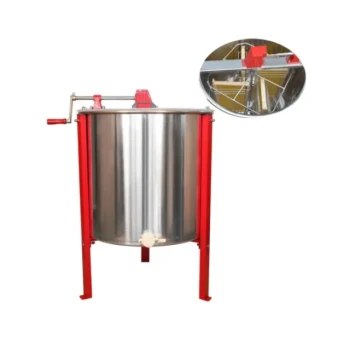
Bevel gears are specifically designed to transmit motion between intersecting axes, typically at a 90-degree angle. In a honey extractor, this allows the operator to stand comfortably and crank a horizontal handle while driving the vertical central shaft.
Operational Efficiency and Ergonomics
Reducing Operator Fatigue
The primary benefit of this mechanical advantage is the reduction of physical exertion. By allowing the gears to handle the speed increase, the operator does not need to expend excessive energy to maintain the necessary RPMs (revolutions per minute).
Increasing Processing Volume
Because the basket reaches extraction speed more easily, the time required to empty a set of frames is reduced. This directly correlates to improved operating efficiency, allowing a significantly higher volume of honey to be processed per hour compared to lower-geared or direct-drive systems.
Understanding the Trade-offs
The Torque Sacrifice
It is important to understand that mechanical systems trade force for speed. While the 1:2 ratio doubles the speed, it roughly halves the torque available at the shaft.
Starting Inertia
Due to this reduction in torque, initiating the spin when the basket is fully loaded with heavy honey frames requires more effort. The operator may notice that the handle feels "heavier" to turn during the first few rotations until the basket gains momentum.
Making the Right Choice for Your Goal
When evaluating manual extractors or designing a transmission system, consider how the gear ratio impacts your workflow.
- If your primary focus is speed of extraction: Ensure the gear ratio provides sufficient multiplication (like 1:2) to reach centrifugal speeds quickly without rapid arm movement.
- If your primary focus is ease of use: Recognize that while the 1:2 ratio saves energy over time, it requires slightly more force to start the spin compared to a lower ratio.
The 1:2 bevel gear system is the critical mechanical link that transforms standard human input into the high-velocity force required for efficient honey harvesting.
Summary Table:
| Component/Feature | Technical Specification | Functional Benefit |
|---|---|---|
| Gear Type | Bevel Gears (90-degree axis) | Converts horizontal cranking to vertical shaft rotation |
| Gear Ratio | 1:2 Ratio | Doubles the output RPM compared to input hand-cranking |
| Extraction Method | Centrifugal Force | Overcomes honey viscosity to empty cells effectively |
| Ergonomics | Mechanical Multiplication | Maintains high basket speeds with a comfortable operator rhythm |
| Trade-off | Torque vs. Speed | Provides higher rotational velocity at the cost of starting torque |
Elevate Your Beekeeping Operations with HONESTBEE
Maximize your harvest efficiency with high-performance equipment designed for commercial success. At HONESTBEE, we specialize in serving commercial apiaries and distributors with a robust wholesale portfolio, ranging from precision-engineered honey extractors and hive-making machinery to essential industry consumables and honey-themed cultural merchandise.
Whether you are scaling your honey production or looking to supply the best beekeeping tools to your local market, our technical expertise ensures you get the most reliable and efficient hardware available. Contact HONESTBEE today to discuss our wholesale offerings and machinery solutions and see how our comprehensive equipment range can drive your business growth.
References
- Husen Bona. Improvement and Evaluation of Honey Extractor. DOI: 10.54536/ajise.v1i1.875
This article is also based on technical information from HonestBee Knowledge Base .
Related Products
- HONESTBEE 72 Frame Industrial Electric Honey Extractor for Beekeeping
- Commercial Electric 12 Frame Honey Extractor Spinner Motorized Honey Extractor
- HONESTBEE 3-Frame Manual Acrylic Honey Extractor
- electric honey extractor honey centrifuge 3 frame honey extractor stainless steel honey frame extractor
- HONESTBEE 6 Frame Self Reversing Electric Honey Extractor for Beekeeping
People Also Ask
- What is the importance of balancing honeycomb frames within a honey extractor? Ensure Stability and Protect Machinery
- How is honey separated from the frames after they are uncapped? Efficient Extraction Methods for High Yields
- What are the main benefits of using a honey extractor? Maximize Yields and Protect Your Honeycomb
- What are the recommended methods for removing honey from the honeycomb? Top Extraction Techniques for Maximum Efficiency
- How do manual honey extractors compare to electric honey extractors? Choosing the Right Tool for Your Apiary Growth