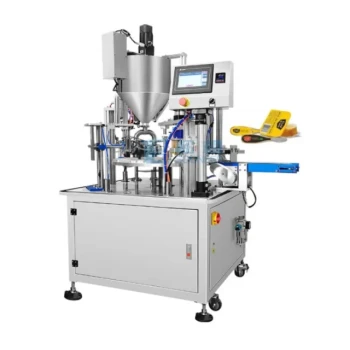
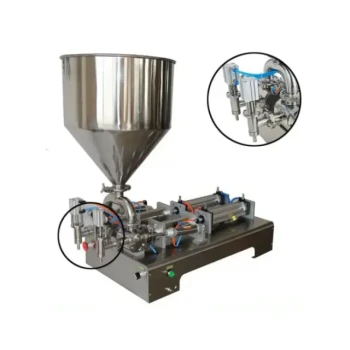
Industrial-grade honey filling machines leverage high-precision volumetric control and vacuum anti-drip systems to fundamentally transform the packaging workflow. Unlike manual methods, which are prone to variability, these machines operate in a closed environment to significantly increase processing speed while guaranteeing absolute weight consistency and superior hygiene standards.
Core Insight Manual filling exposes honey to environmental variables and inconsistent dosing, compromising both quality and profit margins. The definitive value of industrial automation lies in its ability to isolate the product from contamination—preserving pharmacological stability—while enforcing the standardization required for large-scale retail distribution.
Enhancing Product Integrity and Hygiene
The Closed-Loop Advantage
According to primary technical specifications, industrial machines operate in a closed environment. This design effectively isolates the honey from external pollutants, ensuring the final product meets strict hygiene standards that manual filling cannot guarantee.
Preserving Bioactive Stability
Honey contains oxygen-sensitive bioactive substances, such as inhibines, phenolic antioxidants, and vitamins. By utilizing precise quantitative filling and vacuum sealing, industrial machines significantly reduce the honey's exposure to air, preserving these critical pharmacological properties from the apiary to the market.
Prevention of Secondary Contamination
Manual handling introduces multiple points of contact where contaminants can enter the product. Automated machines mitigate this risk through sterile packaging technology and vacuum anti-drip systems, effectively preventing secondary contamination during the critical packaging phase.
Operational Precision and Efficiency
High-Precision Volumetric Control
The primary technical differentiator of industrial equipment is the use of advanced metering systems. These systems ensure that every bottle meets specific net weight requirements, eliminating the over-filling or under-filling common in manual processes.
Economic Scalability
Automation directly impacts the bottom line by increasing total output while reducing labor requirements. By lowering the unit production cost per kilogram, these machines allow producers to overcome the low-profit margins often associated with small-scale, manual operations.
Meeting Retail Standards
Transitioning from direct sales to supermarket supply chains requires rigorous standardization. Industrial filling ensures the product consistency, professional branding, and traceability required to access high-value export markets and commercial retail sectors.
Understanding the Trade-offs
Calibration and Maintenance
While manual filling is mechanically simple, industrial machines require regular calibration of their volumetric controls. Operators must adhere to strict maintenance schedules to ensure the anti-drip systems and metering sensors function correctly over time.
Complexity of Sanitization
Because these machines operate as closed systems, the cleaning process is more technical than washing manual tools. Proper Clean-In-Place (CIP) protocols must be followed to ensure the internal components remain sterile between batches.
Making the Right Choice for Your Production Goals
To determine if an industrial filling solution aligns with your current operational needs, consider your primary objectives:
- If your primary focus is Pharmaceutical Quality: Prioritize machines with advanced vacuum sealing to minimize oxidation and preserve bioactive compounds like inhibines.
- If your primary focus is Economic Efficiency: Look for high-speed volumetric systems that maximize throughput and lower the labor cost per unit.
- If your primary focus is Retail Expansion: Ensure the equipment guarantees weight consistency and professional sealing to meet strict supermarket compliance standards.
Investing in industrial filling technology is not merely about speed; it is a strategic move to secure product stability and enforce the standardization necessary for commercial growth.
Summary Table:
| Feature | Manual Filling | Industrial Filling Machines | Benefit of Automation |
|---|---|---|---|
| Dosing Accuracy | High variability (Manual) | High-precision volumetric control | Ensures weight consistency & retail compliance |
| Hygiene Standard | High contamination risk | Closed-loop environment | Prevents secondary pollution & preserves purity |
| Product Stability | High oxygen exposure | Vacuum sealing / Anti-drip | Protects antioxidants & bioactive substances |
| Efficiency | Labor-intensive / Slow | High-speed automated output | Lower unit cost & scalable production |
| Market Access | Local / Direct sales | Standardized retail/export ready | Enables supermarket & global distribution |
Scale Your Apiary Success with HONESTBEE
Transitioning from manual processes to automated precision is the key to unlocking commercial growth. At HONESTBEE, we empower commercial apiaries and distributors with professional-grade honey-filling machines, hive-making equipment, and a complete range of beekeeping tools designed for durability and hygiene.
Whether you are looking to preserve the pharmacological integrity of your honey or need to meet rigorous supermarket standards, our wholesale solutions provide the competitive edge you need. Maximize your efficiency and product value today.
Contact Our Technical Experts for a Custom Quote
References
- Fedorova E.E., Zalilova Z.A.. WAYS TO IMPROVE AND INCREASE THE ECONOMIC EFFICIENCY OF BEEKEEPING PRODUCTION. DOI: 10.31563/2308-9644-2023-48-2-510-526
This article is also based on technical information from HonestBee Knowledge Base .
Related Products
- Precision Durable Efficient HONESTBEE Rotary Honey Filling Machine
- Commercial Rotary Honey Filling Machine for Production
- Fully Automatic Honey Filling Packaging Machine for Processing Line
- Precision Automated Packaging Turntable Honey Spoon Filling Sealing Packing Machine
- Automatic Honey Filling and Filtering Machine for Beekeeping Bottle Filling
People Also Ask
- How do honey filling machines work? Achieve Precision & Speed for Your Apiary
- How do high-precision honey filling machines ensure quality? Optimize Your Commercial Production with HONESTBEE
- What are the common types of bottling machines used for honey? Choosing the Right Solution for Your Apiary
- What quality control role does professional honey filling equipment perform? Ensure Consistency and Product Stability
- How do honey filling and processing machines aid native bee product conservation? Boost Value with HONESTBEE Technology