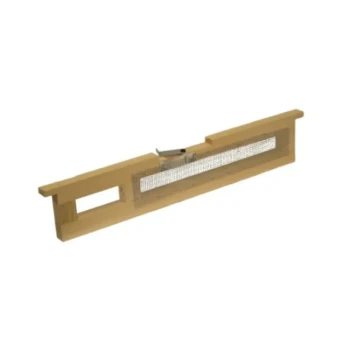
The technical superiority of wooden beehives stems from their ability to actively regulate the colony's microclimate while facilitating modern management practices. Unlike ceramic pots, which serve primarily as rigid containment vessels, wooden hives utilize the material's natural hygroscopic properties to control humidity and stabilize temperature, creating an environment that significantly lowers the risk of larval disease and mold proliferation.
Core Takeaway Wood is not just a structural material; it is a functional component of the hive ecosystem that mimics the thermal and breathable properties of natural tree hollows. When combined with standardized engineering, wooden hives transform beekeeping from a passive containment activity into a precise, scalable science.
Regulating the Internal Microenvironment
Humidity Control and Disease Prevention
The most critical advantage of wood over ceramic is its hygroscopic nature. Wood naturally absorbs and releases moisture, allowing the hive to "breathe."
This breathability prevents the accumulation of excess moisture within nest cells. In contrast, ceramic pots often lead to moisture retention, which fosters mold growth and significantly increases the susceptibility of larvae to disease.
Thermal Buffering and Energy Conservation
Wooden structures provide superior thermal insulation, buffering the colony against external temperature fluctuations. This stability protects larvae from heat-induced mortality during summer and reduces the colony's energy expenditure during winter.
By maintaining a stable internal temperature, the bees can focus resources on reproduction and food storage rather than thermoregulation, directly impacting colony survival rates.
Optimizing Colony Management
Standardization and Modularity
Wooden hives allow for the implementation of Rational Hive designs. These are standardized, layered structures that enable beekeepers to perform complex operations such as artificial colony splitting and queen rearing with precision.
This modularity allows for "soft" management. You can separate honey chambers from brood chambers, enabling clean honey collection without destroying the internal nest architecture—a common issue with non-modular ceramic vessels.
Real-Time Monitoring and Eduction
Wooden hives are easily engineered with standardized interfaces and observation windows. This is vital for the eduction process (colony propagation), as it allows for real-time visual monitoring of colony health and growth.
For "melitourism" (tourism-oriented apiaries), these transparent covers allow visitors to observe bee activity without opening the hive or disturbing the colony's stress levels.
Mimicking Natural Habitats
Wood and bamboo closely replicate the natural tree-hollow habitats where stingless bees evolved. This biological familiarity promotes faster colony adaptation and reduces stress during the critical establishment phase.
Understanding the Trade-offs
Maintenance vs. Longevity
While wood offers superior biological advantages, it is an organic material subject to decay. Unlike ceramic, which is largely inert, wooden hives require monitoring for rot or weathering over time to ensure the structural integrity of the colony's home.
The Necessity of Precision
The advantages of wood are maximized only when the hive utilizes a standardized, improved design. A simple, uncalculated wooden box may not offer the same operational benefits as a "Rational Hive" designed with specific aerodynamic principles and volume calculations. The material advantage must be paired with engineering precision to outperform traditional methods.
Making the Right Choice for Your Goal
If your primary focus is Commercial Scalability: Prioritize Standardized Rational Hives with layered structures to maximize efficiency in colony splitting, pest control, and clean honey harvesting.
If your primary focus is Education or Tourism: Select wooden hives equipped with transparent observation covers, allowing for non-intrusive monitoring of the eduction process and visitor engagement.
If your primary focus is Colony Health and Conservation: Ensure the hive is constructed from high-insulation wood or bamboo to mimic natural tree hollows, specifically to minimize thermal stress and maximize winter survival rates.
By transitioning to engineered wooden hives, you move from simply housing bees to actively managing a productive biological system.
Summary Table:
| Feature | Wooden Rational Hives | Traditional Ceramic Pots |
|---|---|---|
| Microclimate Control | High (Hygroscopic wood regulates humidity) | Low (Prone to moisture & mold) |
| Thermal Insulation | Excellent (Buffers against temp fluctuations) | Poor (Rapid temperature changes) |
| Management Style | Active (Modular layers for splitting) | Passive (Rigid containment) |
| Honey Harvesting | Clean (Separate honey chambers) | Destructive (Requires nest disruption) |
| Monitoring | Visual (Observation windows) | Limited (Opaque and non-modular) |
| Natural Mimicry | High (Simulates natural tree hollows) | Low (Synthetic environment) |
Scale Your Apiary with HONESTBEE Precision Equipment
Transitioning to professional-grade wooden hives is the first step toward commercial success in stingless beekeeping. At HONESTBEE, we empower commercial apiaries and distributors with high-performance equipment designed for scalability and health.
Our comprehensive wholesale range includes:
- Standardized Rational Hives: Engineered for precise colony splitting and thermal stability.
- Beekeeping Machinery: From advanced hive-making tools to efficient honey-filling machines.
- Full Spectrum Supplies: Beekeeping tools, industry consumables, and honey-themed cultural merchandise.
Whether you are expanding a commercial operation or supplying the next generation of beekeepers, our expert team is ready to support your growth with high-quality, durable solutions.
Contact HONESTBEE Today for Wholesale Inquiries
References
- Preeti S. Virkar, V. P. Uniyal. Building Walkways: Observation on Nest Duplication of Stingless Bee Smith (1854). DOI: 10.21276/ambi.2014.01.1.nn01
This article is also based on technical information from HonestBee Knowledge Base .
Related Products
- Wholesales Dadant Size Wooden Bee Hives for Beekeeping
- Wooden Bee Hive Frames for Beekeeping and Wholesale
- Assembled Wooden Bee Frames with Plastic Foundation for Durability and Convenience by HONESTBEE
- HONESTBEE Wired and Assembled Wooden Bee Frames Foundation for a Thriving Hive
- Assembled Wooden Bee Frames with Beeswax Foundation Ready to Use by HONESTBEE
People Also Ask
- What are the strategic benefits of installing beekeeping hives at an elevation of 1 to 6 meters? Protect Your Assets
- What are the key advantages of modern improved beekeeping hives? Scale Your Honey Yield and Production Efficiency
- What is the proper way to store unused bee hives? Expert Stacking Tips for Equipment Longevity
- What are the 2 types of bee hives? Langstroth vs. Top-Bar for Your Apiary
- How does the design of improved beekeeping hives contribute to maintaining honey quality and purity? Enhancing Purity