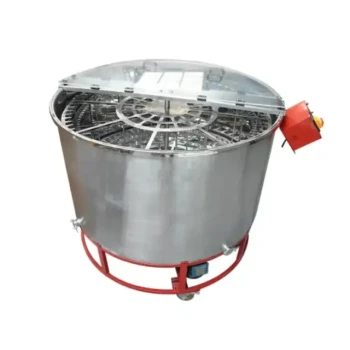
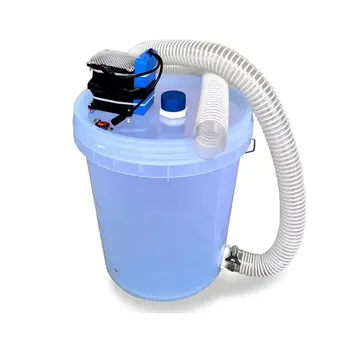
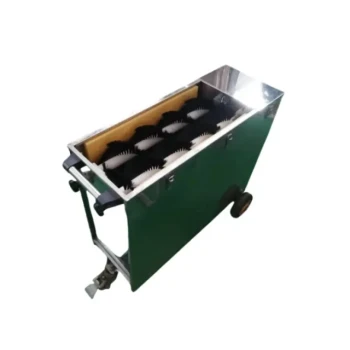
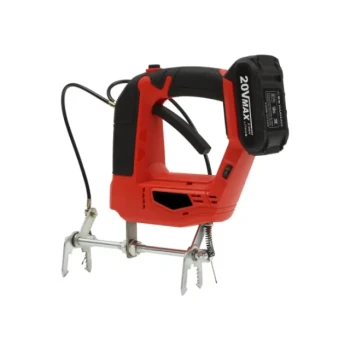
Utilizing 12V industrial-grade vacuum suction equipment fundamentally shifts harvesting from a destructive process to a non-invasive maintenance activity.
The primary technical advantage is non-destructive extraction. By employing controlled negative pressure, this equipment extracts honey without damaging the internal honey sac structures or the vital propolis matrix of the hive. This preservation of structural integrity allows the bee colony to resume production activities immediately, significantly shortening the production cycle compared to traditional methods.
Core Takeaway The transition to industrial-grade vacuum extraction is not just about speed; it is about biological conservation. By preserving the hive's physical architecture, you eliminate the bees' need for massive reconstruction, effectively converting "repair time" back into "production time" while simultaneously ensuring a sterile, contaminant-free product.
Preserving Colony Architecture
Protecting the Propolis Matrix
Stingless bees do not store honey in standard combs, but in unique waxy structures called cerumen pots. Traditional harvesting often involves crushing these structures.
Vacuum equipment extracts the liquid without collapsing the pot walls or disrupting the surrounding hive environment. This leaves the complex propolis matrix—the skeleton of the colony—completely intact.
Minimizing Physiological Stress
When a hive is physically damaged by squeezing or pressing, the colony enters a crisis mode to repair the breach. This diverts energy away from foraging and brood rearing.
By maintaining the colony's stability, vacuum extraction prevents this stress response. The bees remain in a productive state rather than a reactive, reconstructive state.
Accelerating Production Cycles
Immediate Production Resumption
Because the internal structure remains undamaged, the colony does not lose time rebuilding storage pots from scratch.
The primary reference indicates that bees can resume production activities immediately after harvesting. This creates a compounding effect on yield over time, as the gap between harvests is significantly reduced.
Precision Access via Micro-Nozzles
High-quality industrial units often utilize small-diameter suction nozzles, typically around 0.2 cm.
This requires only a minute opening in the honeycomb cell or pot to access the honey. The bees can reseal these tiny punctures rapidly, whereas repairing crushed pots takes days or weeks.
Enhancing Product Hygiene and Quality
Closed-Loop Extraction
Industrial suction machines operate in a closed state, isolating the honey from the moment it leaves the pot until it reaches the collection vessel.
This mechanical negative pressure eliminates contact with external environmental pollution. It ensures that dust, debris, and pests cannot contaminate the harvest during the extraction process.
Separation of Mature Honey
Vacuum extraction allows for selective harvesting. Operators can target specific pots containing mature honey while ignoring those with high-moisture immature honey.
This selectivity prevents the mixing of moisture levels that often occurs with crushing methods, resulting in a final product with higher stability, better flavor, and increased market value.
Understanding the Trade-offs
Equipment Complexity vs. Simplicity
While superior in results, 12V industrial equipment introduces mechanical complexity that does not exist with manual squeezing. Operators must maintain pumps, manage battery power sources, and ensure seals are airtight to maintain negative pressure.
Hygiene Maintenance
The "closed loop" is only as sanitary as the equipment itself. Because the system uses tubing and nozzles, rigorous cleaning protocols are required between harvests to prevent cross-contamination or fermentation within the machine components.
Making the Right Choice for Your Goal
To determine if this technology aligns with your operation, consider your specific objectives:
- If your primary focus is Production Volume: This equipment is essential because it eliminates the hive reconstruction phase, allowing for more frequent harvest cycles per season.
- If your primary focus is Honey Purity: The vacuum system provides the best defense against environmental contaminants and prevents the accidental inclusion of larval fluids or pollen that occurs during crushing.
Ultimately, 12V vacuum extraction is the only method that aligns commercial efficiency with the biological preservation of the stingless bee colony.
Summary Table:
| Feature | Traditional Manual Harvesting | 12V Industrial Vacuum Extraction |
|---|---|---|
| Hive Integrity | High damage to cerumen pots/propolis | Non-destructive; maintains structure |
| Hygiene Level | High risk of environmental contamination | Closed-loop system; sterile extraction |
| Production Cycle | Long (delayed by hive reconstruction) | Immediate resumption of production |
| Product Purity | Potential mix of pollen/larval fluids | Selective harvesting of mature honey |
| Complexity | Simple, manual labor | Requires mechanical maintenance & power |
Maximize Your Colony Yield with HONESTBEE Precision Tools
As a commercial apiary or distributor, maintaining colony health while maximizing output is your top priority. HONESTBEE provides the professional-grade machinery and consumables you need to transition to high-efficiency, non-destructive harvesting. From industrial-grade vacuum suction units to specialized honey-filling machines and hive-making hardware, we supply the full spectrum of beekeeping equipment designed for the modern industry.
Ready to scale your stingless bee operation? Contact us today to explore our wholesale equipment solutions
References
- I Wayan Wahyudi, Anak Agung Komang Suardana. Behavioral Patterns and Honey Yield Between Native and Non-native Stingless Bees in Bali's Ecosystem. DOI: 10.29303/jbt.v25i1.8323
This article is also based on technical information from HonestBee Knowledge Base .
Related Products
- HONESTBEE 72 Frame Industrial Electric Honey Extractor for Beekeeping
- Honey Concentrating Vacuum Heating Thickening Machine Dehumidifier for Honey
- Professional Wide Blade Honey Scraper for Beekeeping and Honey Processing
- Professional Long-Handled Silicone Honey Scraper for Beekeeping
- 2 Frame Stainless Steel Manual Honey Spinner Extractor for Beekeeping
People Also Ask
- What is the importance of balancing honeycomb frames within a honey extractor? Ensure Stability and Protect Machinery
- How is honey separated from the frames after they are uncapped? Efficient Extraction Methods for High Yields
- What are the main benefits of using a honey extractor? Maximize Yields and Protect Your Honeycomb
- What are the recommended methods for removing honey from the honeycomb? Top Extraction Techniques for Maximum Efficiency
- How do manual honey extractors compare to electric honey extractors? Choosing the Right Tool for Your Apiary Growth