The fundamental technical requirement for utilizing woodworking saws or axes to extract Trigona sp. colonies is the application of precise, controlled force. Rather than simply splitting the wood, the operator must surgically open the natural log to expose the colony without compromising the physical structure of the nest inside.
The success of colony acquisition is defined by the preservation of the core bee cluster, not the speed of extraction. You must maintain the integrity of the queen, egg cells, and food stores to ensure the colony survives the transfer to an artificial hive.
The Mechanics of Controlled Extraction
The Principle of Precise Force
When using an axe or saw, the primary technical constraint is the limitation of impact vibration and depth. You are not cutting to destroy the log; you are cutting to access a delicate cavity.
The force applied must be sufficient to split the timber but gentle enough to stop immediately upon reaching the hollow center.
Protecting the Biological Integrity
The technical goal of the tool usage is to avoid crushing the biological components of the hive.
The "core bee cluster" is a cohesive unit. If the mechanical action of the saw or axe disrupts this unit, the colony's ability to recover is severely diminished.
Critical Components to Preserve
Ensuring Queen Survival
The queen is the single most critical asset during the extraction process.
Your cutting path must avoid the area where the queen resides, as her injury or loss renders the entire acquisition a failure.
Maintaining Egg Cell Structure
Future generations of the colony are housed in delicate egg cells.
Rough handling or deep cuts with a saw can destroy these cells, creating a generation gap that weakens the colony during the critical adaptation phase.
Intact Food Stores
The reference explicitly identifies pollen and honey stores as vital components to preserve.
Rupturing honey pots can drown the bees or attract pests. The saw or axe must be used in a way that separates the wood without slicing through these soft storage structures.
Understanding the Trade-offs
Speed vs. Precision
There is an inherent trade-off between the speed of using heavy tools like axes and the safety of the colony.
Rapid, high-force strikes increase the probability of fracturing the core cluster. The technical requirement demands a slower, more measured approach to ensure "modern domestication" success.
Force vs. Vibration
While an axe delivers force effectively, it also transmits shockwaves through the wood.
Excessive shock can collapse the internal architecture of the nest before the log is even fully opened. The operator must balance the need to split the wood with the necessity of minimizing internal vibration.
Making the Right Choice for Your Goal
To ensure the successful domestication of the colony, apply the following principles:
- If your primary focus is immediate colony survival: Prioritize the integrity of the queen and brood above all else by stopping the cut before it penetrates the central cavity.
- If your primary focus is long-term hive health: Ensure that pollen and honey stores remain intact and attached to the cluster to provide immediate energy resources during the transfer.
The technical mastery of these tools lies not in their cutting power, but in your restraint and ability to protect the life inside the log.
Summary Table:
| Technical Factor | Requirement | Impact on Colony Survival |
|---|---|---|
| Force Application | Precise and Controlled | Prevents crushing the internal nest structure |
| Cutting Depth | Shallow/Stopped at Cavity | Protects the queen, brood, and egg cells |
| Vibration Control | Minimal Impact | Prevents the collapse of internal architecture |
| Store Preservation | Non-intrusive Handling | Keeps honey/pollen pots intact to prevent drowning/pests |
| Operational Goal | Integrity over Speed | Ensures successful transfer to artificial hives |
Elevate Your Beekeeping Operation with HONESTBEE
At HONESTBEE, we understand that the successful acquisition of Trigona sp. is just the first step toward a thriving apiary. Whether you are a commercial beekeeper or a specialized distributor, our mission is to provide you with the professional-grade tools and machinery needed for modern domestication.
Our value to your business:
- Comprehensive Equipment: From high-precision woodworking tools for nest extraction to advanced honey-filling machines.
- Scalable Solutions: We supply everything from specialized hive-making hardware to essential industry consumables at wholesale volumes.
- Industry Expertise: Our portfolio is designed to enhance efficiency and preserve the biological integrity of your colonies.
Ready to scale your production? Contact us today to discover how our full spectrum of beekeeping machinery and cultural merchandise can drive your success.
References
- Erwan Erwan, Wike Agustin. Pengaruh Desain Kotak Terhadap Produktivitas Lebah Trigona sp. DOI: 10.29303/jstl.v6i2.206
This article is also based on technical information from HonestBee Knowledge Base .
Related Products
- Stainless Steel Pollen Shovel with Wooden Handle
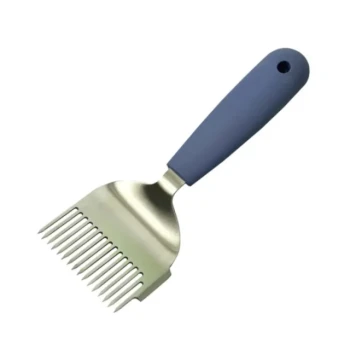
- Professional Multi-Function Uncapping Fork with Ergonomic Rubber Grip
- Professional Stainless Steel Pry-Bar Hive Tool
- Professional Dual Action Queen Excluder Scraper for Beekeeping
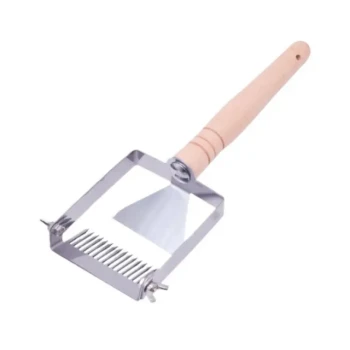
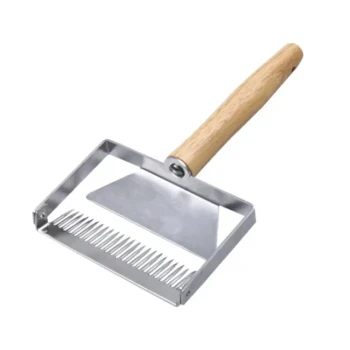
- Professional Extra-Wide Uncapping Fork with Bent Tines for Beekeeping
People Also Ask
- How do bee pollen collection tools affect the quality of bee pollen used in functional dairy ice cream production?
- Why should commercial apiaries focus on the collection of diversified bee products? Maximize Your Hive’s Profit Potential
- How does a specialized pollen collector facilitate the harvesting of diverse bee products? Automate High-Value Yields
- What is the impact of pollen collectors and associated equipment on the cost structure of pollen production? Maximize ROI
- What is the technical significance of using specialized cutting tools for propolis? Master Precision Pollen Harvesting