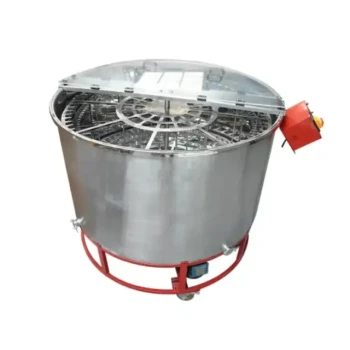
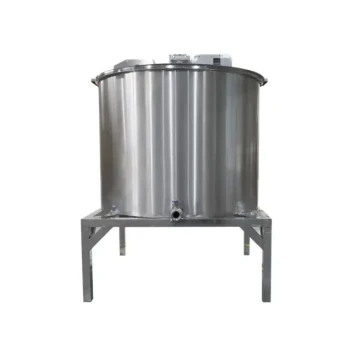
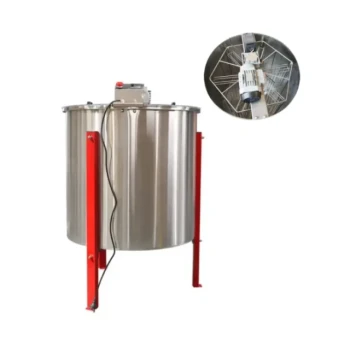
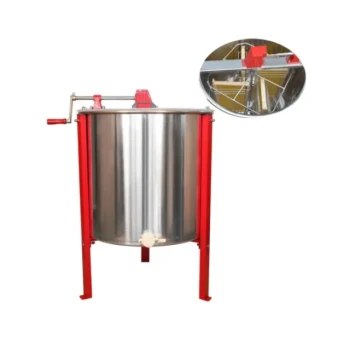
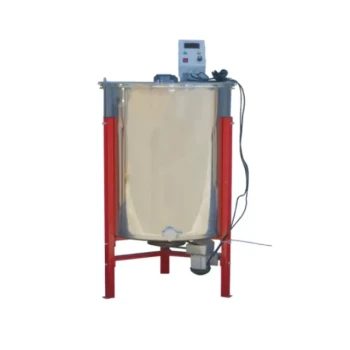
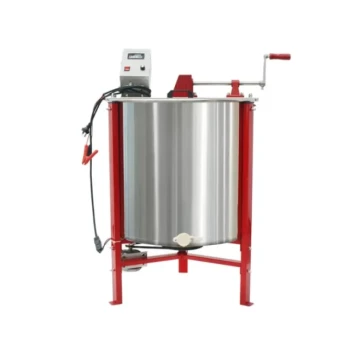
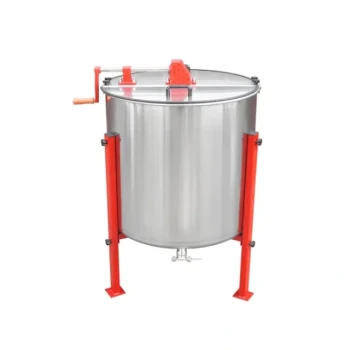
The price of a honey extractor is primarily dictated by its power source and frame capacity. generally speaking, manual honey extractors typically cost between $100 and $300, making them the standard entry point for hobbyists. Conversely, electric honey extractors start at approximately $300 and can exceed $1,500 for high-capacity, commercial-grade models.
While manual units offer an affordable entry point for small apiaries, investing in an electric model becomes a necessity as your operation scales, trading higher upfront costs for significant savings in time and physical labor.
Breakdown by Power Source
The most significant factor influencing the price tag is whether the machine relies on a hand crank or an electric motor.
Manual Extractors ($100 – $300)
These units are designed for small-scale beekeepers. Because they rely on hand-cranking, they are mechanically simpler and less expensive to manufacture.
Most manual extractors have a limited capacity, typically holding between 2 to 4 frames at a time. This makes them cost-effective for those with only a few hives but physically demanding for larger operations.
Electric Extractors ($300 – $1,500+)
Electric models replace the hand crank with a motor, drastically increasing the price but automating the spinning process.
These units start around $300 for basic models and scale up significantly. High-end, commercial-grade versions can cost well over $1,500, offering heavy-duty construction and the ability to process large volumes of honey efficiently.
Design Styles and Capacity
Beyond the power source, the mechanical design—how the frames sit inside the drum—affects capacity and efficiency, which correlates with price.
Tangential Extractors
Tangential extractors are common in the lower to mid-price range. They typically hold 3 to 6 frames positioned with the flat side facing the drum wall.
The downside to this design is labor; you must stop the machine and flip the frames to extract honey from both sides. This inefficiency often keeps them at a lower price point compared to large radial systems.
Radial Extractors
Radial extractors are generally associated with higher efficiency and often command a higher price, particularly in electric configurations.
These units position frames like spokes on a wheel, allowing honey to be extracted from both sides simultaneously without flipping. They offer the widest capacity range, holding anywhere from 4 to over 100 frames, making them the standard for serious apiarists.
Evaluating the Trade-offs
When choosing an extractor, you are balancing your budget against the "labor cost" of using the machine.
The Hidden Cost of Manual Extraction
A manual extractor saves you money upfront, but it costs you physical energy. Cranking a basket full of heavy frames is tiring work, and you cannot multitask while extracting.
Efficiency vs. Frame Management
Tangential extractors are often cheaper but require double the handling because of the need to flip frames.
Radial extractors save time by extracting both sides at once. However, they are often larger and more expensive, requiring a commitment to a higher volume of honey to justify the investment.
Making the Right Choice for Your Goal
Select your extractor based on your anticipated hive count over the next few years, not just where you are today.
- If your primary focus is keeping costs low for a hobby (1-5 hives): A manual extractor ($100–$300) provides the best value and is sufficient for occasional harvests.
- If your primary focus is efficiency and scaling (10+ hives): An electric extractor (starting at $300) is essential to prevent burnout and process honey quickly.
- If your primary focus is commercial volume: Invest in a large electric radial extractor ($1,500+) to maximize throughput and eliminate the need to flip frames.
Your equipment should grow with your apiary; buying slightly more capacity than you currently need is often cheaper than upgrading a year later.
Summary Table:
| Extractor Type | Power Source | Typical Price | Frame Capacity | Best For |
|---|---|---|---|---|
| Manual | Hand-Crank | $100 - $300 | 2 - 4 Frames | Hobbyists (1-5 hives) |
| Electric (Basic) | Motorized | $300 - $800 | 4 - 8 Frames | Sideliners (10+ hives) |
| Tangential | Either | Lower-Mid Range | 3 - 6 Frames | Small-scale efficiency |
| Radial | Usually Electric | $800 - $1,500+ | 4 - 100+ Frames | Commercial operations |
Scale Your Honey Production with HONESTBEE
Choosing the right equipment is an investment in your apiary's future. HONESTBEE empowers commercial apiaries and distributors with a complete range of professional-grade beekeeping tools. From durable manual and electric honey extractors to advanced honey-filling machines and hive-making hardware, we provide the wholesale solutions you need to maximize efficiency and profit.
Ready to upgrade your extraction line or restock your inventory? Our experts are here to help you select the perfect equipment for your specific volume requirements.
Contact HONESTBEE Today for a Quote
Related Products
- HONESTBEE 72 Frame Industrial Electric Honey Extractor for Beekeeping
- Commercial Electric 12 Frame Honey Extractor Spinner Motorized Honey Extractor
- 32 Frame Commercial Electric Honey Extractor for Beekeeping and Honey Production
- HONESTBEE 3-Frame Manual Acrylic Honey Extractor
- HONESTBEE 6 Frame Self Reversing Electric Honey Extractor for Beekeeping
People Also Ask
- What is the importance of balancing honeycomb frames within a honey extractor? Ensure Stability and Protect Machinery
- How is honey separated from the frames after they are uncapped? Efficient Extraction Methods for High Yields
- What are the main benefits of using a honey extractor? Maximize Yields and Protect Your Honeycomb
- What are the recommended methods for removing honey from the honeycomb? Top Extraction Techniques for Maximum Efficiency
- How do manual honey extractors compare to electric honey extractors? Choosing the Right Tool for Your Apiary Growth