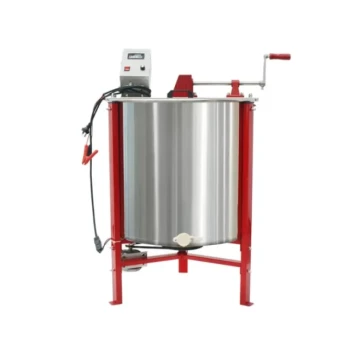
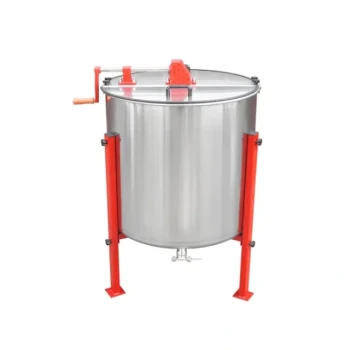
The two most popular methods for harvesting liquid gold from the hive are using a Honey Extractor and using a Honey Press. While both techniques effectively remove honey from the comb, they rely on fundamentally different mechanical principles: one utilizes centrifugal force to spin the honey out, while the other uses compression to squeeze it out.
Core Takeaway The choice between these methods largely depends on whether you intend to preserve the beeswax comb. A Honey Extractor spins honey out, leaving the comb intact for bees to reuse, whereas a Honey Press destroys the comb to release the honey, necessitating the separation of wax from the liquid.
The Mechanics of Extraction
To understand which method suits your needs, you must look beyond the equipment and understand the impact each has on the hive's resources and the workflow of the beekeeper.
The Honey Extractor (Centrifugal Force)
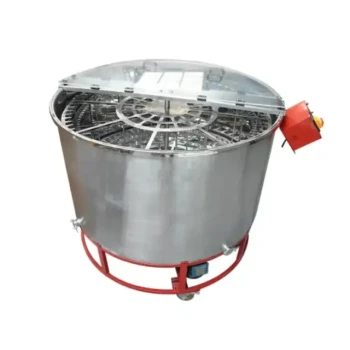
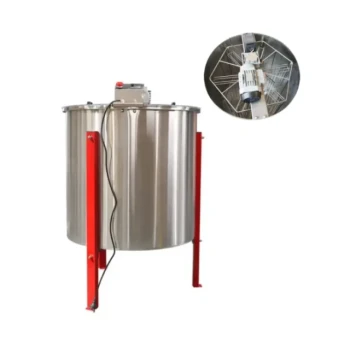
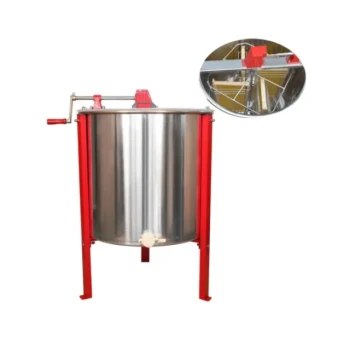
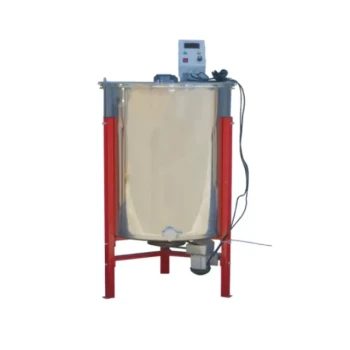
This method focuses on efficiency and preservation. It typically involves a machine—hand-cranked or electric—that holds the frames of the honeycomb.
Before placing frames in the extractor, you must perform uncapping. This involves removing the thin layer of wax caps sealing the honey cells using a heated knife or uncapping fork.
Once uncapped, the frames are spun rapidly. The centrifugal force pulls the liquid honey out of the cells and against the walls of the drum, where it drains to the bottom. Crucially, this process keeps the wax structure intact.
The Honey Press (Crush and Strain)
This method is often associated with the "Crush and Strain" technique. It is a more destructive but mechanically simpler process, often used for combs built without a rigid foundation.
The honeycomb is removed from the frame and placed into a press. Pressure is applied to physically crush the wax cells, forcing the honey out through a strainer or mesh.
Because the comb is pulverized during this process, the honey and wax are initially mixed. The mixture must be strained thoroughly to separate the liquid honey from the leftover beeswax particles.
Understanding the Trade-offs
Choosing between a press and an extractor is not just about the tool; it is about balancing immediate harvest yield against future hive productivity.
Comb Preservation vs. Reconstruction
The most significant difference lies in the fate of the honeycomb. An extractor allows you to return the empty, intact drawn comb to the hive. This is a massive advantage for production, as bees can immediately refill the cells without spending energy producing new wax.
A honey press destroys the comb entirely. If you use a press, the bees must consume significant amounts of honey and energy to rebuild the wax comb from scratch before they can store new surplus honey.
Equipment Cost vs. Operational Speed
Extractors represent a higher upfront investment and take up more storage space. However, they process honey much faster, making them the standard for larger operations.
Presses are generally smaller, cheaper, and easier to store. However, the process is slower and more labor-intensive, making it better suited for small-scale hobbyists who prioritize low overhead over high volume.
Making the Right Choice for Your Goal
Selecting the correct extraction method depends entirely on the scale of your apiary and your long-term goals for hive management.
- If your primary focus is maximum honey production: Choose a Honey Extractor to preserve drawn comb, allowing bees to focus on making honey rather than building wax.
- If your primary focus is simplicity and low cost: Choose a Honey Press, particularly if you have a small number of hives and do not use foundation in your frames.
Ultimately, the best method is the one that balances your budget with the amount of time and energy you—and your bees—are willing to invest.
Summary Table:
| Feature | Honey Extractor | Honey Press |
|---|---|---|
| Mechanism | Centrifugal Force (Spinning) | Compression (Crushing) |
| Comb Condition | Preserved (Intact) | Destroyed |
| Best For | Commercial & High-Yield | Small-scale & Hobbyist |
| Effort Level | Faster / Efficient | Slower / Labor-intensive |
| Bee Recovery | Immediate Refilling | Energy spent rebuilding wax |
Maximize Your Apiary's Potential with HONESTBEE
Whether you are scaling a commercial operation or supplying the next generation of beekeepers, HONESTBEE provides the professional-grade tools you need. From high-capacity centrifugal honey extractors and honey-filling machines to durable hives and essential consumables, our comprehensive wholesale catalog is designed to support distributors and large-scale apiaries worldwide.
Ready to upgrade your harvesting efficiency? Contact our expert team today to discuss our bulk equipment solutions and see how we can bring superior value to your beekeeping business.
Related Products
- HONESTBEE 72 Frame Industrial Electric Honey Extractor for Beekeeping
- Commercial Electric 12 Frame Honey Extractor Spinner Motorized Honey Extractor
- HONESTBEE 6 Frame Self Reversing Electric Honey Extractor for Beekeeping
- HONESTBEE 3-Frame Manual Acrylic Honey Extractor
- Stainless Steel Manual 8 Frame Radial Honey Extractor Machine for Beehives
People Also Ask
- What is the importance of balancing honeycomb frames within a honey extractor? Ensure Stability and Protect Machinery
- How is honey separated from the frames after they are uncapped? Efficient Extraction Methods for High Yields
- What are the main benefits of using a honey extractor? Maximize Yields and Protect Your Honeycomb
- What are the recommended methods for removing honey from the honeycomb? Top Extraction Techniques for Maximum Efficiency
- How do manual honey extractors compare to electric honey extractors? Choosing the Right Tool for Your Apiary Growth