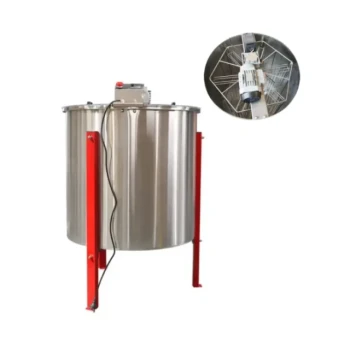
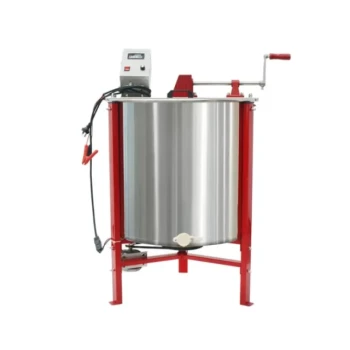
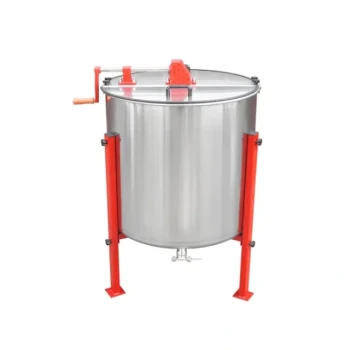
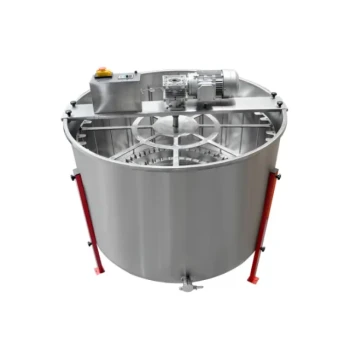
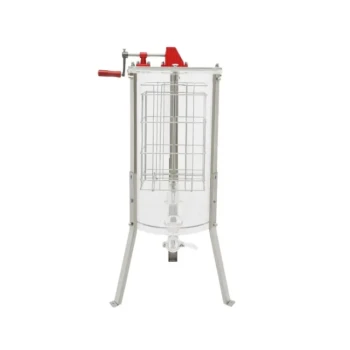
To safeguard your equipment and harvest quality, the three most critical errors to avoid are overloading the extractor, attempting to extract from unripe or uncapped frames, and spinning the centrifuge at excessive speeds.
These missteps can lead to mechanical failure, poor quality honey, or catastrophic damage to the wax foundation that your bees rely on.
Core Takeaway The efficiency of a centrifuge relies on a delicate balance between rotational force and structural integrity. Your primary goal is not just extracting honey, but preserving the drawn comb—a resource that requires significant energy for bees to rebuild—so it can be reused in future seasons.
Protecting the Structural Integrity of the Comb
The Risks of Excessive Speed
The most common operator error is spinning the extractor too fast, too quickly.
While high-speed rotation is necessary to fling honey out of the cells, applying maximum force immediately can cause the honeycombs to blow out or break.
Start the extractor slowly to remove the bulk of the honey, then gradually increase speed to clear the remaining liquid without shattering the wax.
Preserving Drawn Comb
A centrifuge is valued because it keeps the wax framework intact, unlike crush-and-strain methods.
If you destroy the comb through rough handling or excessive speed, you force the colony to secrete new wax.
This wastes valuable hive resources, as bees consume significant amounts of honey and energy to rebuild the structure rather than producing surplus honey.
Managing Load Capacity
Avoid overloading the extractor with too many frames at once.
Crowding the machine can prevent frames from sitting correctly, leading to uneven extraction or mechanical jamming.
Ensure the load is balanced; an unbalanced centrifuge will wobble violently, potentially damaging the machine's bearings or the frames themselves.
Ensuring Process Efficiency
The Necessity of Uncapping
You must never place fully capped frames directly into the centrifuge without preparation.
The machine relies on centrifugal force to pull liquid out, but it cannot pull honey through a wax seal.
Use a heated knife or uncapping fork to remove the wax caps from all cells before loading the frames.
Avoiding Unripe Honey
Do not extract from frames that are largely uncapped or contain "unripe" honey.
Uncapped honey often has a high water content because the bees have not yet finished curing it.
Extracting this liquid can lead to fermentation, spoiling the entire batch of harvested honey.
Common Pitfalls to Avoid
Misjudging the Trade-off: Speed vs. Preservation
There is an inherent trade-off between extraction speed and comb preservation.
High speed extracts more honey in less time but dramatically increases the risk of comb failure.
Low speed protects the comb and ensures it can be reused, but may leave a small amount of honey behind.
Ignoring Directional Orientation
Failing to optimize the direction of the spin can result in incomplete extraction.
Some extractors, particularly radial ones, rely on specific rotational directions to align with the natural angle of the honey cells.
Verify your machine’s specifications to ensure you are spinning in the direction that aids, rather than fights, the flow of honey.
Making the Right Choice for Your Goal
To maximize your results, tailor your approach based on your immediate priorities:
- If your primary focus is Long-Term Colony Health: Prioritize slower spin speeds to ensure the drawn comb remains intact, allowing bees to reuse the structure immediately.
- If your primary focus is Honey Quality: Ensure you only harvest fully capped frames, guaranteeing the honey has been properly cured and has the correct moisture content to prevent spoilage.
Treat the centrifuge as a precision tool for conservation, not just extraction.
Summary Table:
| Potential Mistake | Consequence | Prevention Strategy |
|---|---|---|
| Excessive Speed | Shattered wax combs (blowouts) | Start at low RPM; increase speed gradually |
| Overloading/Unbalanced | Bearing damage & violent wobbling | Balance frame weights & follow load capacity |
| Extracting Capped Cells | Zero honey yield from sealed cells | Use a heated knife or fork to uncap all cells |
| Using Unripe Honey | Fermentation and spoilage | Only harvest frames that are at least 80% capped |
| Wrong Spin Direction | Incomplete extraction | Align rotation with the natural angle of cells |
Maximize Your Harvest with HONESTBEE Professional Equipment
Don't let avoidable mistakes compromise your commercial apiary's output. At HONESTBEE, we specialize in supporting commercial beekeepers and distributors with high-performance honey-filling machines, advanced centrifugal extractors, and specialized hive-making machinery.
Our comprehensive wholesale offering provides everything from essential consumables to heavy-duty hardware designed to preserve your valuable drawn comb and ensure the highest honey quality.
Ready to upgrade your apiary’s efficiency? Contact us today to discover how our tailored equipment solutions can streamline your production and grow your business.
Related Products
- electric honey extractor honey centrifuge 3 frame honey extractor stainless steel honey frame extractor
- Manual Hand Crank 4 Frame Honey Extractor Centrifuge for Beekeeping
- Professional 4 Frame Self Reversing Electric Honey Extractor for Beekeeping
- 24 Frame Honey Extractor Commercial Radial Honey Frame Extraction Machine
- 10L Stainless Steel Electric Honey Press Machine
People Also Ask
- What are the characteristics of electric honey extractors? Boost Your Apiary Efficiency with Automated Technology
- What are the disadvantages of using an electric honey extractor? Weighing Cost, Power, and Comb Safety
- What are the advantages of an electric honey extractor? Boost Efficiency and Scale Your Honey Production
- What are the technical advantages of electric honey extractors? Maximize Yield and Protect Your Bee Colony
- How does an electric honey extractor affect the quality of honey? Preserve Flavor & Purity with Precision Extraction