
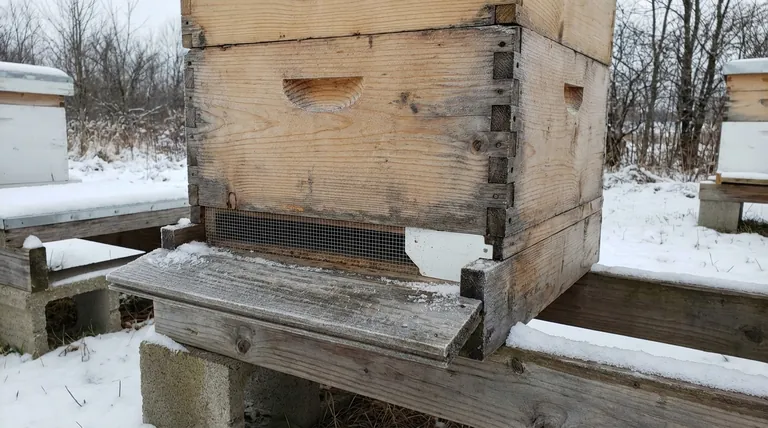
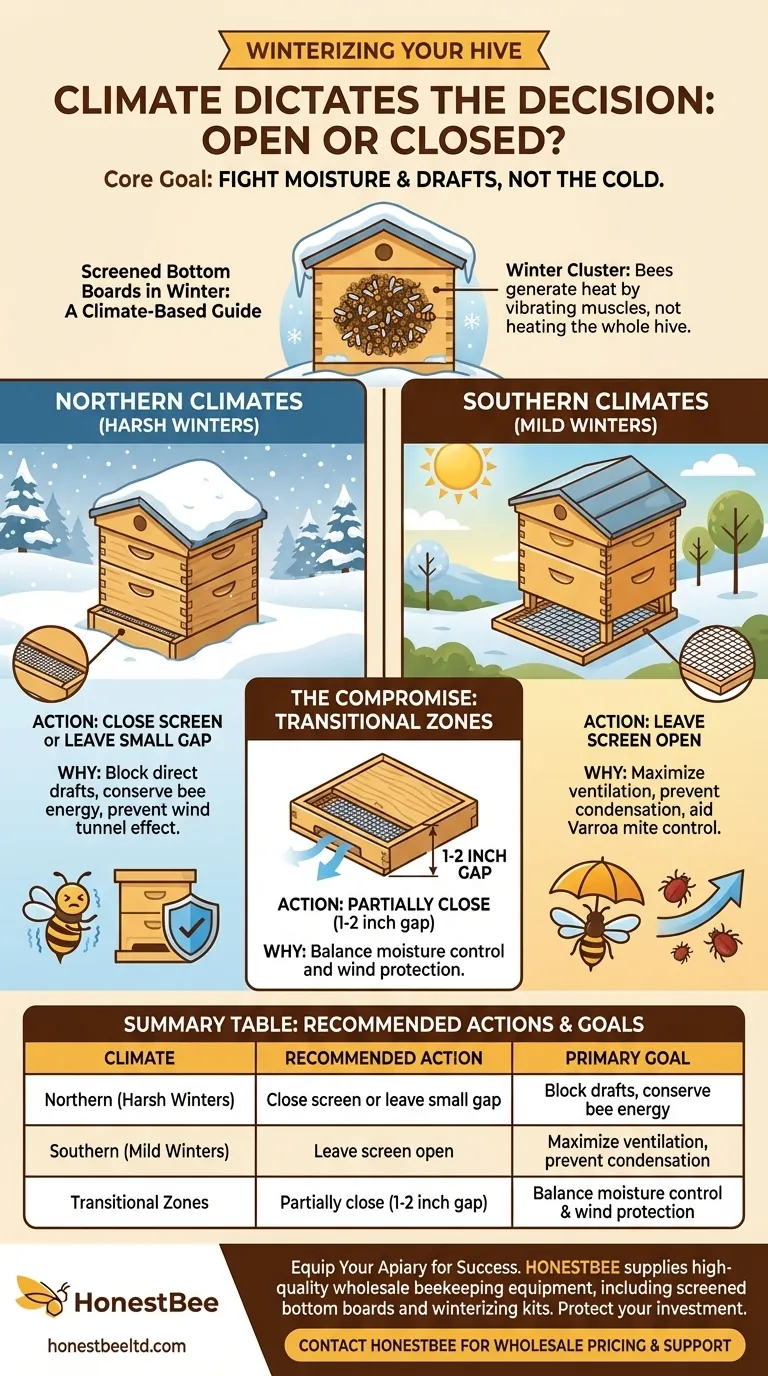
The decision to close a screened bottom board for winter depends entirely on your climate. For beekeepers in the northern half of the United States or other regions with harsh winters, it is generally recommended to close the screen to prevent excessive cold and wind from stressing the colony. In the southern half of the U.S. and milder climates, leaving the screen open is typically the better choice to ensure proper ventilation.
Your primary goal in winter is not to fight the cold, but to fight moisture and drafts. The choice to leave a screened bottom board open or closed is a strategic decision about how to best manage ventilation for your specific climate.
The Core Conflict: Ventilation vs. Insulation
Bees do not heat the entire hive cavity during winter. Instead, they form a tight winter cluster and generate heat at its core by vibrating their wing muscles, maintaining a stable temperature around the queen. Understanding this principle is key to making the right decision for your hive.
How a Winter Cluster Works
The bees on the outer layer of the cluster act as a living blanket, insulating the bees inside. This cluster can move around the hive to access honey stores, but it is a self-contained heating unit. The ambient temperature of the hive itself can be very close to the outside temperature.
The Real Winter Threat: Moisture
A colony consumes honey and breathes, releasing a significant amount of warm, moist air. When this humid air rises and hits the cold inner surfaces of the hive (like the inner cover), it condenses into water. This condensation can drip back down onto the cluster, chilling and killing the bees. Wet bees are dead bees.
The Role of the Screened Bottom Board
An open screen provides an excellent escape route for this moisture-laden air and allows dry, fresh air to enter. This constant airflow is the single greatest tool for preventing deadly condensation inside the hive. It also helps with Varroa mite control, as mites that fall from bees will drop out of the hive entirely.
Understanding the Trade-offs
While ventilation is critical, there are situations where a fully open screen can become a liability. The decision requires balancing the benefits of ventilation against the risks of excessive cold exposure.
The Case for Closing the Screen (Northern Climates)
In areas with severe, windy winters, a fully open bottom screen can create a wind tunnel effect. A persistent, strong draft blowing directly up into the cluster forces the bees to consume far more honey to maintain their temperature. Closing the screen, or at least partially blocking it, reduces this direct draft and helps the colony conserve its vital winter food stores.
The Case for Leaving the Screen Open (Southern Climates)
In milder climates, the risk of deadly condensation is much higher than the risk of the colony freezing. An open screen provides essential year-round ventilation and pest management. Closing it can trap moisture and create an environment favorable to mold and disease.
Creating a Vented Compromise
You do not have to choose between fully open and fully closed. Many beekeepers in transitional climates slide the closing board (often a plastic "correx" board) in but leave a one-to-two-inch gap at the front or back. This blocks the worst of the wind while still allowing moisture to escape, offering a safe middle ground.
How to Apply This to Your Hive
Your specific location and the severity of your winters are the ultimate guides. There is no single answer that applies to all beekeepers, but there are clear principles to follow.
- If your primary focus is surviving severe, windy winters: Close the screen fully or leave a small vent gap to protect the cluster from direct drafts and help it conserve energy.
- If your primary focus is managing moisture in a mild winter: Leave the screen fully open to maximize ventilation and prevent condensation.
- If your primary focus is year-round Varroa mite control: Keep the screen open as much as your climate allows, as this ensures any dislodged mites are permanently removed from the hive.
Ultimately, successful wintering is about providing an environment where your bees can effectively manage their own temperature and stay dry.
Summary Table:
| Climate | Recommended Action | Primary Goal |
|---|---|---|
| Northern (Harsh Winters) | Close screen or leave small gap | Block drafts, conserve bee energy |
| Southern (Mild Winters) | Leave screen open | Maximize ventilation, prevent condensation |
| Transitional Zones | Partially close (1-2 inch gap) | Balance moisture control and wind protection |
Ensure your apiary is equipped for a successful winter. The right equipment is crucial for managing hive health in any climate. HONESTBEE supplies durable, high-quality beekeeping supplies and equipment—including screened bottom boards and winterizing kits—to commercial apiaries and beekeeping equipment distributors through our wholesale-focused operations. Let us help you protect your investment. Contact HONESTBEE today for wholesale pricing and expert support.
Visual Guide
Related Products
- Australian Pine Wood Langstroth Screen Bottom Board for Wholesale
- Langstroth Screen Bottom Board for Beekeeping Wholesale
- Solid Bottom Board Australian Pine Wood Langstroth Bottom Board for Wholesale
- Langstroth Solid Bottom Board for Beekeeping
People Also Ask
- How are screen bottom boards and sticky boards utilized to detect Varroa mites? Master Passive Apiary Monitoring
- What is the primary function of a screen bottom board? Achieve Accurate Varroa Mite Assessment in Your Apiary
- Why is the combination of a screen bottom board and a sticky trap board essential for monitoring Varroa mite? Guide
- What is the primary function of a standard screen bottom board when assessing honeybee grooming behavior? - Key Mite Data
- What role do screen bottom boards and monitoring inserts play in assessing Varroa mite mortality and maintaining hive hygiene in Langstroth hives?


