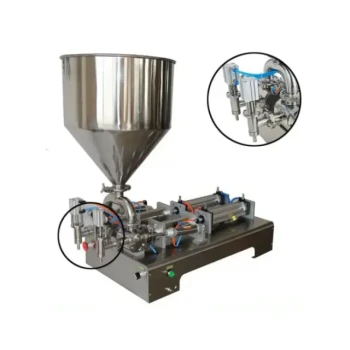
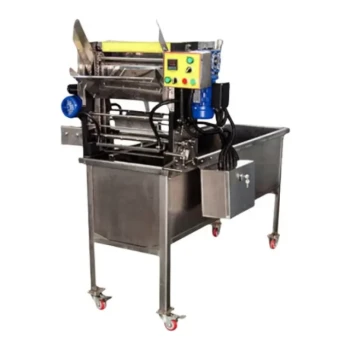
Automated honey filling machines serve as the technological foundation for commercial scalability, providing critical advantages in precision, speed, and standardization that manual methods cannot replicate. These systems utilize advanced metering control to deliver high-speed throughput while ensuring strict liquid level consistency across every unit. By minimizing human intervention, they significantly reduce the risk of secondary contamination, enabling enterprises to meet the rigorous compliance standards required by large retail chains and distributors.
By transitioning from manual handling to automated precision, honey producers minimize material loss and contamination risks while achieving the standardization necessary to enter high-volume commercial markets.
Transforming Production Consistency
Achieving Precise Weight Control
One of the most significant challenges in honey processing is maintaining the exact net weight of the product. Manual filling often leads to variance, resulting in either product giveaway (financial loss) or underfilling (regulatory non-compliance).
Automated machines utilize high-precision piston or weighing-based systems to ensure the net content of every jar complies strictly with label specifications. This mechanical accuracy eliminates the "human factor," ensuring that raw material usage is optimized and every gram of product is accounted for.
Standardization for Retail Compliance
Commercial distributors and supermarkets demand uniform shelf appearance and supply stability. Manual filling can lead to inconsistent fill levels, which negatively impacts consumer perception and brand professionalism.
Automated equipment guarantees that liquid levels are identical across thousands of units, providing the standardized aesthetic required for formal retail channels. This consistency is often a prerequisite for securing contracts with major grocery chains.
Elevating Hygiene and Product Safety
Eliminating Secondary Contamination
Manual packaging processes introduce multiple points of contact where debris, bacteria, or foreign objects can enter the product. This is a critical vulnerability in food safety.
Automated systems function as closed or semi-closed loops, often integrating filtration systems directly into the filling line. By removing the need for manual handling, these machines prevent secondary contamination, ensuring the final product meets strict food safety and hygiene requirements.
Preserving Quality via Hermetic Sealing
Honey is hygroscopic, meaning it naturally absorbs moisture from the air, which can lead to fermentation and spoilage. Prolonged exposure during slow manual filling increases this risk.
Modern filling machines are equipped with no-drip nozzles and automatic capping functions that seal the container immediately after filling. This airtight process prevents moisture absorption and preserves the honey’s sensory characteristics, such as color and crystallinity, extending the product's shelf life.
Operational Efficiency and Throughput
Minimizing Raw Material Waste
Honey is viscous and sticky; manual pouring inevitably leads to drips, spills, and residue left in transfer vessels.
Professional filling equipment employs specialized anti-drip nozzles and precise cut-off valves. These features ensure a clean break in the flow of honey after every cycle, significantly minimizing material waste at the bottle neck and keeping the exterior of the packaging clean.
Scaling for Commercial Demand
Manual labor is the primary bottleneck in scaling production; it is difficult to surge output without hiring and training temporary staff.
Automation uncouples production speed from labor availability. High-speed filling processes allow producers to drastically increase production line throughput to meet seasonal spikes or large bulk orders, transitioning the operation from a small batch apiary to a large-scale commercial enterprise.
Understanding the Trade-offs
Capital Investment vs. Volume
While the efficiency gains are substantial, automated machinery represents a significant upfront capital expense. For very small, boutique apiaries with low volume, the Return on Investment (ROI) may not be immediate. These machines are best utilized when production demands exceed what a small manual team can reasonably handle.
Maintenance and Viscosity Management
Automated systems require technical discipline. Honey viscosity changes drastically with temperature; machines must be calibrated correctly to handle these fluctuations without clogging or compromising accuracy. Regular maintenance and cleaning of piston heads and nozzles are non-negotiable to prevent cross-contamination or mechanical failure.
Making the Right Choice for Your Goal
Selecting the right level of automation depends on your current production volume and your specific market targets.
- If your primary focus is Retail Entry: Prioritize machines with high-precision weighing and leveling systems to ensure strict compliance with weight regulations and shelf-appearance standards.
- If your primary focus is Product Purity: Select equipment that integrates filtration and immediate automatic capping to minimize exposure time and prevent moisture absorption.
Upgrading to automated filling is the pivotal step that transitions a honey operation from an artisanal pursuit to a scalable, professional manufacturing enterprise.
Summary Table:
| Key Advantage | Technical Benefit | Business Impact |
|---|---|---|
| Precision Control | High-precision piston/weighing systems | Minimizes product giveaway and ensures regulatory compliance |
| Hygienic Safety | Closed-loop systems & no-drip nozzles | Eliminates secondary contamination and preserves honey quality |
| Standardization | Consistent liquid level filling | Meets professional retail standards for shelf appearance |
| Scalability | High-speed automated throughput | Enables transition from small batches to high-volume distribution |
Scale Your Apiary with HONESTBEE Professional Equipment
Transitioning from manual labor to automated precision is the key to unlocking commercial growth. HONESTBEE specializes in empowering commercial apiaries and distributors with high-performance honey-filling machines, hive-making hardware, and a full spectrum of beekeeping tools.
Whether you are looking to increase production line throughput or ensure strict food safety compliance, our comprehensive wholesale offerings and honey-themed merchandise are designed to elevate your brand. Contact HONESTBEE today to discover how our specialized machinery and industry consumables can streamline your operations and maximize your ROI.
References
- Pedro Dinis Gaspar, Hélio Silva. Development of Technological Capabilities through the Internet of Things (IoT): Survey of Opportunities and Barriers for IoT Implementation in Portugal’s Agro-Industry. DOI: 10.3390/app11083454
This article is also based on technical information from HonestBee Knowledge Base .
Related Products
- Fully Automatic Honey Filling Packaging Machine for Processing Line
- Automatic Honey Filling and Filtering Machine for Beekeeping Bottle Filling
- Precision Durable Efficient HONESTBEE Rotary Honey Filling Machine
- Semi Automatic Small Honey Bottle Filling Machine Honey Filler
- Precision Automated Packaging Turntable Honey Spoon Filling Sealing Packing Machine
People Also Ask
- Why are fully automatic honey filling and packaging lines essential? Boost Your Honey's Market Value and Quality
- What is a fully-automatic honey filler? Streamline Your Production with High-Precision Automation
- How do automated honey filling and packaging machines affect profitability? Boost Margins with HONESTBEE Technology
- How do automated honey filling and packaging machines contribute to the market value of honey products? Maximize Your ROI
- How do industrial-grade automated honey filling and packaging machines mitigate the risk of physical contamination?