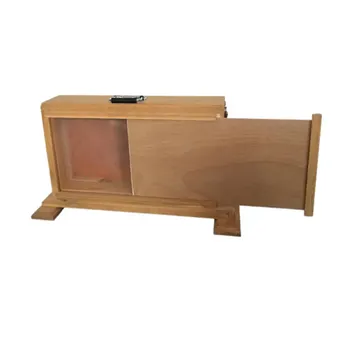
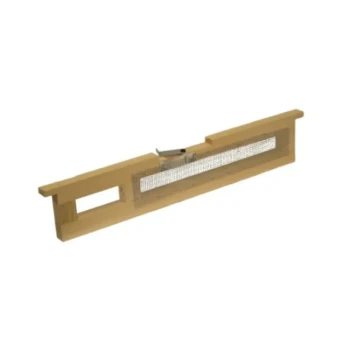
For commercial apiaries entering migratory pollination, the essentials are standardized portable hives, transport hardware, colony-expansion tools, and protective management equipment. Durable Langstroth woodenware or synthetic hive bodies, interchangeable frames, secure fasteners, ventilated covers, screened bottom boards, and heavy-duty straps form the core infrastructure. Apiaries also need colony-splitting and queen-rearing equipment, feeding systems, and efficient handling tools to maintain colony strength across repeated crop moves.
The central requirement is a standardized, transport-ready hive system. Consistent dimensions reduce labor, simplify replacement and repair, improve compatibility with mechanical handling, and help protect colonies during loading, transit, and field deployment.
Build a Standardized Hive Platform
Use interchangeable Langstroth components
Commercial pollination operations should standardize on hive bodies, frames, bottom boards, inner covers, and tops with uniform dimensions. Interchangeability allows crews to replace damaged parts, equalize colonies, and assemble splits without delaying field deployment.
Langstroth equipment is particularly practical because it supports established handling, transport, and extraction systems. The chosen material may be quality timber or a durable synthetic alternative, provided it withstands repeated use and exposure to weather.
Invest in durable hive-making capability
Apiaries expanding rapidly need a dependable supply of standardized boxes and frames. Commercial hive-making machinery can include precision woodworking equipment, box-jointing machinery, frame-cutting equipment, and assembly tools.
Dimensional consistency matters because poorly fitted components can create gaps, interfere with stacking, reduce equipment interchangeability, and complicate mechanical handling. For distributors and resellers, a coordinated portfolio of machinery, woodenware, hardware, and replacement parts is more valuable than isolated products.
Maintain sufficient spare hive inventory
Migratory operations should plan for damaged boxes, broken frames, worn covers, and emergency colony transfers. A shortage of replacement equipment can interrupt pollination contracts even when colonies and transport capacity are available.
The reserve inventory should include complete hive bodies, frames, bottom boards, covers, straps, fasteners, and feeding equipment. Standardized spares also reduce the need to maintain multiple incompatible product lines.
Prepare Hives for Safe Transport
Provide ventilation during transit
Migratory colonies face heat buildup, crowding, vibration, and restricted airflow during loading and transport. Ventilated hive covers and screened bottom boards help improve air circulation and reduce heat stress.
Ventilation must be paired with secure stacking and physical protection. Airflow alone does not prevent damage if boxes shift or components separate during transit.
Use heavy-duty hive straps and fasteners
Hive straps, clamps, and other secure fastening hardware should hold stacked boxes together during loading, road movement, and unloading. Fasteners must be easy for crews to apply consistently while remaining strong enough for repeated commercial use.
Standardized fastening points also make loading procedures faster and reduce the risk of inconsistent securing between crews or transport vehicles.
Design for mechanical and manual handling
Large pollination contracts require frequent movement of colonies between yards, staging areas, and crop fields. Hive bodies should be compatible with the apiary’s lifting, palletizing, loading, and transport methods.
Even where equipment is primarily handled manually, uniform hive dimensions simplify team lifting and reduce unnecessary transfers between incompatible components.
Equip the Apiary for Colony Expansion
Use colony-splitting equipment
Pollination contracts often require the apiary to maintain a large number of strong colonies. Colony-splitting tools and a reliable supply of hive hardware allow beekeepers to divide colonies and house new units without improvising equipment.
The structural side of expansion depends on having enough boxes, frames, bottom boards, covers, and feeders available when biological increases occur.
Add queen-rearing supplies
A scalable expansion program may require grafting needles, cell bar frames, mating nucs, and queen excluders. These tools support organized queen production and help the apiary replace queens or establish additional colonies.
Queen-rearing capacity should be planned together with hive production. Producing queens without having standardized housing ready creates a bottleneck at the point where new colonies need to be established.
Maintain colony-management equipment
Protective clothing, veils, gloves, smokers, hive tools, and inspection equipment remain essential even in highly mechanized operations. Commercial crews need enough equipment for simultaneous work teams and rapid intervention at multiple sites.
Management equipment should be durable, easy to clean, and simple to replace. Standardized kits also improve training and reduce omissions during field deployment.
Support Feeding and Seasonal Movement
Plan for supplemental feeding
Migratory colonies may encounter dearth periods before, between, or after crop blooms. Feeding equipment and a steady supply of apiary consumables help maintain colony strength when natural forage is insufficient.
Feeding systems should be selected for the operating scale, transport conditions, and the apiary’s ability to refill or service colonies across multiple locations.
Match infrastructure to the migration schedule
Commercial movement requires more than hives and trucks. Operations must coordinate staging areas, loading procedures, field access, land arrangements, localized pest-control requirements, and labor availability.
Equipment selection should therefore reflect the full seasonal cycle rather than a single crop contract. A hive system that works for short regional moves may be inadequate for long-distance transport in high temperatures.
Use Extraction Equipment as a Supporting System
Add high-capacity extraction equipment where honey is also commercialized
Pollination-focused apiaries may still generate honey during crop cycles. Automatic uncappers and high-capacity centrifugal extractors can process bulk honey flows more efficiently than small-scale equipment.
These systems are not always essential to starting a pollination service, but they become important when the operation is also managing large honey volumes. Standardized frames improve compatibility with extraction lines and reduce handling time.
Keep pollination priorities separate from honey-flow assumptions
Crop pollination contracts depend primarily on colony strength, timing, transport reliability, and field management. Extraction capacity supports the broader business but does not compensate for weak colonies or inadequate migration infrastructure.
Purchasing decisions should therefore prioritize transport readiness and colony management before adding processing capacity that the operation cannot yet fully use.
Understanding the Trade-offs
Timber versus synthetic hive bodies
Quality timber can be practical and familiar, while dense synthetic materials may offer durability and consistent dimensions. The right choice depends on climate, transport frequency, repair capability, supplier availability, and total lifecycle cost.
A mixed inventory can increase complexity if components are not interchangeable. Standardization should take priority over material preference.
Automation versus operational flexibility
Hive-making machinery and mechanized extraction reduce labor requirements and improve consistency at scale. However, they require capital, maintenance, operator training, and sufficient throughput to justify the investment.
Smaller or newly expanding apiaries may be better served by reliable standardized purchased equipment before investing in a complete manufacturing or extraction line.
More equipment does not eliminate biological risk
Ventilation, straps, and durable boxes reduce physical and heat-related risks, but they do not replace colony inspections, appropriate loading practices, feeding decisions, or timely field management.
The infrastructure must support sound beekeeping rather than encourage the movement of colonies beyond their practical handling capacity.
Standardization can limit supplier flexibility
Using one equipment standard simplifies operations, but it can create dependence on a narrow supply channel. Distributors and apiaries should confirm ongoing availability of compatible hive bodies, frames, hardware, and replacement components before committing to a large-scale system.
Making the Right Choice for Your Goal
A staged procurement plan helps align equipment investment with contract volume and migration distance.
- If your primary focus is rapid colony expansion: Prioritize standardized hive bodies, frames, bottom boards, covers, colony-splitting tools, queen-rearing supplies, and immediate access to replacement hardware.
- If your primary focus is long-distance migratory pollination: Prioritize ventilated covers, screened bottom boards, heavy-duty straps, secure fasteners, durable hive bodies, and loading systems designed for repeated transport.
- If your primary focus is distributor or reseller service: Build a full-spectrum supply program covering hive-making machinery, woodenware, transport gear, protective equipment, feeding systems, queen-rearing supplies, and consumables with dependable fulfillment.
- If your primary focus is combined pollination and honey production: Add automatic uncappers and high-capacity centrifugal extractors after transport and colony-management infrastructure are adequately covered.
- If your primary focus is operational reliability: Standardize dimensions and components across the fleet, maintain spare inventory, and select suppliers able to provide rapid response and compatible replacement parts.
A commercial migratory apiary succeeds when its biological program, standardized hive platform, transport system, and supply chain operate as one dependable service infrastructure.
Summary Table:
| Equipment Category | Essential Items | Purpose |
|---|---|---|
| Hive Platform | Standardized Langstroth boxes, frames, bottom boards, covers | Interchangeability, ease of handling, and colony expansion |
| Transport Hardware | Ventilated covers, screened bottom boards, heavy-duty straps, fasteners | Safe transit, ventilation, and secure stacking |
| Colony Expansion | Splitting tools, queen-rearing supplies, feeding systems | Maintain colony strength and increase numbers |
| Management Equipment | Protective gear, smokers, hive tools | Safe and efficient field operations |
| Supporting Systems | Extraction equipment (if honey production) | Process honey at scale |
Ready to build a transport-ready, standardized hive system for your migratory pollination business? HONESTBEE offers a one-stop wholesale portfolio including hive-making machinery, durable Langstroth woodenware, transport hardware, queen-rearing supplies, and more. Our rapid delivery, OEM/ODM support, and dedicated service ensure your apiary moves with confidence. For distributors and resellers, we provide full-spectrum supply reliability and profit-boosting partnerships. Contact us today to optimize your pollination infrastructure — Get in Touch.
Related Products
- Professional Observation Hive: The Ultimate Portable Solution for Beekeeping Education, Exhibitions, and Colony Displays
- High-Performance Langstroth Bee Hives for Global Professional Beekeeping
- Wholesales Dadant Size Wooden Bee Hives for Beekeeping
- Modern Flat-Mount Hive Number Set for Beekeeping
- Wooden Bee Hive Frames for Beekeeping and Wholesale
People Also Ask
- How does transitioning to modern hives boost honey yield? Increase production and product quality for your commercial apiary
- How do Langstroth and Dadant standard beehives compare regarding brood chamber management and component compatibility? Find the Perfect Fit for Your Apiary
- What are the primary differences between Langstroth, horizontal top bar, and Warré hive box designs when selecting beekeeping equipment? Choose the Right Hive for Your Apiary
- Why do commercial apiary operators transition from traditional hive structures, such as clay cylinders, to standardized Langstroth hive boxes? Discover Scalable Beekeeping Solutions
- What is the recommended frame and box setup for a standard Langstroth hive configuration? Discover the optimal Hive Configuration for Best Results