Commercial bee pollen harvesting requires more than hive-mounted traps. Apiaries need pollen traps, collection trays, cleaning tools, rapid freezing or controlled drying equipment, moisture-protective packaging, and documented operating procedures. The essential workflow is harvest frequently, clean thoroughly, stabilize immediately, package securely, and maintain traceability from hive to shipment.
The central risk is delay: fresh pollen absorbs moisture quickly and can mold, ferment, or attract pests. A commercially reliable operation therefore combines carefully managed hive collection with rapid post-harvest stabilization and disciplined quality control.
Build the Right Harvesting Setup
Install Hive-Mounted Pollen Traps
A pollen trap is fitted at the hive entrance or opening. As returning forager bees pass through the screen, the trap gently dislodges some pollen pellets from their hind-leg pollen baskets into a collection tray.
Commercial traps should be compatible with the hive design, easy to remove for cleaning, and constructed from food-contact-suitable materials. The trap must allow normal bee traffic and should not be operated continuously without monitoring colony condition.
Use Collection Trays and Harvest Containers
Each trap requires a collection tray positioned below the dislodging screen. Trays should be removable, cleanable, and protected from rain, dirt, insects, and other contaminants.
Operators also need clean, sealed harvest containers for transferring pollen from the hive to the processing area. Labeling containers by apiary, hive group, date, and collection period supports inventory control and later traceability.
Equip the Apiary for Routine Collection
Pollen traps should be checked on a regular schedule. In humid environments, collection trays may need to be emptied daily because moisture-rich pollen can develop mold, bacterial growth, or insect larvae infestation.
In drier climates, the collection interval may be longer, but the correct schedule should be determined by local humidity, pollen moisture, weather, and observed product condition. Pollen should never be left in a trap until it becomes visibly damp, clumped, fermented, or contaminated.
Control When and Where Pollen Is Collected
Protect Colony Health
Pollen is a critical food source for brood production, so trapping should be managed in a way that does not unnecessarily deprive colonies. Commercial operators should monitor brood rearing, food stores, colony strength, and seasonal forage before deciding how extensively to collect.
Collection should be suspended during colony disease treatments when there is a risk that treatment materials could contaminate pollen. Apiaries should also follow veterinary, pesticide, and food-safety requirements applicable to their jurisdiction.
Avoid Agrochemical Contamination
Pollen collection should be restricted when bees are foraging in areas recently treated with agricultural chemicals. A practical control program includes mapping nearby forage areas, communicating with growers, and observing legally required or label-specific waiting periods.
The supplementary guidance identifies a buffer zone of approximately 3.0 to 4.2 kilometers around treated areas for several days or weeks after treatment. The exact distance and duration should be based on local regulations, product labels, crop conditions, and the chemical’s documented risk to bees and food products.
Record Harvest Conditions
A commercial apiary should record the collection date, hive or apiary location, weather conditions, trap duration, approximate quantity, and any relevant treatment or forage restrictions.
These records help distributors and wholesalers answer customer questions, manage recalls if necessary, and separate product lots according to origin or quality characteristics.
Process the Pollen Immediately
Move Fresh Pollen Into a Clean Processing Area
Freshly collected pollen should be transported promptly from the hives to a clean, protected processing area. The area should limit exposure to rain, dust, pests, excessive heat, and uncontrolled humidity.
Processing equipment and work surfaces should be cleaned according to a documented sanitation procedure. Operators should also prevent cross-contamination between raw pollen, finished pollen, cleaning chemicals, and unrelated apiary products.
Remove Visible Impurities
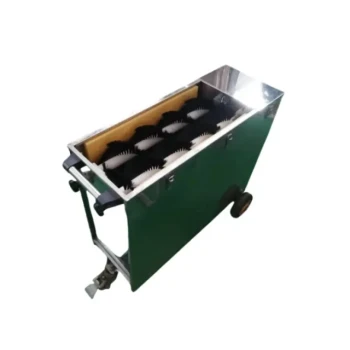
Raw pollen commonly contains bee parts, fragments of comb, plant debris, dust, and other foreign material. Cleaning normally begins with screens, sieves, trays, or purpose-built pollen cleaning equipment that separates the pellets from larger and lighter impurities.
The cleaning system should be gentle enough to avoid excessive pellet breakage. Cleaned pollen should be inspected before stabilization, with visibly contaminated or deteriorated material removed from the saleable lot.
Stabilize by Rapid Freezing
Freezing is a direct method for preserving fresh pollen after cleaning. It helps protect freshness and nutritional quality while limiting the conditions that support mold and fermentation.
Commercial operations need suitable freezers or rapid-freezing capacity, along with food-grade containers or bags that prevent moisture transfer and freezer contamination. The pollen should remain frozen during storage and distribution when the product specification requires a frozen chain.
Stabilize by Controlled Drying
A dehydrator or dedicated pollen dryer can reduce moisture to a stable level for products intended for ambient storage. Drying must be controlled carefully because excessive heat can damage quality, while inadequate drying leaves enough moisture for spoilage.
The apiary should define and verify a target moisture specification using appropriate measurement equipment. A dryer with adjustable temperature, airflow control, and uniform tray loading is more suitable for commercial production than improvised heat sources.
Choose One Validated Preservation Route
Freezing and drying serve different distribution models. Frozen pollen preserves a fresh product profile but requires cold-chain storage and transport, while dried pollen is easier to warehouse and ship but depends on controlled drying and moisture protection.
The chosen process should be validated against the intended shelf life, packaging format, storage conditions, customer requirements, and applicable food regulations. The operation should avoid switching between methods without updating its product specifications and records.
Package for Market Distribution
Use Moisture- and Air-Resistant Packaging
Pollen readily absorbs atmospheric moisture, so packaging must protect it from humidity and air. Suitable formats may include sealed food-grade pouches, jars, bulk liners, or containers designed for frozen distribution.
Dried pollen should be packed only after it has cooled and reached its verified stability condition. Packaging warm product can create condensation inside the container and undermine the drying process.
Match Packaging to the Sales Channel
Distributors and wholesalers may require bulk containers, private-label units, retail-ready packs, or material suitable for further processing into capsules, tablets, or other supplements. Packaging specifications should therefore be agreed before production rather than selected only after harvesting.
Every unit or bulk lot should carry the information required by the destination market, such as product identity, net quantity, lot code, storage conditions, date information, and responsible business details.
Maintain Lot Traceability
A lot should be traceable back to its collection date, apiary, hive group, processing method, and packaging run. This is particularly important when pollen from different floral sources, locations, or treatment periods is blended.
Traceability also improves distributor confidence because buyers can distinguish consistent supply lots and investigate quality complaints without placing the entire inventory at risk.
Equip the Processing Operation
Core Equipment
A commercial pollen line typically requires:
- Hive-mounted pollen traps with collection trays
- Clean harvest containers and labeled transfer bins
- Sieves, screens, sorting trays, or a pollen cleaning machine
- Food-grade processing tables and sanitation equipment
- Commercial freezers for rapid stabilization and frozen storage
- Pollen dehydrators or controlled drying cabinets
- Moisture-measuring equipment for dried pollen
- Weighing scales and lot-labeling tools
- Heat sealers, filling equipment, jars, pouches, or bulk packaging systems
- Shelving, pallets, and storage equipment suited to frozen or dry inventory
Equipment capacity should match the number of active traps, expected harvest volume, and required processing turnaround. A large trap installation without enough freezer or drying capacity creates a bottleneck at the point where the product is most vulnerable.
Add Equipment for Downstream Products
Apiaries supplying health-product manufacturers may sell cleaned frozen or dried pollen as an ingredient. Other operations may add encapsulation, tablet production, or retail packing through their own facility or a qualified processing partner.
Related apiary equipment can support broader product development, including beeswax rendering units, wax molds, propolis collection and extraction tools, and honey filling and packaging machines. These systems are separate from pollen processing but can help a commercial operation build a wider, one-stop product portfolio.
Understanding the Trade-offs
Traps Can Affect the Colony
Pollen traps collect a portion of the pollen returning to the hive, but excessive collection can reduce the colony’s available protein supply. Trap use should therefore be seasonal and monitored rather than treated as a permanent maximum-yield setting.
The commercial objective is not simply to collect the largest possible quantity. It is to obtain a consistent, uncontaminated product while preserving colony strength and future productivity.
Freezing Requires Cold-Chain Discipline
Frozen pollen can retain a fresh product profile, but freezers, power reliability, storage space, and temperature-controlled transportation add cost and operational complexity.
A broken cold chain can cause thawing, condensation, or quality loss. Frozen product is therefore best suited to customers and distributors equipped to receive, store, and move it under the specified conditions.
Drying Requires Process Control
Dry pollen is generally easier to warehouse and distribute, but drying quality depends on temperature, airflow, loading depth, and final moisture. Overheating can reduce product quality, while under-drying can leave a spoilage risk.
The process should be tested and documented before the apiary commits to large commercial volumes or long shelf-life claims.
Poor Collection Practices Create Avoidable Losses
Leaving pollen in traps too long, exposing it to rain, using dirty trays, or delaying stabilization can cause contamination and spoilage before the product reaches the processing line.
The most common operational error is treating harvesting as the main event and processing as an administrative follow-up. For pollen, processing speed and environmental control are part of harvesting quality.
Making the Right Choice for Your Goal
Choose equipment and operating procedures around the market you intend to serve.
- If your primary focus is bulk supply to distributors: Prioritize scalable traps, frequent collection routes, high-throughput cleaning, lot traceability, and enough freezer or dryer capacity to process every harvest promptly.
- If your primary focus is frozen premium pollen: Invest in rapid freezing, reliable cold storage, insulated handling, and cold-chain logistics that preserve the product through delivery.
- If your primary focus is dried pollen for wholesalers: Invest in controlled dehydration, moisture measurement, sealed packaging, and dry warehouse conditions.
- If your primary focus is supplement manufacturers: Supply consistently cleaned, documented lots with agreed specifications for moisture, packaging, storage, and delivery format.
- If your primary focus is retail-ready products: Add calibrated filling, sealing, labeling, inventory, and quality-control systems that support repeatable consumer packaging.
- If your primary focus is a broad apiary portfolio: Integrate pollen processing with separate honey, beeswax, and propolis equipment to provide distributors with a wider range of market-ready products.
A commercially dependable pollen operation is built by coordinating colony management, contamination control, rapid stabilization, packaging, and fulfillment as one connected process.
Summary Table:
| Equipment Category | Equipment | Purpose | Key Considerations |
|---|---|---|---|
| Harvesting | Pollen traps, collection trays, harvest containers | Collect pollen pellets from hives | Hive compatibility, easy cleaning, regular emptying schedule |
| Cleaning | Sieves, screens, sorting trays, pollen cleaning machine | Remove impurities from raw pollen | Gentle handling to avoid pellet breakage |
| Stabilization | Commercial freezers, dehydrators, moisture meters | Preserve pollen by freezing or drying | Rapid processing, controlled temperature and moisture |
| Packaging | Sealed pouches, jars, bulk containers, heat sealers | Protect pollen from moisture and air | Food-grade materials, moisture-resistant seals |
| Quality Control | Weighing scales, lot labels, recording tools | Ensure traceability and quality | Maintain records for recalls and customer confidence |
| Facility | Processing tables, sanitation equipment, storage shelving | Maintain cleanliness and organization | Adequate capacity, clean environment |
Streamline Your Commercial Pollen Harvesting with HONESTBEE
Are you ready to elevate your apiary's pollen production? At HONESTBEE, we cater to commercial apiaries and distributors with a comprehensive wholesale offering. Our portfolio includes everything from hive-mounted pollen traps and cleaning machines to commercial freezers and moisture-resistant packaging.
Why partner with us?
- One-Stop Sourcing: Get all your beekeeping tools and equipment from a single supplier, saving time and effort.
- Premium Quality: Our equipment is designed for efficiency and durability, ensuring your pollen is processed to the highest standards.
- Rapid Response: Our dedicated team ensures quick replies and support for all your inquiries.
- Ultra-Fast Delivery: We understand the urgency of the harvesting season, so we guarantee prompt fulfillment.
- Custom Solutions: Need OEM/ODM support or specific packaging? We offer flexible options to meet your requirements.
Take action today! Contact us to discuss your needs and discover how we can help you optimize your pollen processing operation. Our team is ready to assist you with expert advice and reliable solutions.
Related Products
- Stainless Steel Pollen Shovel with Wooden Handle
- Heavy-Duty Ergonomic Grip Galvanized Pollen Shovel
- 30 cm Plastic Entrance Hole Bee Pollen Trap and Collector
- Heavy-Duty Ergonomic Stainless Steel Pollen Shovel
- Plastic Bee Pollen Trap Strips Comb Catcher Collector
People Also Ask
- How do bee pollen collection tools affect the quality of bee pollen used in functional dairy ice cream production?
- Why should commercial apiaries focus on the collection of diversified bee products? Maximize Your Hive’s Profit Potential
- How does a specialized pollen collector facilitate the harvesting of diverse bee products? Automate High-Value Yields
- What is the impact of pollen collectors and associated equipment on the cost structure of pollen production? Maximize ROI
- What is the technical significance of using specialized cutting tools for propolis? Master Precision Pollen Harvesting