To establish a commercial beeswax candle operation, you fundamentally need bulk beeswax, specific cotton wicks, and a reliable thermal processing system. While hobbyists may use basic kitchen tools, commercial production demands specialized wax melters, precision molds, and filtration supplies to ensure a consistent, marketable burn.
Commercial success relies less on the wax itself and more on the infrastructure used to process it. High-quality output requires a setup that guarantees even heating, effective filtration of impurities, and precise structural alignment of the wick.
Core Raw Materials
The Wax Foundation
For commercial volume, you require bulk beeswax, typically sourced in pellets, cakes, or strips. While some producers render their own wax from cappings and comb, purchasing pre-filtered wax ensures consistency.
If you are producing hand-rolled candles rather than poured ones, you will specifically need pre-formed honeycomb-patterned beeswax sheets.
Wicking Systems
Cotton wicks are the standard requirement for beeswax candles. Because beeswax has a high melting point, selecting the correctly sized wick for your candle's diameter is critical.
For container candles, you must have wick tabs (metal bases) to anchor the wick. Professional kits often include coloring agents (chips) or essential oils if you intend to deviate from the natural honey scent.
Thermal Processing and Filtration
Melting Equipment
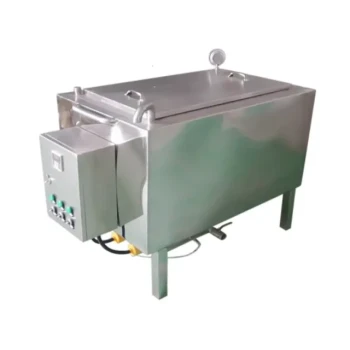
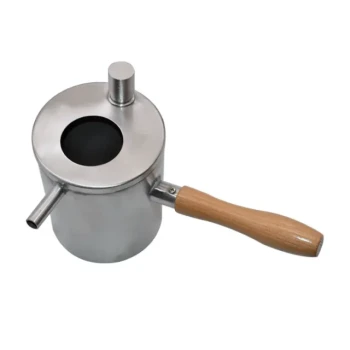
Temperature control is the single most important variable in manufacturing. A double boiler is the minimum requirement, but a specialized wax melter is preferred for commercial scales.
These devices ensure even heating, which is vital to prevent scorching the wax or altering its natural fragrance. An infrared thermometer is highly recommended to monitor these temperatures accurately without contaminating the wax.
Purification Tools
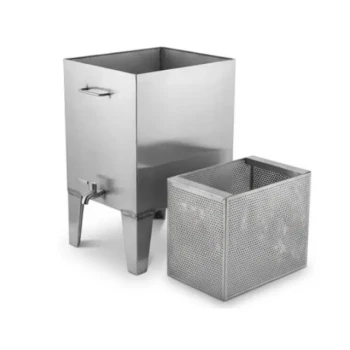
Even high-grade bulk wax can contain debris. You must have straining materials, such as nylon or polyester cloth.
Filtering the molten wax through these cloths removes particulate impurities. This step is non-negotiable; impurities left in the wax will clog the wick and cause the candle to burn poorly.
Molding and Structural Equipment
Molds and Containers
Your product line determines your hardware. Silicone or metal molds are used for pillar candles, while glass jars or aluminum tins are required for container candles.
If you are producing tapers, you will need specific dipping equipment and racks to repeatedly submerge wicks into the wax.
Precision Alignment Tools
To ensure a professional finish, you need a small level to verify that your molds are sitting perfectly flat on your work surface.
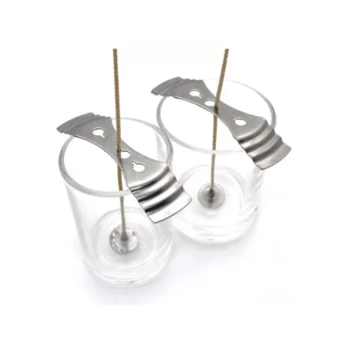
For split molds, heavy-duty rubber bands are necessary to keep the mold seams tight and prevent leaking. Finally, wick holders (metal bars or pins) are required to keep the wick centered while the wax cools and hardens.
Understanding Common Pitfalls
Mold Release Issues
Beeswax is sticky. A common commercial failure is damaging the candle during extraction. To prevent this, mold release sprays are essential equipment for any poured candle operation.
Hardness and Blending
Pure beeswax creates a very hard candle that can suffer from "tunneling" (burning down the center without melting the edges).
To mitigate this, some manufacturers blend in small amounts of softer oils, such as coconut oil or coconut butter. This improves the burn quality and scent throw, though it requires precise measurement tools.
Making the Right Choice for Your Goal
If your primary focus is High-Volume Container Candles:
- Invest heavily in a large-capacity specialized wax melter and bulk wick tabs to maximize pouring efficiency.
If your primary focus is Artisan Pillar Candles:
- Prioritize high-quality silicone molds, mold release sprays, and nylon straining cloths to ensure perfect surface details.
If your primary focus is Traditional Tapers:
- Focus your budget on dipping racks and wick centering devices to ensure straight, uniform candles.
Commercial manufacturing is not just about melting wax; it is about the precise management of heat, cleanliness, and structural geometry.
Summary Table:
| Category | Essential Equipment & Materials | Primary Function |
|---|---|---|
| Raw Materials | Bulk Beeswax, Cotton Wicks, Wick Tabs | Foundation for the candle structure and burn. |
| Melting & Monitoring | Specialized Wax Melter, Infrared Thermometer | Ensures even heating and prevents scorching. |
| Filtration | Nylon or Polyester Straining Cloths | Removes impurities to prevent wick clogging. |
| Molding & Shaping | Silicone/Metal Molds, Dipping Racks, Level | Defines the candle's final shape and dimensions. |
| Precision Tools | Wick Holders, Rubber Bands, Mold Release | Ensures centered wicks and clean extraction. |
| Additives | Essential Oils, Colorants, Coconut Oil | Enhances scent, appearance, and burn quality. |
Scaling Your Candle Manufacturing Business?
Maximize your production efficiency with high-performance equipment from HONESTBEE. As a premier partner for commercial apiaries and distributors, we provide the industrial-grade tools you need to succeed in the beeswax market.
Our value to your business includes:
- Comprehensive Wholesale Range: From specialized wax processing machinery to professional-grade molds.
- End-to-End Solutions: We supply everything from hive-making hardware to advanced honey-filling and wax-processing systems.
- Industry Expertise: We cater specifically to large-scale operations and distributors seeking reliable, high-volume consumables.
Contact HONESTBEE Today to equip your facility with the industry's most reliable beekeeping and wax-crafting machinery!
Related Products
- Beeswax Melter for Candle Making Honey Bee Wax Melter
- Electric Commercial Beeswax Melter for Factory Use
- Beeswax Machine Press Embosser Wax Foundation Mold Printer Bee Hive Equipment Making Sheet
- Professional Stainless Steel Wax Melter for Beekeeping and Crafts
- Electric Flatting and Embossing Machine with Tray for Beekeeping
People Also Ask
- What is the best way to melt beeswax? Safely Preserve Quality with Indirect Heat
- What is the best way to melt beeswax? Use a Solar Wax Melter for Simple, Pure Results
- What types of beeswax melters are available for beekeepers? Choose the Right One for Your Operation
- What safety precautions should be taken when melting beeswax? A Guide to Flammable Wax Handling
- What types of beeswax melters are available for different scales of beekeeping? Solar vs. Electric Melters Compared