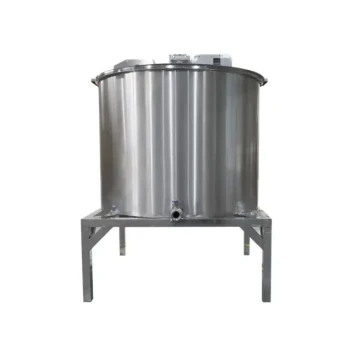
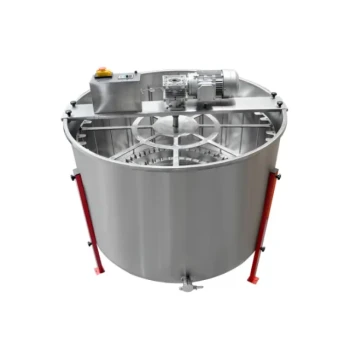
Advanced honey and beeswax processing machines serve as the technological foundation for commercial apiary operations, shifting production from manual extraction to automated industrial standards. These systems primarily perform deep filtration and dehydration to stabilize the raw product, followed by high-precision filling to package the honey into standardized containers without waste or contamination.
By transitioning from manual handling to automated processing, producers do not just increase speed; they fundamentally alter the product's marketability. These machines ensure international quality standards are met through precise moisture control and contamination prevention, unlocking high-value retail and export markets while shortening the return on investment.
Ensuring Product Stability and Purity
To move beyond subsistence beekeeping, the raw product must be refined to meet consumer expectations and safety regulations.
Deep Filtration
Raw honey often contains particulate matter that can affect texture and clarity. Advanced refining equipment utilizes deep filtration systems to remove these impurities efficiently.
This process ensures the final product is visually appealing and free of debris, which is a prerequisite for entering high-end retail markets.
Moisture Control and Dehydration
One of the most critical functions of these machines is dehydration. Excess moisture in honey can lead to fermentation and spoilage.
By strictly controlling moisture content, these machines stabilize the honey, significantly extending its shelf life and ensuring it meets the stringent standards required for international export.
Achieving Commercial Packaging Standards
Once processed, the honey must be packaged in a way that protects the brand and ensures regulatory compliance.
High-Precision Filling
Industrial-grade filling machines employ piston pumps or advanced weighing systems to dispense honey. This technology ensures that every container holds the exact labeled weight.
This consistency is vital for brand reputation and complying with international trade standards regarding weights and measures.
Closed-Loop Hygiene
Manual bottling introduces significant risks of contamination. Advanced machines operate within a closed environment, sealing the product immediately after filling.
This effectively prevents secondary contamination, ensuring high food safety standards are maintained from the tank to the bottle.
The Economics of Automation
The value of this machinery extends beyond quality control; it directly impacts the profitability of the operation.
Minimizing Material Loss
Manual handling often results in spills and overfilling, which eats into profit margins. Automated systems offer precise metering control, minimizing product overflow and waste.
This reduction in material loss is a key factor in maximizing the yield from every harvest.
Economies of Scale
By automating extraction, filtration, and filling, producers can accelerate production rates significantly. This scalability allows operations to meet large-scale market demands that manual labor cannot sustain.
While the initial investment is higher, the increased efficiency shortens the return on investment (ROI), making the business commercially viable in the long term.
Understanding the Trade-offs
While automation is necessary for commercial growth, it introduces new challenges that must be managed.
Capital Investment vs. Flexibility
Advanced machinery requires significant upfront capital. Unlike manual labor, which can be scaled up or down easily based on harvest size, machinery represents a fixed cost that requires consistent production volume to justify.
Maintenance and Technical Skill
Transitioning to automated systems shifts the labor requirement from manual handling to technical maintenance. Operators must be trained to clean, calibrate, and repair complex pneumatic and electronic components to prevent costly downtime.
Making the Right Choice for Your Operation
Investing in processing machinery is a strategic decision that depends on your current stage of growth.
- If your primary focus is Export Markets: Prioritize equipment with dehydration and closed-loop filling capabilities to meet strict international hygiene and moisture standards.
- If your primary focus is Brand Consistency: Focus on high-precision metering pumps to ensure every unit sold matches the labeled weight exactly, building consumer trust.
- If your primary focus is Profit Margins: Look for automation that emphasizes waste reduction and speed, allowing you to process higher volumes with minimal material loss.
Advanced processing machinery is the bridge that allows a beekeeping operation to cross over from a local agricultural activity to a scalable, global business.
Summary Table:
| Function | Key Benefit | Commercial Impact |
|---|---|---|
| Deep Filtration | Removes impurities & particulates | Ensures clarity and high-end market appeal |
| Dehydration | Precise moisture control | Prevents fermentation; meets export standards |
| Precision Filling | Automated weighing/metering | Eliminates product waste and ensures brand trust |
| Closed-Loop Processing | Contamination prevention | Guarantees food safety and regulatory compliance |
| Automation | High-speed scalability | Maximizes ROI and enables industrial-scale supply |
Scale Your Honey Business with HONESTBEE Professional Equipment
Transitioning to industrial standards requires more than just machines—it requires a partner who understands the complexities of commercial apiary operations. HONESTBEE specializes in providing comprehensive wholesale solutions for commercial apiaries and distributors worldwide.
From advanced honey-filling machines and hive-making equipment to essential beekeeping tools and consumables, our portfolio is designed to increase your yield and ensure international quality compliance. Whether you are expanding your retail brand or entering the export market, we provide the technical hardware and industry expertise you need to succeed.
Ready to optimize your production and maximize your ROI?
Contact HONESTBEE Today to discuss our full spectrum of beekeeping machinery and wholesale supplies.
References
- Nicholaus Musimu Kuboja, Fredy Kilima. Determinants of economic efficiency among small-scale beekeepers in Tabora and Katavi regions, Tanzania: a stochastic profit frontier approach. DOI: 10.1080/21665095.2017.1355738
This article is also based on technical information from HonestBee Knowledge Base .
Related Products
- Commercial Rotary Honey Filling Machine for Production
- 32 Frame Commercial Electric Honey Extractor for Beekeeping and Honey Production
- 40 Frame Commercial Electric Honey Extractor for Beekeeping
- Commercial 48-Frame Stainless Steel Honey Extractor
- HONESTBEE 72 Frame Industrial Electric Honey Extractor for Beekeeping
People Also Ask
- What role do commercial honey filling machines play in honey distribution? Scaling Efficiency and Quality Control
- What technical support do commercial-grade filling machines provide? Convert Honey NTFPs into Marketable Commodities
- What is the significance of specialized honey filling equipment? Scaling from Beekeeping to Commercial Success
- Why is professional honey filling machinery critical for honey production? Scale Your Apiary's Profit & Efficiency
- Why is high-capacity honey filling machinery necessary for Giant Honey Bees? Solve the Apis dorsata Volume Crisis