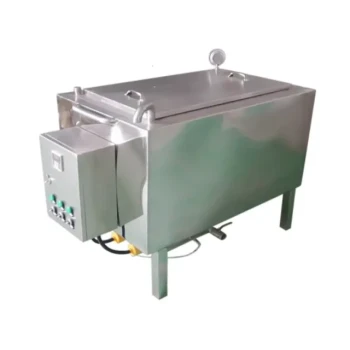
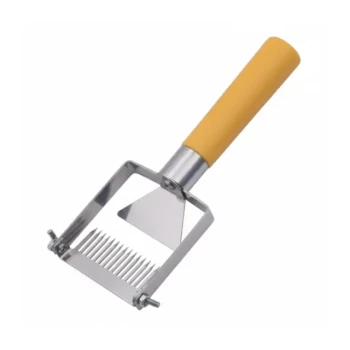
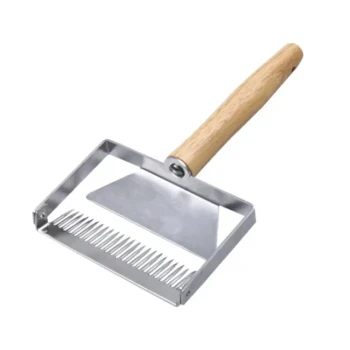
Upon removal from the frame, beeswax cappings are immediately processed to recover the significant amount of honey they still hold. The cappings are typically placed in a filter positioned over a bucket or tank, allowing gravity to separate the high-quality honey from the wax so it can be collected.
Beekeeping efficiency relies on treating cappings as a resource rather than waste. The processing workflow first prioritizes maximizing the total honey yield through gravity filtration, then shifts to refining the wax for use in apiary management, cosmetics, or artisan goods.
The Recovery and Cleaning Process
Once the initial gravity filtration is complete, the cappings undergo further processing to purify the wax. This transforms sticky, honey-laden byproducts into usable raw material.
Rinsing and Separation
After the bulk of the honey has dripped off, the wax often retains a sticky residue. To address this, the material is placed in a large container and mixed with cold water.
Stirring the mixture loosens the remaining honey. The liquid is then poured through a fine mesh sieve to separate the water and dissolved honey from the solid wax.
Achieving High Purity
A single rinse is rarely sufficient for high-quality wax. The rinsing process typically requires two to five repetitions using fresh cold water each time.
The goal is to repeat the wash cycle until the rinse water appears completely clear, indicating that the sugar and sticky residue have been fully removed.
Rendering and Melting
Once clean, the beeswax cappings are melted down. This process, known as rendering, separates the pure beeswax from any final debris or impurities.
Rendering not only prepares the wax for future use but also ensures that any final trapped honey separates out, helping the beekeeper increase their overall yield.
Applications for Recycled Cappings
Refined beeswax is a versatile material with distinct chemical and physical properties. It is highly valued in both industrial and domestic settings.
Apiary Sustainability
One of the most circular uses for recycled cappings is within the hive itself. Beekeepers often use the rendered wax to create new foundations for frames, reducing the need to purchase external supplies.
Skincare and Cosmetics
Due to its natural moisturizing properties, rendered beeswax is a key ingredient in health and beauty products.
It acts as a natural emulsifier, binding ingredients together in lip balms, body butters, lotions, and makeup.
Artisan Goods
The wax from cappings is extensively used in the production of clean-burning candles, which burn longer and produce less soot than paraffin alternatives.
It also serves as a base for furniture and leather polishes, or for creating beeswax wraps, which provide an eco-friendly alternative to plastic cling film for food storage.
Understanding the Trade-offs
While processing cappings adds value, it is a labor-intensive process with specific constraints.
Time vs. Yield
The rinsing process is time-consuming. Requiring up to five washes to achieve clear water demands significant effort relative to the amount of wax recovered.
Temperature Sensitivity
Great care must be taken during the melting phase. If the wax is heated too aggressively while honey remains, the honey can burn or degrade, ruining both the potential honey yield and discoloring the wax.
Making the Right Choice for Your Goal
The way you handle cappings should depend on whether you prioritize honey volume or wax quality.
- If your primary focus is maximizing honey yield: Prioritize a long, passive gravity filtration period over a tank to ensure every drop of honey is captured before any water is introduced.
- If your primary focus is creating cosmetic-grade wax: Commit to the full regimen of multiple cold-water rinses to ensure absolutely no sticky sugar residue remains before melting.
By systematically filtering, cleaning, and rendering cappings, you convert a sticky byproduct into two valuable harvest streams.
Summary Table:
| Stage | Action | Primary Goal |
|---|---|---|
| Filtration | Passive gravity drainage over a tank | Maximize raw honey recovery |
| Rinsing | 2-5 washes with cold water | Remove sticky sugars and residue |
| Rendering | Controlled melting and debris removal | Produce pure, cosmetic-grade beeswax |
| Application | Crafting foundations, candles, or balms | Add value to apiary byproducts |
Maximize Your Apiary’s Potential with HONESTBEE
Turning beeswax cappings into high-value products requires the right tools. At HONESTBEE, we specialize in supporting commercial apiaries and distributors with professional-grade solutions. Whether you need honey-filling machines to bottle your harvest, hive-making machinery for sustainable growth, or a full spectrum of wholesale beekeeping tools and consumables, we have you covered.
From industrial hardware to honey-themed cultural merchandise, we help you scale your operations and increase your profitability. Ready to upgrade your equipment?
Contact HONESTBEE Today for a Wholesale Quote
Related Products
- Manual Beeswax Flat Sheet Machine for Beeswax Processing
- Electric Beeswax Flat Sheet Machine with Operating Tray for Wax Processing
- Electric Commercial Beeswax Melter for Factory Use
- Beeswax Machine Press Embosser Wax Foundation Mold Printer Bee Hive Equipment Making Sheet
- Electric Flatting and Embossing Machine with Tray for Beekeeping
People Also Ask
- What is the primary function of the double-roller extrusion system? Master Precision Beeswax Foundation Production
- How do cultural merchandise processing machines contribute to the economic value chain? Boosting Apiary Profitability
- What are some practical tips for managing equipment and workspace when processing beeswax? Essential Studio Setup Tips
- How do specialized beeswax processing machines maximize the value of beekeeping by-products? Boost Your Apiary's ROI
- What role does beeswax processing equipment play in development of by-products? Turn Apiary Waste into High-Value Profit