The most widely accepted configuration for a Langstroth beehive utilizes deep supers for the lower brood chambers and either medium or shallow supers for the upper honey storage areas. This arrangement strategically divides the hive into a permanent nursery for the bees and a harvestable storage area for surplus honey.
By dedicating the largest boxes to the colony's population and using smaller, lighter boxes for honey collection, you balance the biological needs of the bees with the ergonomic limitations of the beekeeper.
Optimizing the Vertical Structure
The Brood Chamber
The foundation of the hive consists of deep supers. These boxes are placed directly above the bottom board and serve as the main living quarters for the colony.
The primary function of these deep boxes is to house the brood (eggs, larvae, and pupae). Providing this deep, uninterrupted comb space allows the queen to lay eggs efficiently and supports a large, healthy population.
The Honey Super
Stacked above the brood chambers are the honey supers, which are typically medium or shallow boxes. These are the "extras" (hence "super") where the bees store surplus honey intended for harvest.
While bees could technically store honey in deep boxes, beekeepers prefer medium or shallow supers for this purpose. This preference is largely practical; these boxes are lighter and significantly easier to lift and transport during harvest.
Essential Management Tools
The Queen Excluder
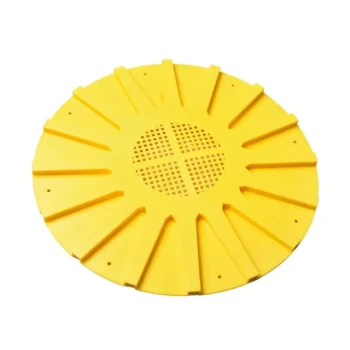
To maintain the separation between the brood nest and the honey stores, a queen excluder is often placed between the deep brood boxes and the medium/shallow honey supers.
This device allows worker bees to pass through but physically prevents the larger queen from entering the honey supers. Installing this before the queen lays eggs ensures your harvestable honey frames remain free of brood.
Base and Protection
The entire stack of supers must rest on a sturdy bottom board, which may be solid wood or screened for ventilation.
Crucially, the bottom board should sit on a hive stand rather than directly on the ground to prevent rot and pest intrusion. The top of the stack is sealed with an inner cover and a telescoping outer cover to protect the colony from the elements.
Understanding the Trade-offs
Weight vs. Efficiency
The main trade-off in hive configuration is weight versus volume. A deep super offers the most volume, but a 10-frame deep box full of honey is incredibly heavy and difficult to maneuver.
Using medium or shallow supers for honey reduces the volume of honey per box, but it keeps the weight manageable. Even a smaller 10-frame honey super can weigh over 30 lbs, making the use of deeps for honey a significant physical risk for many beekeepers.
Frame Compatibility
It is important to remember that frames correspond to specific box sizes. A deep frame will not fit in a medium box, and a medium frame is too short for a deep box.
This lack of interchangeability means you must commit to purchasing specific frame sizes for specific functions (brood vs. honey). You cannot easily swap frames between the nursery and the honey stores if your box sizes differ.
Making the Right Choice for Your Goal
To select the best configuration for your apiary, consider your physical capabilities and management style:
- If your primary focus is Ease of Management: Use medium or shallow supers for honey to minimize heavy lifting during inspections and harvest.
- If your primary focus is Colony Population: Ensure you have adequate deep supers at the bottom to provide the queen with maximum uninterrupted laying space.
Ultimately, the standard configuration of deeps for brood and shallows for honey remains the industry standard because it effectively safeguards both the colony's health and the beekeeper's back.
Summary Table:
| Component | Common Size | Primary Function |
|---|---|---|
| Brood Chamber | Deep Super | Houses the queen, eggs, and larvae (nursery). |
| Honey Super | Medium or Shallow Super | Stores surplus honey for harvesting; easier to lift. |
| Queen Excluder | Screen/Grid | Prevents the queen from laying eggs in honey supers. |
| Base & Stand | Bottom Board + Hive Stand | Provides foundation, ventilation, and pest protection. |
| Covers | Inner & Telescoping Outer | Protects the colony from weather and predators. |
Scale Your Beekeeping Operation with HONESTBEE
As a leading wholesale supplier for commercial apiaries and distributors, HONESTBEE provides the full spectrum of high-quality beekeeping equipment and consumables. From precision-engineered hive-making and honey-filling machinery to professional-grade hardware and honey-themed cultural merchandise, we empower your business to grow efficiently.
Whether you need bulk Langstroth components or specialized industry tools, our comprehensive portfolio is designed to meet the demands of large-scale operations.
Contact our wholesale experts today to discover how HONESTBEE can streamline your production and supply chain.
Related Products
- Australian Langstroth Beehive Boxes for Beekeeping Wholesales
- Heavy Duty Castellated Iron Frame Spacer for Honey Supers
- Professional Hive Top Bee Feeder for Beekeeping
- Langstroth Honey Bee Box Hive Boxes for Different Depths
- Long Langstroth Style Horizontal Top Bar Hive for Wholesale
People Also Ask
- What are the primary advantages of using standardized Langstroth boxes? Scale Your Commercial Beekeeping Operation
- What are the differences between the three standard depths of Langstroth boxes? Choose the Best Size for Your Apiary
- What role do standardized Langstroth boxes play in commercial apiary management and honey bee research? | HONESTBEE Guide
- How many beehive boxes are needed when starting a new hive? A Guide to Proper Hive Setup
- What are the disadvantages of using a combination of deep and medium boxes? Avoid Costly Incompatibility Issues