The primary potential concern associated with filtering honey is the accidental removal of natural pollen. While the goal of filtration is often to remove visible impurities, aggressive or improper filtering techniques can strip away these microscopic grains, which are essential for verifying the honey's floral source and geographical origin.
A significant trade-off exists in honey processing: as you increase filtration to improve clarity, you increase the risk of removing pollen, which many consumers and beekeepers view as a vital component of authentic honey.
The Significance of Pollen in Honey
A Marker of Authenticity
Pollen serves as a natural fingerprint for honey. It allows experts and consumers to identify exactly where the honey was produced and what flowers the bees visited.
Removing this pollen makes it difficult to trace the honey's origin. This is a major point of concern for those who value transparency in their food sources.
Consumer Expectations
Many consumers specifically seek out honey that retains its natural composition. They often equate the presence of pollen with "raw" or minimally processed products.
When filtration removes pollen, the product may be perceived as less natural or "over-processed," regardless of the producer's intent.
The Purpose of Filtration
Removing Unwanted Debris
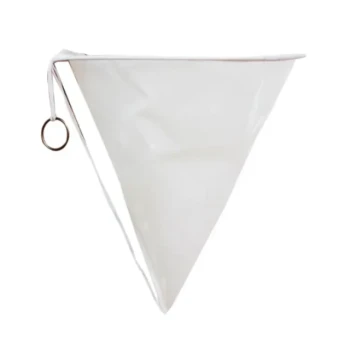
Despite the concern regarding pollen, filtration serves a practical purpose. Beekeepers use filtering machines to remove physical impurities, such as wax particles or bee parts, from the final product.
Preserving Enzymes and Flavor
It is possible to filter honey without destroying its character. When done correctly, such as with a machine designed for raw, unpasteurized honey, the process removes macro-impurities while preserving natural enzymes and flavors.
Understanding the Trade-offs
Clarity vs. Completeness
The central trade-off is between visual clarity and biological completeness. Finer filters produce a clearer, more shelf-stable liquid but are more likely to trap pollen. Coarser filters retain pollen but may leave the honey looking cloudy.
Equipment Maintenance and Performance
The state of the filtration equipment also impacts the quality of the output. As noted in technical guidelines, residue build-up can compromise the system.
To ensure the equipment functions efficiently without contaminating the honey, components must be washed with warm water and mild detergent. Regular inspection of filters for wear is critical to maintaining the balance between cleaning the honey and preserving its integrity.
Making the Right Choice for Your Goal
Whether you are producing honey or purchasing it, understanding your priority is key.
- If your primary focus is authenticity and traceability: Choose honey that has undergone minimal straining rather than high-pressure filtration to ensure pollen remains intact.
- If your primary focus is visual clarity and purity: Utilize filtration systems designed to remove physical debris, but ensure regular maintenance to prevent residue build-up that could affect quality.
Ultimately, the best approach respects the balance between removing impurities and retaining the microscopic elements that make honey unique.
Summary Table:
| Aspect | Minimal Straining | Intensive Filtration |
|---|---|---|
| Primary Goal | Retain pollen & authenticity | Maximum clarity & shelf stability |
| Visual Result | May appear cloudy | Clear, translucent liquid |
| Pollen Content | High (Traceable origin) | Low to None (Harder to verify) |
| Impurity Removal | Large debris only | Fine particles & air bubbles |
| Consumer Value | Preferred by "Raw" seekers | Preferred for commercial aesthetics |
Elevate Your Honey Production with HONESTBEE
At HONESTBEE, we understand the delicate balance between achieving a crystal-clear product and preserving the natural integrity of your honey. As a dedicated partner to commercial apiaries and distributors, we provide professional-grade beekeeping tools and advanced machinery—from precise filtration systems to honey-filling machines—designed to maintain natural enzymes and floral markers.
Whether you are scaling your commercial operations or looking for reliable wholesale consumables and honey-themed merchandise, our expertise helps you deliver the quality your customers demand. Contact us today to discover how our comprehensive equipment solutions can optimize your honey processing and grow your business.
Related Products
- Electric Double Wall Honey Filtering Machine Purifier Equipment for Honey Processing Plant
- Professional Stainless Steel Honey Filtering Machine with Water Bath Heating for Beekeeping
- 0.5T Capacity Honey Dehumidifier Dryer with Vacuum Heating and Thickening Filtering Machine
- Professional Stainless Steel Honey Filter with Support Handle
- Honey Concentrating and Filtering Dehumidifier Machine 2T Capacity for Honey
People Also Ask
- What is the process of filtering honey? A Guide to Clean, Pure, and Market-Ready Honey
- What types of equipment are used in honey filtering? Build an Efficient System for Pure, Marketable Honey
- What is the overall importance of using the right equipment in honey filtering? Boost Quality & Marketability
- What are the benefits of drying honey filtering equipment after use? Protect Your Honey Quality & Equipment Investment
- How should honey filtering equipment be properly maintained? Extend Equipment Life & Protect Honey Purity