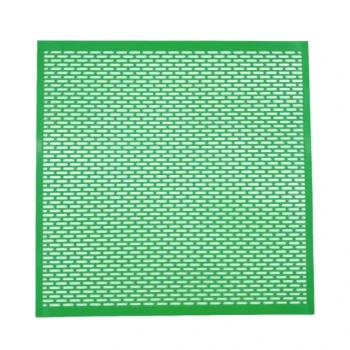
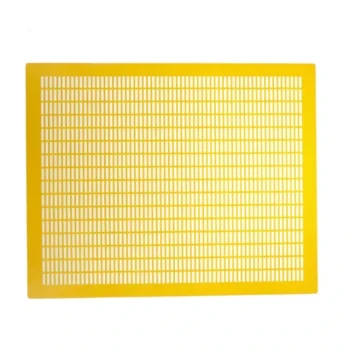
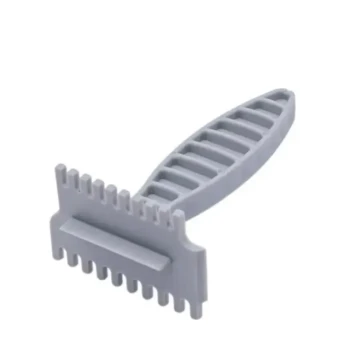
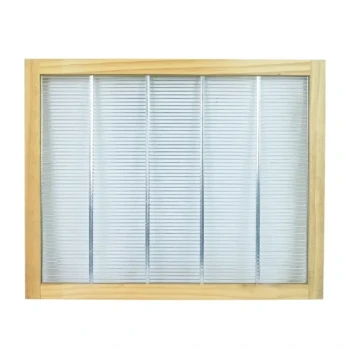
A queen excluder is a precision grid screen designed to restrict the queen bee's movement within specific areas of the hive. It features openings specifically sized to allow smaller worker bees to pass through freely while physically blocking the larger queen. These devices are typically manufactured using plastic or metal.
By leveraging the size difference between bee castes, the excluder acts as a filter. It is essential for beekeepers who wish to keep the queen—and her eggs—confined to the brood chamber, ensuring the upper honey supers remain exclusively for honey storage.
How the Excluder Functions
The Physiology of Exclusion
The device works by exploiting the physical dimorphism between the queen bee and the worker bees.
While worker bees have smaller thoraxes, the queen bee (and male drones) possess a significantly larger thorax. The excluder creates a physical barrier that the queen simply cannot fit through.
Precise Dimensions
To function correctly, the spacing of the grid must be exact.
The gaps are typically manufactured to be between 4.1 and 4.4 millimeters (approximately 0.163 inches). If the gaps are too small, workers cannot pass; if they are too large, the queen may slip through.
Material Composition and Types
Metal Excluders
Metal is a traditional and highly durable choice for excluders.
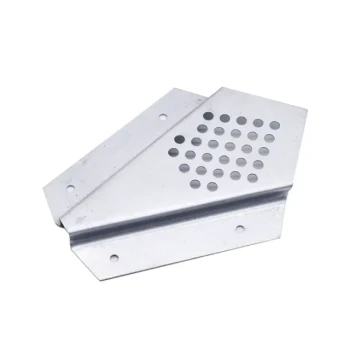
These are often constructed as a wire grid, sometimes set into a wood frame for stability. Alternatively, they can be made from a perforated zinc sheet. Metal excluders generally offer greater longevity and can withstand years of scraping and cleaning.
Plastic Excluders
Plastic excluders are a common, lightweight alternative to metal.
They are molded into a single sheet with the necessary grid spacing. While often more affordable, they may be less rigid than metal options and can be more difficult to clean without damaging the grid bars.
Other Material Variations
While less common, other materials are occasionally used for specific setups.
Some beekeepers use #5 hardware cloth, which naturally has the correct mesh size to filter queens. Others may prefer wood-bound options that combine a metal grid with a wooden rim to maintain proper "bee space" between hive boxes.
Primary Uses in Hive Management
Protecting the Honey Harvest
The most frequent use of a queen excluder is placing it between the brood box (bottom) and the honey supers (top).
This ensures that the queen lays eggs only in the lower boxes. Consequently, the honey harvested from the upper supers is clean and free of brood (larvae and pupae).
Advanced Management Techniques
Beyond simple honey production, excluders are vital for complex hive manipulations.
They are used in queen rearing to isolate the queen from queen cells, in the production of royal jelly, and in establishing two-queen hive systems to boost colony population.
Understanding the Trade-offs
The "Honey Barrier" Effect
Beekeepers sometimes refer to excluders as "honey excluders."
Occasionally, worker bees may be reluctant to squeeze through the grid, effectively reducing the amount of nectar stored in the supers. This is more common with plastic excluders or sheets with sharp edges that may feel restrictive to the bees.
Drone Entrapment
Because drones (males) are also larger than workers, they cannot pass through the excluder.
If an excluder is placed above a box containing drones, they will be trapped and unable to exit the hive to mate or defecate. This requires the beekeeper to provide an upper entrance or ensure drones are not trapped above the screen.
Making the Right Choice for Your Goal
Selecting the right material depends on your specific operational needs and budget.
- If your primary focus is durability and longevity: Choose a metal wire grid excluder, as it withstands cleaning and resists warping over many seasons.
- If your primary focus is budget or weight: Choose a plastic excluder, which is inexpensive and easy to handle, though it requires care during cleaning.
- If your primary focus is honey purity: Ensure you use an excluder of any material to guarantee your extraction frames remain 100% free of brood.
The correct use of a queen excluder simplifies harvest time and allows for precise management of the colony's growth and production zones.
Summary Table:
| Material Type | Durability | Main Benefit | Cleaning Ease |
|---|---|---|---|
| Metal (Wire/Zinc) | High | Long-lasting & precise | Easy to scrape |
| Plastic | Moderate | Lightweight & affordable | Requires gentle care |
| Wood-Bound | High | Maintains proper bee space | Durable frame |
Maximize Your Honey Yield with HONESTBEE Professional Equipment
At HONESTBEE, we specialize in empowering commercial apiaries and distributors with high-performance beekeeping solutions. Whether you need precision-engineered metal or plastic queen excluders, automated honey-filling machines, or complete hive-making machinery, our comprehensive wholesale catalog has you covered.
From essential consumables to specialized hardware and honey-themed merchandise, we provide the tools you need to scale your operations and ensure a brood-free harvest. Contact us today to discuss your bulk equipment needs and see how our industry expertise can drive your business success.
Related Products
- High Performance Plastic Queen Excluder for Beekeeping and Apiary Management
- Professional Plastic Queen Excluder for Modern Beekeeping
- Lightweight Durable Plastic Queen Excluder Scraper for Beekeeping
- Metal Queen Bee Excluder for Beekeeping
- Premium Wood Framed Metal Wire Queen Bee Excluder
People Also Ask
- What are the characteristics of a plastic queen excluder? Key Benefits for Cost-Effective Beekeeping
- What are the operational and cost advantages of using plastic queen excluders over metal or wire excluders in commercial hive management? Discover how they reduce labor, prevent wing damage, and lower total costs.
- What types of queen excluders are available for beekeepers? Choose the Right Tool for Your Hive
- Why are standardized hive frames and queen excluders essential for maintaining honey purity and quality? Scale Your Purity
- Do plastic queen excluders work? A Cost-Effective Solution for Modern Apiaries