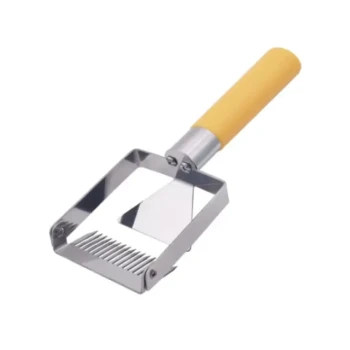
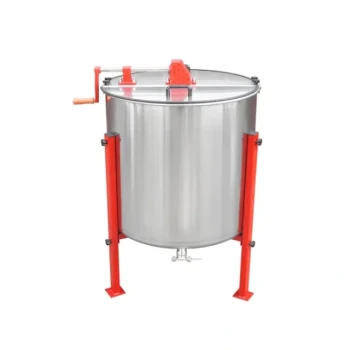
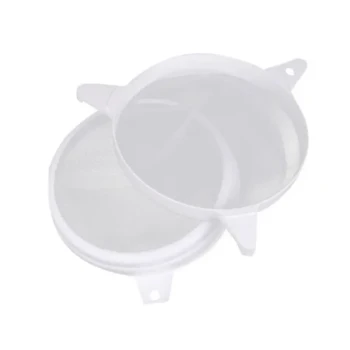
The 'crush & strain' method is a manual technique for harvesting honey that involves physically breaking down the honeycomb to release its contents. Instead of using centrifugal force to spin honey out of the frames, you cut the entire comb away from the frame, mash it thoroughly—often using a simple tool like a potato masher—and pour the mixture into a double strainer. This allows the liquid honey to drip through into a collection bucket while the wax particles are filtered out.
Core Takeaway This method offers a low-barrier entry to harvesting because it requires minimal, inexpensive equipment compared to mechanical extraction. However, it relies heavily on ambient temperature and necessitates the destruction of the wax comb, requiring bees to rebuild it for future batches.
The Mechanics of the Process
Step 1: Removal
The process begins by taking the frame from the hive and cutting the honeycomb away from the frame structure. Unlike spin extraction, which preserves the wax structure, this method requires the complete removal of the comb.
Step 2: Mashing
Once the comb is removed, it must be mechanically broken down. The most common tool for this is a standard potato masher. The goal is to crush the wax cells thoroughly to release the honey stored inside.
Step 3: Filtration
The mashed mixture of wax and honey is then poured into a double strainer positioned over a collection bucket. Gravity pulls the heavy liquid honey through the mesh, separating it from the crushed wax.
Critical Success Factors
The Role of Temperature
The efficiency of the 'crush & strain' method is heavily dependent on warmth. Higher temperatures reduce the viscosity of the honey, allowing it to flow quickly through the strainers.
Dealing with Cold Conditions
In colder weather, this gravity-fed process slows down significantly. While you can introduce a heater to warm the setup, this adds complexity. It is generally recommended to perform this method when ambient temperatures are naturally high.
Understanding the Trade-offs
Equipment Cost vs. Labor
The primary advantage of this method is the low cost of equipment; you avoid the expense of a centrifugal extractor. The trade-off is that the process is labor-intensive and slower than mechanical spinning.
Comb Preservation
Because the comb is cut and crushed, the structural integrity of the wax is destroyed. This means the bee colony must expend energy and resources to rebuild the comb on the frames before they can store honey again.
Colony Preparation
Before you can crush and strain, you must clear the bees from the harvest area. Utilizing a honey bee escape board is an effective, non-harmful way to clear the colony from the frames prior to starting the manual harvest.
Making the Right Choice for Your Harvest
To decide if this method suits your apiary, consider your resources and long-term goals:
- If your primary focus is low startup costs: This is the ideal method, as it requires only basic kitchen tools and a bucket, avoiding the investment in a spin extractor.
- If your primary focus is production speed and volume: You should consider spin extraction, as 'crush & strain' is time-consuming and forces bees to rebuild wax, delaying the next harvest.
The 'crush & strain' technique is the definitive choice for the small-scale beekeeper who values simplicity over speed.
Summary Table:
| Feature | Crush & Strain Method | Centrifugal Extraction |
|---|---|---|
| Equipment Cost | Low (Basic tools & buckets) | High (Mechanical extractor) |
| Comb Preservation | Destroyed (Must be rebuilt) | Preserved (Reusable) |
| Labor Intensity | High (Manual mashing/straining) | Moderate (Spinning) |
| Ideal Scale | Hobbyist / Small-scale | Commercial / Large-scale |
| Processing Speed | Slow (Gravity-dependent) | Fast (Centrifugal force) |
Scale Your Apiary Operations with HONESTBEE
Whether you are a hobbyist moving toward a commercial scale or a large-scale distributor, HONESTBEE provides the professional-grade tools you need to optimize your harvest. From specialized honey-filling machines and hive-making machinery to a full spectrum of beekeeping tools and consumables, we offer the wholesale solutions required to grow your business.
Ready to upgrade your equipment or stock your distribution center? Contact us today to discover how our comprehensive portfolio of hardware and honey-themed merchandise can drive your success.
Related Products
- Stainless Steel Double Layer Honey Strainer Sieve Filters
- Stainless Steel Pivoting Honey Uncapping Fork with Plastic Handle
- All-Stainless Steel Pivoting Honey Uncapping Fork for Beekeeping
- 6 Frame Manual Stainless Steel Honey Extractor Beekeeping Equipment
- Professional Stainless Steel Pry-Bar Hive Tool
People Also Ask
- What are some typical mesh size combinations found in double sieve honey strainers? Expert Guide to Honey Filtration
- How is a double-layer honey filter used for monitoring Varroa mite infestation? Achieve Precise Pest Control Data
- How do double-layer honey filters and white blotting paper function together in Varroa mite detection? Expert Guide
- What is the function of honey sieves, strainers, and filters in processing? Master the 3 Stages of Honey Purity
- What mesh sizes are commonly used in double sieve honey strainers? Achieve Clean, Raw Honey Efficiently