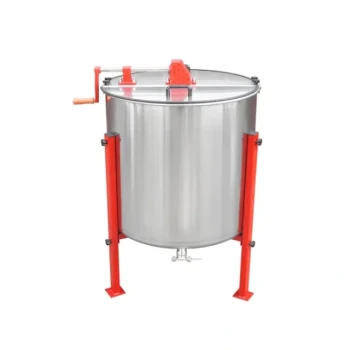
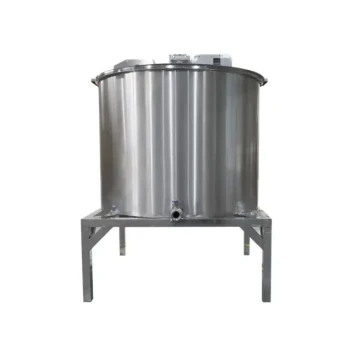
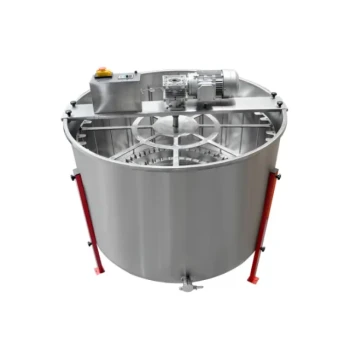
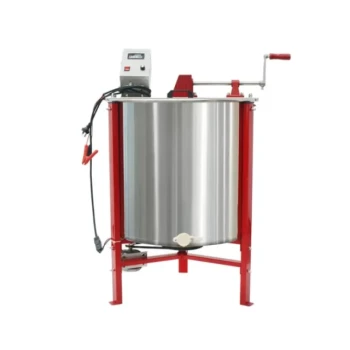
The economic significance of industrial-grade honey extraction equipment lies in its ability to transform beekeeping from a variable manual craft into a scalable, high-yield industrial operation. By utilizing mechanized centrifugal processes, this equipment ensures the highly efficient separation of honey and wax. This capability is essential for generating revenue from byproducts to offset the significant management costs associated with complex migratory pollination cycles.
Core Takeaway Industrial extraction is not merely about speed; it is a mechanism for yield multiplication and market stabilization. By preserving honeycomb integrity for reuse and ensuring product standardization, this equipment lowers the biological cost of production for the bees while simultaneously meeting the strict entry requirements for lucrative global markets.
Maximizing Yield Through Biological Efficiency
The Mechanism of Centrifugal Separation
Modern industrial equipment relies on centrifugal force to separate honey from the comb. Unlike manual pressing or crushing, this physical principle allows for rapid extraction without destroying the honeycomb structure.
Reducing Biological Overhead
The preservation of the honeycomb is a critical economic factor. When combs are damaged during harvest, bees must consume significant energy and resources to rebuild them.
Increasing Annual Yield per Hive
By returning intact combs to the hive, industrial extraction allows bees to focus their energy immediately on nectar collection rather than construction. This shift significantly increases the total annual honey yield per hive, directly boosting the operation's overall production efficiency.
Standardization and Market Competitiveness
Meeting Bulk Product Specifications
In the context of migratory beekeeping, volume is key. Standardized processing ensures that honey meets uniform specifications required for bulk agricultural products. This consistency is the primary driver for enhancing market competitiveness.
Hygiene and Contamination Control
Industrial machinery reduces human contact with the product, overcoming the high loss rates and secondary contamination risks associated with manual processing. Stainless steel and food-grade components prevent environmental impurities from compromising the honey.
Accessing High-End Markets
To enter high-end retail markets or engage in long-distance export, honey must meet rigorous international hygiene and traceability standards. Mechanized filtration and hermetic sealing provide the controlled environment necessary to satisfy these strict regulatory requirements.
Revenue Diversification and Cost Management
Monetizing Byproducts
The primary reference highlights that efficient extraction is a primary method for generating revenue from byproducts, specifically wax. In a migratory model with high logistical costs, revenue from efficiently separated wax is crucial for offsetting management expenses.
Streamlining the Migratory Cycle
Migratory beekeeping requires moving colonies rapidly between flowering regions to maximize nectar collection. Industrial extraction shortens the harvesting window, allowing beekeepers to maintain the tight schedules necessary to catch successive blooms.
Understanding the Trade-offs
Infrastructure Requirements
While efficient, this equipment requires a controlled physical space designed to accommodate large-scale machinery. Beekeepers must invest in facilities that meet food safety standards, which increases initial capital expenditure.
Technical Complexity
Transitioning to industrial extraction introduces a layer of technical complexity regarding maintenance and operation. The shift moves the operation away from pure agriculture toward manufacturing, requiring new skills to maintain filtration systems and centrifugal motors.
Making the Right Choice for Your Goal
To maximize the economic impact of this equipment, align your investment with your specific operational focus:
- If your primary focus is Volume and Yield: Prioritize centrifugal equipment that maximizes comb preservation to reduce bee energy expenditure and increase subsequent harvests.
- If your primary focus is Premium Retail/Export: Focus on equipment with advanced filtration and hermetic sealing capabilities to ensure the hygiene and traceability required for high-end market entry.
Industrial-grade extraction is the bridge that allows migratory beekeepers to convert biological effort into a standardized, commercially viable commodity.
Summary Table:
| Economic Driver | Key Impact on Operation | Long-term Value |
|---|---|---|
| Biological Efficiency | Preserves honeycomb structure for immediate reuse | Higher annual yield per hive; lower bee energy waste |
| Market Standardization | Meets bulk specs and international hygiene standards | Access to lucrative export markets and premium retail |
| Byproduct Monetization | Efficiently separates high-value beeswax | Offsets high logistical costs of migratory cycles |
| Process Speed | Reduces the harvesting window | Allows for tighter migration schedules to catch blooms |
Maximize Your Apiary’s Profitability with HONESTBEE
At HONESTBEE, we specialize in empowering commercial apiaries and distributors with the tools needed to dominate the global honey market. From high-capacity centrifugal honey-filling machines to advanced hive-making machinery, our comprehensive wholesale portfolio is designed to transform your operation into a high-yield industrial powerhouse.
Whether you are looking to reduce biological overhead, monetize beeswax byproducts, or ensure food-grade traceability for export, our expert team provides the specialized hardware and industry consumables required for success.
Ready to scale your production and enhance your market competitiveness?
Contact HONESTBEE Today to explore our full spectrum of beekeeping machinery and cultural merchandise.
References
- Gloria DeGrandi‐Hoffman, Nick Ziolkowski. The Economics of Honey Bee (Hymenoptera: Apidae) Management and Overwintering Strategies for Colonies Used to Pollinate Almonds. DOI: 10.1093/jee/toz213
This article is also based on technical information from HonestBee Knowledge Base .
Related Products
- HONESTBEE 72 Frame Industrial Electric Honey Extractor for Beekeeping
- 6 Frame Manual Stainless Steel Honey Extractor Beekeeping Equipment
- HONESTBEE 2 Frame Manual Acrylic Honey Extractor Beekeeping Equipment
- 32 Frame Commercial Electric Honey Extractor for Beekeeping and Honey Production
- Commercial 48-Frame Stainless Steel Honey Extractor
People Also Ask
- What is the importance of balancing honeycomb frames within a honey extractor? Ensure Stability and Protect Machinery
- How is honey separated from the frames after they are uncapped? Efficient Extraction Methods for High Yields
- What are the main benefits of using a honey extractor? Maximize Yields and Protect Your Honeycomb
- What are the recommended methods for removing honey from the honeycomb? Top Extraction Techniques for Maximum Efficiency
- How do manual honey extractors compare to electric honey extractors? Choosing the Right Tool for Your Apiary Growth