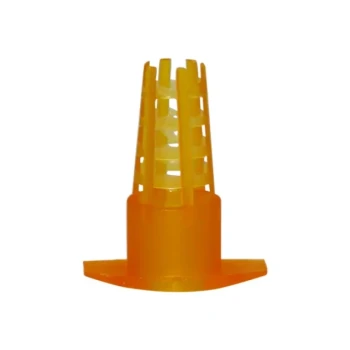
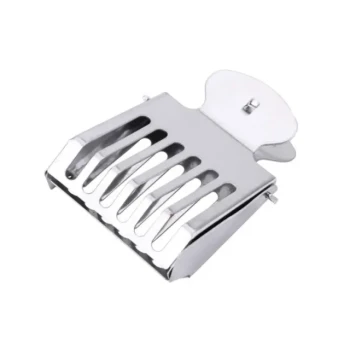
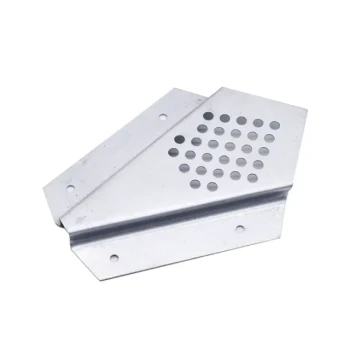
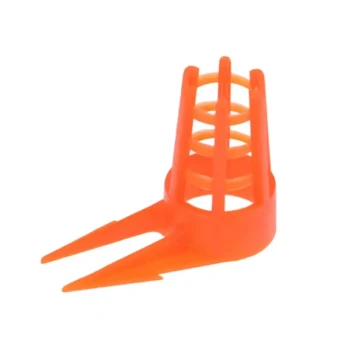
The primary effect of a queen excluder is a reduction in the queen bee's egg-laying productivity. By physically confining the queen to a specific section of the hive, the excluder limits the total surface area available for her to lay eggs. This restriction prevents the queen from utilizing the full hive capacity, resulting in a smaller volume of brood and a lower overall colony population compared to hives where the queen roams freely.
Key Insight: While queen excluders are effective for hive management, they function as a bottleneck on biological potential. Observations show that queens allowed to roam without an excluder utilize significantly more space, producing an average of five additional frames of brood compared to confined queens.
The Mechanics of Restriction
How the Barrier Works
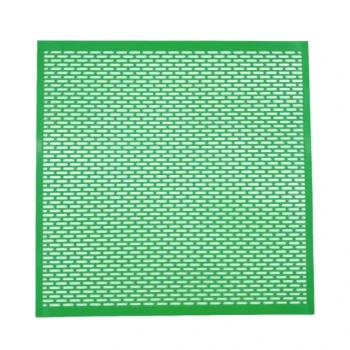
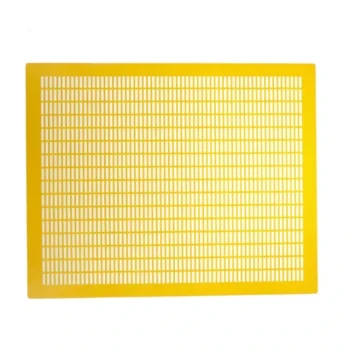
A queen excluder is a mechanical screen with precise gaps, typically measuring between 4.1 and 4.4 millimeters.
Exploiting Size Differences
These gaps capitalize on the physical differences between bee castes. The queen’s thorax is larger than that of a worker bee, meaning she cannot physically pass through the barrier while workers move freely to attend to the colony.
The Consequence of Confinement
By preventing the queen from entering honey supers or other hive bodies, her "office space" is artificially capped. She can only lay eggs in the frames available within the brood chamber, regardless of her biological capacity to lay more.
Analyzing the Productivity Gap
Evidence of Reduced Output
When a queen is not restricted by an excluder, she maximizes the hive's available resources for reproduction.
The "Five Frame" Difference
Data indicates a significant disparity in brood production. Hives managed without excluders have been observed to contain an average of five more frames of brood than those utilizing excluders.
Impact on Colony Population
This reduction in brood frames directly translates to a smaller workforce. Since the queen is the sole reproductive engine of the colony, limiting her range suppresses the hive's total population growth.
Understanding the Trade-offs
Honey Purity vs. Population Growth
The primary trade-off is between ease of harvest and colony size. Using an excluder ensures the honey supers remain free of eggs and developing larvae, keeping the honey "clean," but this comes at the cost of maximum bee production.
Management Efficiency
Excluders offer significant operational benefits despite the drop in productivity. They narrow the search area for the queen, making inspections, requeening, and finding eggs significantly faster and less invasive.
Scientific Precision
For researchers or breeders, the excluder is essential for controlled data. It allows for precise measurement of egg-laying within specific timeframes (e.g., 24 hours) on specific combs, which is impossible if the queen is roaming freely.
Making the Right Choice for Your Goal
Whether you should use a queen excluder depends on whether you prioritize maximum population or ease of management.
- If your primary focus is rapid colony expansion: Remove the queen excluder to give the queen unrestricted access to all frames, maximizing egg-laying and population growth.
- If your primary focus is honey harvesting: Use a queen excluder to keep brood out of honey supers, accepting a slight reduction in overall colony population for cleaner extraction.
- If your primary focus is finding the queen quickly: Utilize the excluder temporarily to confine the queen to a single box, drastically reducing the time required for inspections or requeening.
By understanding that the excluder is a tool of restriction, you can choose when to apply it to control the balance between reproduction and resource storage.
Summary Table:
| Factor | With Queen Excluder | Without Queen Excluder |
|---|---|---|
| Queen Mobility | Restricted to brood chamber | Unrestricted access to all hive bodies |
| Brood Volume | Lower (capped by available frames) | Higher (typically ~5 more frames of brood) |
| Honey Purity | High (supers remain brood-free) | Risk of brood mixed with honey |
| Colony Population | Smaller, controlled workforce | Maximum population potential |
| Management Speed | Faster (easier to locate queen) | Slower (queen can be anywhere) |
Scale Your Apiary Success with HONESTBEE
Maximizing colony productivity requires the right tools for the job. Whether you are a commercial apiary aiming for record-breaking honey yields or a distributor looking to supply high-quality gear, HONESTBEE is your trusted partner.
We provide a comprehensive wholesale range designed to enhance your efficiency, including:
- Precision Beekeeping Tools: High-quality queen excluders and hive hardware.
- Advanced Machinery: State-of-the-art hive-making and honey-filling machines.
- Industry Consumables: Everything you need to keep your colonies thriving.
Ready to elevate your beekeeping operations with professional-grade equipment? Contact us today to discuss your wholesale needs and let us help you build a more productive hive.
Related Products
- High Performance Plastic Queen Excluder for Beekeeping and Apiary Management
- Professional Plastic Queen Excluder for Modern Beekeeping
- Lightweight Durable Plastic Queen Excluder Scraper for Beekeeping
- Metal Queen Bee Excluder for Beekeeping
- Premium Wood Framed Metal Wire Queen Bee Excluder
People Also Ask
- What are the characteristics of a plastic queen excluder? Key Benefits for Cost-Effective Beekeeping
- What are the operational and cost advantages of using plastic queen excluders over metal or wire excluders in commercial hive management? Discover how they reduce labor, prevent wing damage, and lower total costs.
- What types of queen excluders are available for beekeepers? Choose the Right Tool for Your Hive
- Why are standardized hive frames and queen excluders essential for maintaining honey purity and quality? Scale Your Purity
- Do plastic queen excluders work? A Cost-Effective Solution for Modern Apiaries