A practical planning figure is 14 kg (30 lb) of surplus honey per hive per harvest season. Strong colonies in favorable weather and forage conditions may produce 27–36 kg (60–80 lb) or more, while broader estimates for total annual or raw production can reach 40–70 lb per hive. For equipment planning, use the average yield for baseline demand and the strong-colony range as a peak-capacity requirement.
Honey processing equipment should not be sized only around average production. A commercial operation needs enough extraction, filtration, heating, and filling capacity to handle concentrated harvest peaks from strong colonies without creating bottlenecks.
What Honey Yield per Hive Really Means
Average surplus yield
A healthy colony typically provides approximately 14 kg (30 lb) of surplus honey per season under ordinary conditions.
This is the most useful baseline for conservative planning, particularly when forage availability, weather, or colony strength is inconsistent.
Strong-colony yield
Well-managed colonies with abundant forage and favorable weather can produce 27–36 kg (60–80 lb) or more of surplus honey per season.
This range is more important for commercial equipment sizing because a strong harvest can create short periods of significantly higher processing demand.
Why published figures vary
Yield estimates may refer to different measurements, including surplus honey available for harvest, total raw honey, or annual production under favorable conditions.
Local floral resources, rainfall, temperature, colony health, hive management, and the length of the flowering season can all materially change output. For that reason, equipment decisions should use the apiary’s own historical yield data whenever possible.
Converting Hive Counts into Processing Demand
Use a yield range, not a single number
A simple planning model is:
Expected honey volume = Number of productive hives × Yield per hive
For example, an apiary with 100 hives may produce:
- Baseline volume: 100 × 14 kg = 1,400 kg
- Strong-season volume: 100 × 27–36 kg = 2,700–3,600 kg
This difference shows why equipment designed only for average production may be undersized during a strong flowering season.
Measure both annual volume and peak volume
Total seasonal volume determines the required processing capacity across the year. Peak daily or weekly volume determines whether the extractor, tanks, filters, and filling equipment can keep up during harvest.
An operation can have manageable annual production but still require high-capacity machinery if most honey arrives within a short harvest window.
Track yield by apiary and hive group
Yield per hive is also a management indicator. Low output may signal problems with colony strength, hive frames, foundation, forage access, or maintenance.
Recording production by hive group helps operators forecast future equipment requirements using actual performance rather than generic industry averages.
Scaling the Honey Processing Line
Extraction capacity
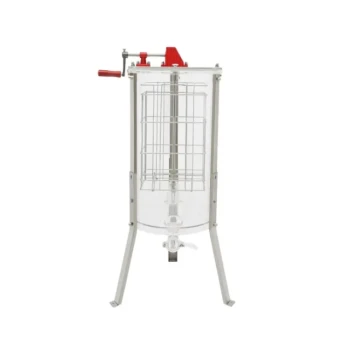
The honey extractor should be selected according to the number of frames processed per cycle, cycle time, and the expected peak harvest volume.
For smaller operations, a scalable extractor may be sufficient. Larger apiaries should consider higher-capacity or commercial extraction systems that reduce loading, unloading, and processing delays.
Heating and holding tanks
Heating or warming tanks support flow and handling, particularly when honey viscosity slows transfer and filtration.
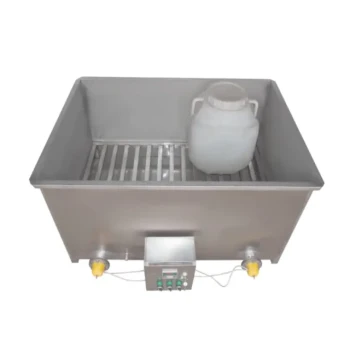
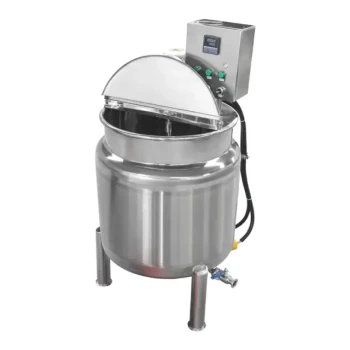
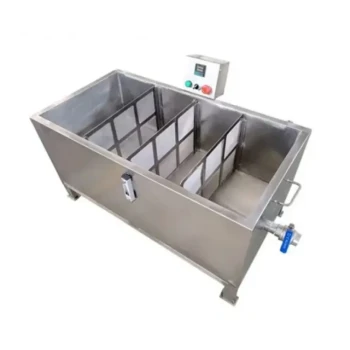
Tank capacity should align with extractor output so that extracted honey does not accumulate at the transfer stage. Multiple tanks or modular vessels can provide greater flexibility as hive numbers increase.
Filtration and settling
Filtration equipment must handle the maximum expected flow from the extractor without restricting production.
Undersized filtration can force operators to pause extraction, while properly matched systems help maintain consistent throughput and support sanitation requirements.
Filling and packaging
Bottling capacity should reflect both honey volume and packaging format. Automated filling equipment is especially valuable for commercial operators because it provides consistent dosage, improved hygiene, and lower manual labor requirements.
For distributors and resellers, modular filling systems can be a practical way to serve customers with different production scales, from growing apiaries to larger commercial operations.
A Practical Equipment-Scaling Model
Small or developing apiaries
Operations with limited hive counts and approximately 14 kg per hive of expected surplus production can often begin with equipment sized for moderate batch processing.
The priority is flexible machinery that can be expanded or upgraded as colony numbers and customer demand increase.
Medium-scale apiaries
Once cumulative output reaches several tonnes per season, equipment integration becomes more important than individual machine capacity.
The extractor, warming tanks, filtration system, and filling machine should be matched as a coordinated line so that one slow stage does not limit the entire operation.
Commercial and wholesale operations
Large apiaries and processing centers should size machinery around the strong-season scenario of 27–36 kg or more per hive, particularly in regions with concentrated flowering periods.
Commercial systems should emphasize high throughput, sanitation, reliable material handling, and rapid order fulfillment for packaged honey. This is also where automated filling and more advanced processing equipment provide the greatest operational value.
Understanding the Trade-offs
Sizing only for average yield
Equipment sized strictly for 14 kg per hive may appear cost-efficient, but it can become a constraint when strong colonies produce 60–80 lb or more.
The result may be overtime, delayed processing, extended storage, and reduced flexibility during the most valuable part of the harvest season.
Oversizing the entire line
Buying maximum-capacity equipment for a small or uncertain apiary can tie up capital and leave machinery underutilized.
A better approach is often to use scalable equipment, allowing extraction, tank, and filling capacity to expand as hive numbers and verified production increase.
Focusing on the extractor alone
The extractor is only one part of the process. A high-capacity extractor paired with undersized filtration, heating, holding, or filling equipment simply moves the bottleneck downstream.
Capacity planning must therefore consider the complete processing path from uncapping and extraction through filtration, storage, and final packaging.
Treating yield estimates as guaranteed
The 14 kg average and 27–36 kg strong-season range are planning references, not guarantees.
Local forage, weather, colony condition, and management practices should be reviewed before committing to major machinery investments.
Making the Right Choice for Your Goal
Use production records, hive counts, and peak harvest timing to select equipment that supports both current needs and future expansion.
- If your primary focus is conservative investment: Size the initial system around approximately 14 kg of surplus honey per productive hive, while allowing room for modular expansion.
- If your primary focus is strong-season readiness: Plan extraction, filtration, tank, and filling capacity around 27–36 kg or more per hive to avoid peak-period bottlenecks.
- If your primary focus is commercial processing: Match the full equipment line to cumulative hive volume and concentrated harvest timing rather than sizing the extractor alone.
- If your primary focus is distribution or resale: Offer a product portfolio spanning flexible small-batch systems and automated commercial lines to serve different apiary sizes.
- If your primary focus is operational efficiency: Prioritize integrated, hygienic equipment with consistent filling, rapid processing, and dependable service support.
The most reliable equipment strategy is to plan for average production financially but engineer for peak production operationally.
Summary Table:
| Yield Scenario | Yield per Hive (kg) | Typical Volume for 100 Hives (kg) | Equipment Planning Implication |
|---|---|---|---|
| Baseline (Average) | 14 kg | 1,400 kg | Size for baseline demand, use modular equipment |
| Strong Colony (Peak) | 27–36 kg | 2,700–3,600 kg | Size extraction, filtration, and filling for peak capacity to avoid bottlenecks |
| Broad Annual Range | 40–70 lb (18–32 kg) | Varies | Use local historical data for precise planning |
Ready to scale your honey processing equipment to match your yield? At HONESTBEE, we offer a full spectrum of beekeeping tools, machinery, and equipment—from extractors and warming tanks to automated filling lines. Our one-stop sourcing, rapid response, and dedicated service ensure you get the right solution for your apiary size, whether you're a growing operation or a large commercial producer. For distributors and resellers, we provide OEM/ODM support, certifications, and reliable supply to help you meet market demand. Contact us today to optimize your honey processing line and maximize your harvest potential!
Related Products
- Electric Double Wall Honey Filtering Machine Purifier Equipment for Honey Processing Plant
- 0.5T Capacity Honey Dehumidifier Dryer with Vacuum Heating and Thickening Filtering Machine
- Heavy Duty Stainless Steel Honey Processing Machine Decrystallizing Tank
- Double Wall Honey Heating Stirring Homogenizer Mixing Machine with Various Capacity
- Economy Honey Homogenizer Mixer and Melting Machine for Beekeeping
People Also Ask
- What is the process of filtering honey? A Guide to Clean, Pure, and Market-Ready Honey
- What types of equipment are used in honey filtering? Build an Efficient System for Pure, Marketable Honey
- What is the overall importance of using the right equipment in honey filtering? Boost Quality & Marketability
- What role do professional honey harvesting and filtering equipment play in meeting honey market quality standards? Boost ROI
- What steps are involved in maintaining honey filtering equipment? A Guide to Protecting Your Honey Quality