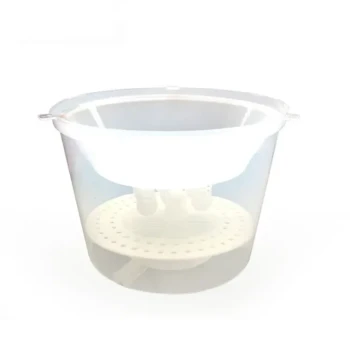
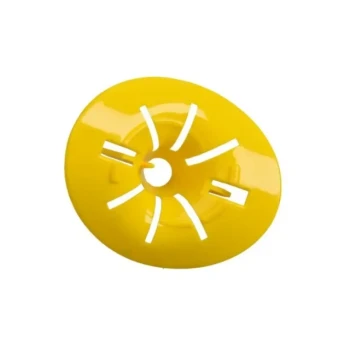
A pollen trap functions as a mechanical interception device installed at the very entrance of a beehive. Its primary mechanism forces returning forager bees to squeeze through a grid with specifically sized openings—often star-shaped—which physically scrapes pollen pellets (bee bread) from their hind legs into a secure collection tray below.
The Core Insight By converting the hive entrance into a passive filtration system, the pollen trap allows researchers to quantitatively measure foraging intensity and local plant diversity without opening the hive. It is the essential hardware for obtaining high-purity biological samples while maintaining the structural integrity of the colony.
The Mechanical Principle
The Interception Grid
The heart of the device is a perforated plate or grid featuring specific pore sizes. These openings are calibrated to be just large enough for a worker bee to pass through, but too narrow for the pollen loads attached to their hind legs.
Passive Dislodgement
As the bee navigates the grid to enter the hive, the walls of the pores—specifically designs like star-shaped holes—act as a scraper. This mechanical friction dislodges the pollen pellets without requiring manual handling by the researcher.
Automated Sample Collection
Once dislodged, gravity takes over. The pellets fall through a secondary screen into a collection tray or drawer at the bottom of the unit. This separates the biological sample from the active bees, preserving the "raw material purity" for analysis.
Critical Research Applications
Quantifying Foraging Intensity
The trap serves as a direct metric for colony productivity. By weighing the collected pollen over set time intervals, researchers can quantitatively analyze the colony foraging intensity, providing hard data on how active the hive is regarding resource gathering.
Monitoring Floral Diversity
Because the pollen is collected before it is stored and processed inside the hive, it acts as a snapshot of the surrounding environment. Researchers use these samples to monitor the diversity of pollen source plants, effectively mapping the local flora and flowering dynamics through the bees' activity.
Nutritional and Taxonomic Analysis
The trap provides large-scale, standardized samples. This high-purity collection is critical for subsequent laboratory work, such as taxonomic studies to identify specific plant species or nutritional analysis to evaluate the protein content available to the bees.
Understanding the Trade-offs
Potential for Colony Stress
While designed to function without causing "physical harm," forcing bees through a restrictive grid changes their entry behavior. Poorly designed or permanently installed traps can physically fatigue the bees or damage their wings over time.
Nutritional Deprivation
The most significant operational risk is nutritional imbalance. If a trap is 100% efficient and left on too long, it deprives the colony of the protein (pollen) required to rear brood. In research settings, traps are often used intermittently to balance data collection with colony health.
Making the Right Choice for Your Goal
To maximize the utility of a pollen trap in your research, align your usage schedule with your specific data requirements:
- If your primary focus is Ecological Surveying: Use the trap intermittently (e.g., 24 hours once a week) to capture a representative sample of flowering dynamics without stressing the colony.
- If your primary focus is Nutritional Analysis: Ensure the grid pore size is calibrated strictly to minimize debris, ensuring high raw material purity for chemical evaluation.
- If your primary focus is Colony Activity: Use the total mass of trapped pollen as a proxy to quantitatively analyze foraging intensity relative to weather or environmental variables.
The pollen trap is not just a collector; it is a bio-monitoring gateway that reveals the invisible relationship between the colony and its botanical environment.
Summary Table:
| Feature | Function in Research | Key Benefit |
|---|---|---|
| Interception Grid | Mechanically scrapes pollen from worker bees | High-purity biological samples |
| Collection Tray | Automated sample storage below the hive | Minimal researcher-bee interaction |
| Weight Metrics | Quantifies total daily foraging mass | Accurate data on colony intensity |
| Floral Mapping | Snapshot of current botanical resources | Real-time plant diversity analysis |
Elevate Your Apiary Research with HONESTBEE
Are you looking to scale your honey bee research or commercial operations? HONESTBEE specializes in providing professional-grade beekeeping tools, from precision pollen traps to advanced honey-filling machines. We cater specifically to commercial apiaries and global distributors, offering a comprehensive wholesale portfolio of machinery, essential consumables, and specialized hardware.
Why partner with HONESTBEE?
- Comprehensive Supply: Access everything from hive-making machinery to honey-themed cultural merchandise.
- Industry Expertise: We understand the technical requirements of large-scale honey production and biological monitoring.
- Scalable Solutions: Bulk offerings designed to grow your distribution network or apiary efficiency.
Contact us today to explore our full wholesale catalog!
References
- Oleksandr Mishchenko, Dmytro Volodymyrovych Kryvoruchko. THE BEHAVIOR OF BEES IN BEE POLLEN COLLECTING. DOI: 10.46913/beekeepingjournal.2022.8.07
This article is also based on technical information from HonestBee Knowledge Base .
Related Products
- Removable Plastic Pollen Trap With Ventilated Tray for Bees Pollen Collector
- 30 cm Plastic Entrance Hole Bee Pollen Trap and Collector
- Plastic Bee Pollen Trap Strips Comb Catcher Collector
- High-Efficiency Diamond Maze Bee Escape for Clearing Supers
- Professional Bucket Style Wasp and Moth Pheromone Trap
People Also Ask
- What are the design principles and advantages of pollen traps in the collection of bee pollen? Boost Your Apiary Yield
- What is the function of professional pollen traps in evaluating honey plants? Quantifying Pollination and Crop Potential
- What functions do pollen traps serve for bee bread production? Optimize Your Raw Material Collection
- What maintenance and pest prevention measures should be taken for pollen traps? Protect Your Hive and Harvest Quality
- How does the use of pollen traps in honeybee hives enhance crop fertilization? Boost Your Yield Through Induced Activity