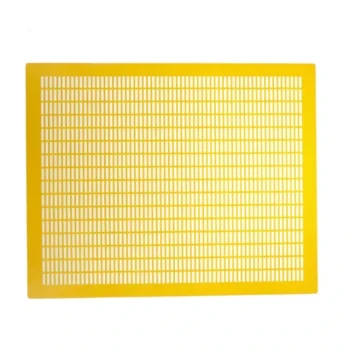
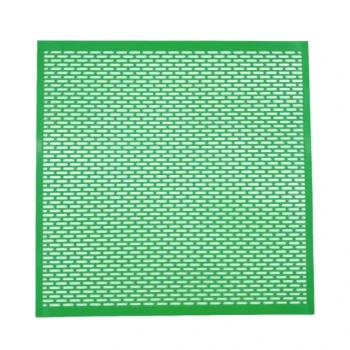
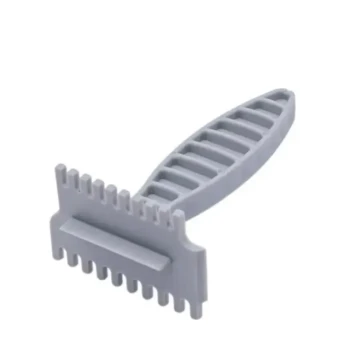
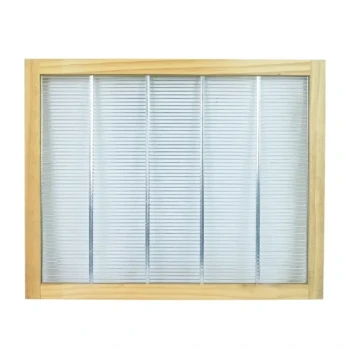
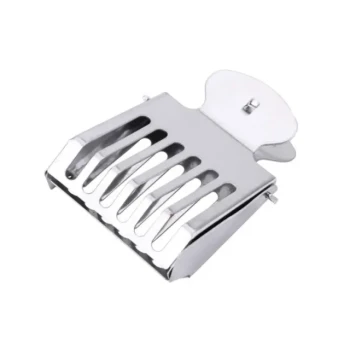
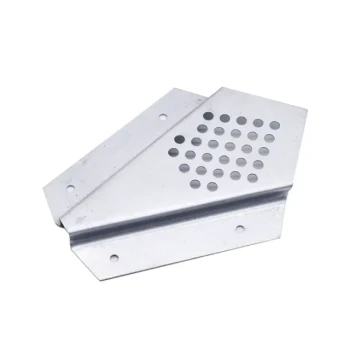
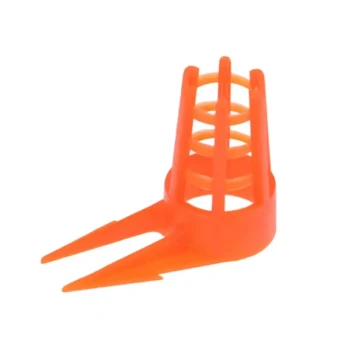
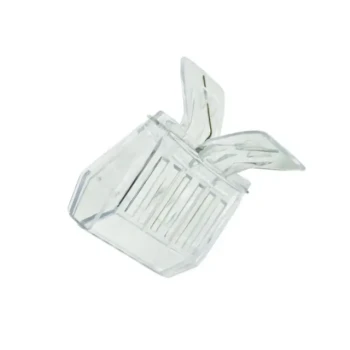
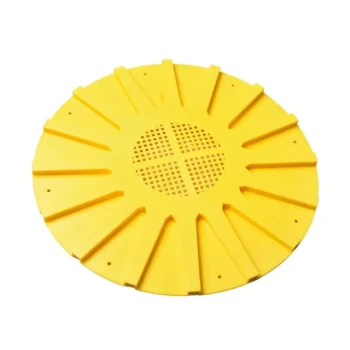
A queen excluder functions as a precise mechanical filter designed to restrict the movement of the queen bee to specific areas of the hive. Its primary application is placing a barrier between the brood chamber and the honey supers, effectively preventing the queen from laying eggs in the honey stores. Additionally, when fitted to the hive lid or entrance, it can serve to prevent the queen from leaving the hive entirely.
The queen excluder leverages the physical size difference between castes to segregate the hive, ensuring that honey harvesting remains separate from brood rearing while simplifying overall colony management.
The Mechanics of Exclusion
Exploiting Size Differences
The excluder operates on a simple biological principle: the physical size difference between bee castes. The thorax of a queen bee is significantly larger than that of a worker bee.
The Critical Dimensions
The device features a screen or grid with gaps manufactured to precise dimensions, typically between 4.1 and 4.4 millimeters.
These openings are large enough for the smaller worker bees to pass through freely to store nectar. However, they are too narrow for the queen (and the larger male drones), effectively confining her to the designated brood chamber.
Operational Benefits
Ensuring Honey Purity
The most common reason for using an excluder is to keep the honey harvest "clean." By confining the queen to the lower boxes, you ensure she cannot lay eggs in the upper honey frames.
This simplifies extraction significantly. You do not have to worry about filtering out larvae or eggs when harvesting your honey crop.
Enhancing Wax Quality
Brood rearing naturally darkens and dirties beeswax due to the cocoons left behind by hatching bees.
By excluding the queen from the supers, the wax in the honey frames remains light-colored and pure. This often results in a higher market value for the wax and comb.
Streamlining Inspections
Locating a queen in a large, multi-box hive can be time-consuming.
An excluder drastically reduces the search area. Because you know the queen is confined to the brood chamber, you do not need to waste time sifting through honey supers during inspections or requeening procedures.
Pest and Colony Management
Using an excluder can indirectly assist with pest control. Wax moths are attracted to the protein in leftover brood cocoons.
By keeping the honey supers free of brood, you make those frames less attractive to wax moths. Furthermore, restricting the brood nest helps regulate colony size and can assist in managing the temperament of aggressive strains.
Specialized Application: Flight Restriction
Securing the Queen
While usually placed between boxes, the primary reference highlights that a queen excluder can also be fitted to the hive lid or entrance.
In this configuration, the device prevents the queen from leaving the hive during flight. This is particularly useful for preventing a newly hived swarm from absconding or leaving the designated equipment.
Understanding the Trade-offs
Impact on Drones
It is important to note that the size restriction applies to drones (male bees) as well as the queen.
Drones are larger than workers and cannot pass through the excluder. If an excluder is placed incorrectly or if drones hatch above the excluder without an upper exit, they will be trapped in the honey supers.
Making the Right Choice for Your Goal
Whether you use a queen excluder depends on your specific objective for the apiary.
- If your primary focus is clean honey production: Use an excluder between the brood box and supers to prevent brood contamination and ensure light-colored wax.
- If your primary focus is efficiency during inspections: Utilize the excluder to confine the queen to the bottom box, eliminating the need to search the entire stack.
- If your primary focus is swarm retention: Fit the excluder to the hive lid or entrance to physically prevent the queen from flying away or absconding.
By mechanically separating the queen from the harvest, you gain control over the internal structure and resource allocation of your hive.
Summary Table:
| Feature | Function | Main Benefit |
|---|---|---|
| Mechanical Filter | Restricts queen movement via 4.1-4.4mm gaps | Prevents egg-laying in honey supers |
| Brood Segregation | Keeps larvae out of honey frames | Ensures clean honey & light-colored wax |
| Space Management | Confines queen to the brood chamber | Reduces inspection time & simplifies requeening |
| Flight Restriction | Prevents queen from exiting the hive | Controls absconding & secures new swarms |
| Pest Control | Limits brood-rearing proteins in supers | Reduces attraction of wax moths to honey frames |
Scale Your Commercial Apiary with HONESTBEE
Maximize your honey yield and operational efficiency with professional-grade equipment from HONESTBEE. As a premier wholesale partner for commercial apiaries and distributors, we provide the full spectrum of tools needed to succeed, including:
- Precision Queen Excluders and essential hive hardware.
- Advanced Machinery such as high-capacity honey-filling and hive-making machines.
- Consumables & Merchandise to support every stage of honey production and branding.
Whether you are stocking up on industry essentials or upgrading your processing line, our team is ready to deliver high-quality solutions tailored to your scale. Contact HONESTBEE today to discuss your wholesale needs!
Related Products
- Professional Plastic Queen Excluder for Modern Beekeeping
- High Performance Plastic Queen Excluder for Beekeeping and Apiary Management
- Lightweight Durable Plastic Queen Excluder Scraper for Beekeeping
- Metal Queen Bee Excluder for Beekeeping
- Premium Wood Framed Metal Wire Queen Bee Excluder
People Also Ask
- What types of queen excluders are available for beekeepers? Choose the Right Tool for Your Hive
- Why are standardized hive frames and queen excluders essential for maintaining honey purity and quality? Scale Your Purity
- What is the function of the queen excluder in the brood break induction process? Optimize Your Varroa Mite Control
- What is a queen excluder and what is its primary function? Master Hive Management for Pure Honey Production
- What is the function of a queen excluder in honey production? Essential Tools for High-Purity Honey Harvesting