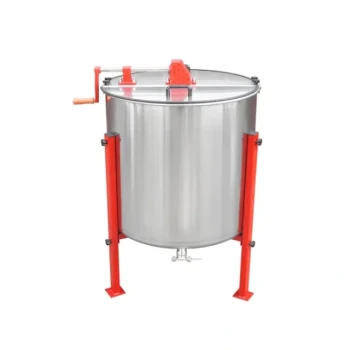
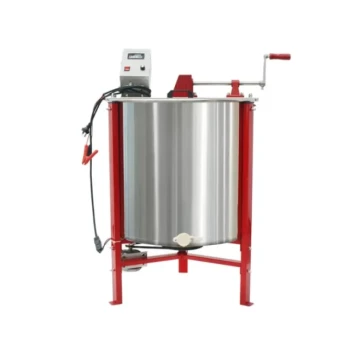
A Tangential Honey Extractor functions as a specialized centrifuge designed to separate liquid honey from the comb without destroying the wax frame. By positioning honeycomb frames tangentially—facing the inner wall of the drum—and rotating them at high speed, the device generates sufficient centrifugal force to expel the honey. This process forces the liquid out of uncapped cells against the container's wall, where it drains to the bottom for collection.
By replacing manual pressing with rotational force, this extractor maximizes honey recovery rates while preserving the delicate beeswax structure, allowing the comb to be reused by the colony.
The Mechanics of Extraction
Tangential Positioning
Unlike other designs, this extractor requires frames to be placed tangentially inside the container. This means the face of the honeycomb is positioned flat against the direction of the centrifugal pull, rather than radiating outward.
The Role of Centrifugal Force
The core mechanism is high-speed rotation. This movement generates centrifugal force that physically pulls the honey out of the cells. It acts as the primary energy source for separation, replacing gravity or crushing methods.
Separation and Collection
Once expelled from the comb, the honey strikes the inner walls of the extractor. It then flows down the sides to the bottom of the drum. This design allows for the efficient processing of large batches of honey in a controlled container.
Why This Method Matters
Preserving the Honeycomb
The most critical advantage of this system is the preservation of the beeswax structure. Manual pressing destroys the comb, but the tangential extractor leaves the frame intact. This allows beekeepers to return the drawn comb to the hive, saving the bees the energy required to rebuild it.
Enhancing Purity and Hygiene
Centrifugal extraction occurs in a closed, hygienic environment, significantly reducing the risk of secondary contamination. It ensures the final product is free from the excessive wax residue often found in pressed honey. This results in a product with superior clarity and sensory quality.
Protecting Nutritional Integrity
This mechanical process relies on physical force rather than heat. Consequently, it protects heat-sensitive components like proteins and enzymes. This preserves the original quality and nutritional value of the raw honey.
Operational Considerations and Trade-offs
The Requirement for Uncapping
The extractor cannot function on sealed frames. Before placement in the drum, a specialized honey harvest knife must be used to slice off the cappings. This precision cut is essential to open the cells without damaging the internal structure of the hive frame.
Energy Dependence
While efficient, these systems rely on rotation source. Industrial models require high-frequency electrical rotation for maximum recovery, which may be a constraint in remote areas. Conversely, manual centrifuges offer a low-energy alternative for operations lacking infrastructure, though they require more physical labor.
Making the Right Choice for Your Goal
To determine if this extraction method aligns with your objectives, consider the following:
- If your primary focus is Production Efficiency: You will benefit from the high recovery rates and the ability to process large batches quickly compared to manual draining.
- If your primary focus is Colony Health: This method is superior because it preserves the drawn comb, allowing the colony to focus on reproduction and honey production rather than rebuilding wax.
The Tangential Honey Extractor transforms the harvest from a destructive chore into a sustainable cycle, ensuring high-quality honey while protecting the hive's most valuable assets.
Summary Table:
| Feature | Description | Key Benefit |
|---|---|---|
| Mechanism | Tangential Centrifugal Force | High-efficiency honey separation from cells |
| Comb Impact | Non-destructive extraction | Frames can be reused immediately by the colony |
| Honey Quality | Cold mechanical process | Preserves enzymes, proteins, and flavor profile |
| Purity | Closed drum environment | Minimizes wax residue and secondary contamination |
| Requirement | Manual/Automatic Uncapping | Ensures cells are open for maximum flow |
Scale Your Honey Production with HONESTBEE
Are you looking to enhance the efficiency and sustainability of your honey harvest? HONESTBEE provides professional-grade beekeeping solutions tailored for commercial apiaries and distributors. From high-capacity industrial honey-filling machines to durable tangential extractors, we supply the full spectrum of equipment and consumables needed to run a successful operation.
Why partner with us?
- Comprehensive Wholesale Catalog: Access everything from specialized hive-making machinery to honey-themed cultural merchandise.
- Sustainable Efficiency: Our tools are designed to maximize your output while protecting the health and productivity of your colonies.
- Expert Support: We understand the unique needs of large-scale beekeeping operations and global distributors.
Ready to upgrade your infrastructure? Contact us today to discuss our wholesale offerings and discover how HONESTBEE can drive your business forward.
References
- M. A. Al-Rajhi, A. El-Sheikha. DEVELOPMENT AND EVALUATION OF A TANGENTIAL HONEY - EXTRACTOR. DOI: 10.21608/mjae.2014.98404
This article is also based on technical information from HonestBee Knowledge Base .
Related Products
- Electric 4 Frame Tangential Honey Extractor
- Commercial Electric 12 Frame Honey Extractor Spinner Motorized Honey Extractor
- Stainless Steel Manual 8 Frame Radial Honey Extractor Machine for Beehives
- Manual Hand Crank 4 Frame Honey Extractor Centrifuge for Beekeeping
- 6 Frame Manual Stainless Steel Honey Extractor Beekeeping Equipment
People Also Ask
- What are the characteristics of electric honey extractors? Boost Your Apiary Efficiency with Automated Technology
- What are the disadvantages of using an electric honey extractor? Weighing Cost, Power, and Comb Safety
- What are the advantages of an electric honey extractor? Boost Efficiency and Scale Your Honey Production
- What are the advantages of electric honey extractors? Boost Harvest Speed & Efficiency
- What are the technical advantages of electric honey extractors? Maximize Yield and Protect Your Bee Colony