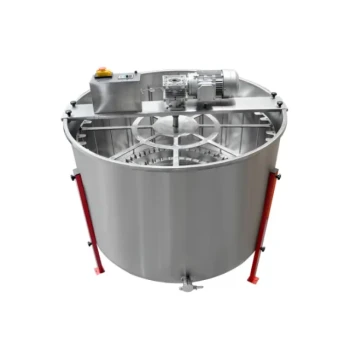
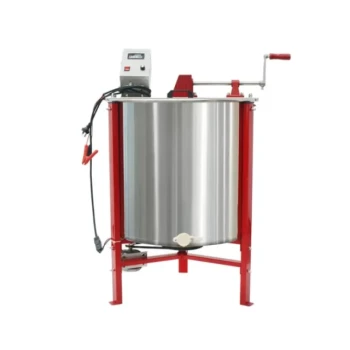
The critical technical difference is the preservation of the honeycomb structure. Traditional harvesting typically involves crushing or melting the comb to release honey, forcing the colony to expend vast amounts of energy secreting new wax to rebuild the nest. In contrast, centrifugal extraction uses high-speed rotation to separate the honey while leaving the wax cells intact, allowing the colony to immediately reuse the structure.
By decoupling honey harvest from comb destruction, centrifugal extraction shifts the colony's energy budget. Instead of consuming resources to synthesize wax, bees can redirect that metabolic energy toward foraging and honey production, significantly increasing overall yield.
The Mechanics of Extraction
Traditional Destructive Methods
Traditional techniques generally require the physical destruction of the hive's internal architecture. To access the honey, the comb is crushed, squeezed, or melted.
This process results in the total loss of the wax storage vessels. Once the harvest is complete, the bees are left with an empty void that must be reconstructed from scratch before any new food storage or brood rearing can occur.
The Centrifugal Solution
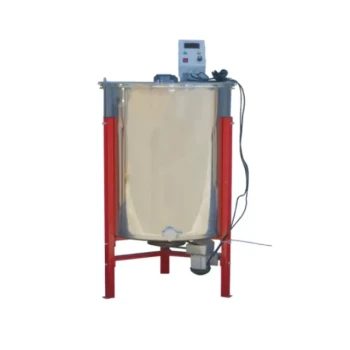
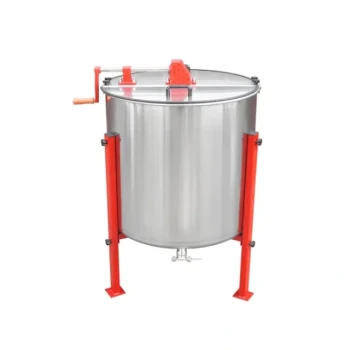
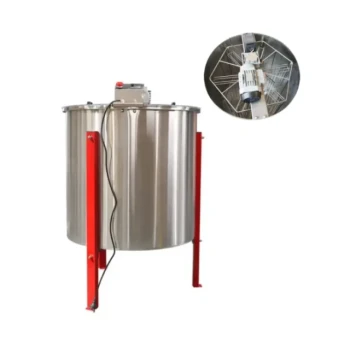
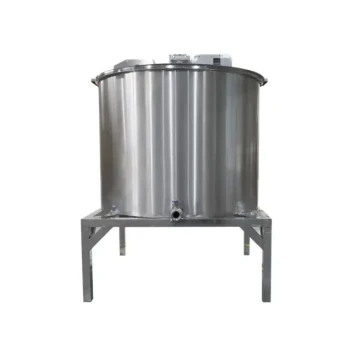
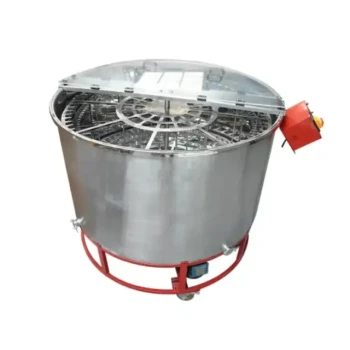
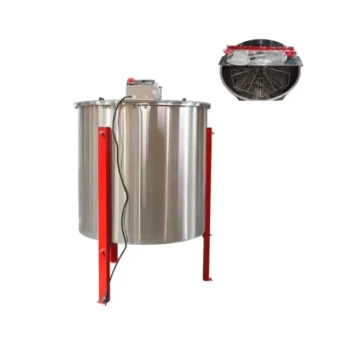
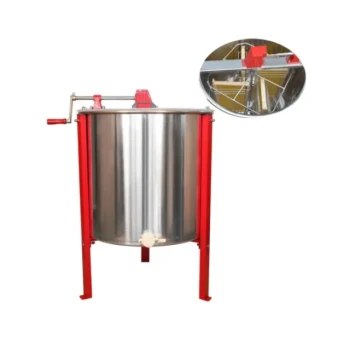
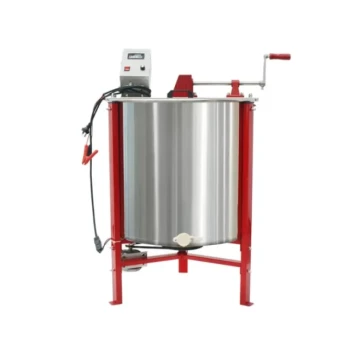
Centrifugal extractors utilize rotational force to evacuate honey from the cells. Standardized, movable frames are placed in a drum and spun at high speeds.
This physical force pulls the honey out of the comb and onto the extractor walls, where it drains away. Crucially, the wax structure remains chemically and structurally unaltered during this process.
The Biological Energy Equation
The Metabolic Cost of Wax
The production of beeswax is one of the most energetically expensive activities for a bee colony. Worker bees must consume large quantities of honey to stimulate their wax glands to secrete small scales of wax.
When a harvester destroys the comb, they are effectively destroying the colony's invested capital. The bees are forced into a recovery phase, consuming their own stores to fund the rebuilding process rather than expanding them.
Redirection of Labor
When intact combs are returned to the hive after centrifugal extraction, the colony bypasses the construction phase entirely. The immediate availability of storage space allows worker bees to transition directly back to nectar collection.
This efficiency shortens the interval between production cycles. During peak flowering seasons, this results in a faster turnover rate and a substantially higher total annual yield.
Understanding the Trade-offs
Infrastructure Requirements
While centrifugal extraction is biologically superior for the bees, it imposes specific technical demands on the beekeeper. It requires the use of movable frame hives (such as Langstroth hives) rather than fixed-comb baskets or skeps.
Equipment Complexity
There is a higher barrier to entry regarding capital and maintenance. Unlike crush-and-strain methods, which require minimal tools, centrifugal extraction relies on specialized machinery that must be cleaned, maintained, and powered (either manually or electrically).
Making the Right Choice for Your Goal
Centrifugal extraction is essentially a method of maximizing biological efficiency through engineering.
- If your primary focus is Maximum Honey Yield: Prioritize centrifugal extractors to eliminate the "wax tax" on your bees, allowing them to focus entirely on nectar collection.
- If your primary focus is Wax Production: Traditional or destructive methods may be preferable, as they force the rapid secretion of new wax, which can be harvested alongside the honey.
The choice ultimately depends on whether you view the honeycomb as a disposable packaging material or a permanent, reusable asset for the colony.
Summary Table:
| Feature | Centrifugal Extraction | Traditional Harvesting |
|---|---|---|
| Comb Impact | Intact & Reusable | Destroyed (Crushed/Melted) |
| Colony Energy | Redirected to Foraging | Consumed for Wax Synthesis |
| Honey Yield | Maximized / High Efficiency | Lower due to Rebuilding Phase |
| Equipment | Specialized Machinery | Minimal / Manual Tools |
| Primary Output | High-Volume Honey | Honey & High Wax Volume |
Boost Your Apiary Efficiency with HONESTBEE
Maximize your honey yield and minimize colony downtime by upgrading to professional-grade extraction technology. HONESTBEE specializes in supporting commercial apiaries and distributors with a comprehensive range of high-performance beekeeping tools and machinery.
From advanced centrifugal honey extractors and honey-filling machines to durable hive-making equipment and essential industry consumables, we provide the hardware you need to eliminate the 'wax tax' and optimize production. Whether you are scaling a commercial operation or supplying the industry, our wholesale solutions are designed for your success.
Ready to elevate your beekeeping output? Contact us today to explore our full equipment catalog!
References
- Tessema Aynalem Abejew, Zeleke Mekuriaw Zeleke. Study on the Beekeeping Situation, the Level of Beekeepers Knowledge Concerning Local Honeybee Subspecies, Their Productive Characteristics, and Behavior in Eastern Amhara Region, Ethiopia. DOI: 10.1155/2017/6354250
This article is also based on technical information from HonestBee Knowledge Base .
Related Products
- electric honey extractor honey centrifuge 3 frame honey extractor stainless steel honey frame extractor
- Manual Hand Crank 4 Frame Honey Extractor Centrifuge for Beekeeping
- Professional 4 Frame Self Reversing Electric Honey Extractor for Beekeeping
- Stainless Steel Manual 8 Frame Radial Honey Extractor Machine for Beehives
- Electric 4 Frame Tangential Honey Extractor
People Also Ask
- What are the characteristics of electric honey extractors? Boost Your Apiary Efficiency with Automated Technology
- What are the disadvantages of using an electric honey extractor? Weighing Cost, Power, and Comb Safety
- What are the advantages of an electric honey extractor? Boost Efficiency and Scale Your Honey Production
- What are the technical advantages of electric honey extractors? Maximize Yield and Protect Your Bee Colony
- How does an electric honey extractor affect the quality of honey? Preserve Flavor & Purity with Precision Extraction