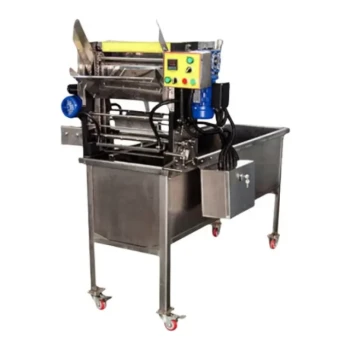
Automatic honey filling machines serve as the critical technological bridge between raw agricultural supply and the commercial retail market. Their primary function is to dispense honey from bulk containers into consumer packaging using high-precision flow control, ensuring consistent volumes while drastically reducing the risk of secondary contamination.
By enabling standardized metering and sterile packaging, these machines transform honey from a basic raw material into a high-value, branded commodity that meets strict international food safety regulations.
The Mechanics of Standardization
Precision Metering and Flow Control
At the technical core of these machines is high-precision flow control. Whether utilizing piston-style or weighing-based systems, the equipment ensures that the dispensing of honey is uniform and consistent.
Compliance with Label Specifications
This precision ensures that the net content of every jar strictly complies with label specifications. By maintaining exact volumes, producers significantly reduce raw material loss that often occurs with less accurate methods.
Ensuring Product Integrity and Safety
Prevention of Secondary Contamination
The primary reference highlights that these machines are essential for hygienic dispensing. By automating the process, producers eliminate the manual handling that introduces bacteria or foreign particles, known as secondary contamination.
Extending Shelf Life
Advanced filling systems utilize no-drip nozzles and automatic capping to create a clean, airtight seal. This prevents issues such as fermentation during storage and transport, thereby extending the product's viable shelf life.
Commercial Viability and Branding
Meeting Retail Requirements
To enter formal retail channels, such as supermarkets or international markets, products must meet high standards for standardized packaging. Automatic filling machines provide the professional aesthetic and consistency required to secure shelf space.
Capturing Economic Value
This equipment allows producers to transition from exporting low-cost raw materials to selling independent commercial brands. By completing the processing cycle internally, producers capture the added value that is otherwise lost to foreign packagers.
Understanding the Operational Impact
The Cost of Inconsistency
Without automated metering, operations face significant risks regarding product uniformity. Manual filling lacks the quantitative precision necessary for modern commerce, leading to regulatory issues regarding net weight accuracy.
Hygiene as a Barrier to Entry
The most significant pitfall in honey processing is the risk of contamination during the "deep processing" stage. Reliance on manual processes often fails to meet the food safety and hygiene requirements mandated by high-end domestic and export markets, effectively locking producers out of lucrative sales channels.
Making the Right Choice for Your Goal
To maximize the value of your honey production, consider your specific strategic objectives:
- If your primary focus is International Export: Prioritize automation to ensure strict adherence to weight specifications and to prevent fermentation during long-haul transport.
- If your primary focus is Brand Development: Leverage the machine's ability to produce clean, professional sealing and aesthetics to enhance the visual appeal of your product on the shelf.
Ultimately, the automatic honey filling machine is not just a packaging tool, but the essential mechanism for converting agricultural output into a profitable commercial asset.
Summary Table:
| Key Function | Operational Benefit | Commercial Impact |
|---|---|---|
| Precision Metering | Eliminates volume inconsistency and material waste | Ensures strict compliance with retail label regulations |
| Hygienic Dispensing | Prevents secondary contamination and bacterial growth | Meets international food safety standards for export |
| Automatic Sealing | Creates airtight, drip-free packaging | Extends shelf life and prevents fermentation during transit |
| Standardized Branding | Professional aesthetic and uniform packaging | Increases brand value and secures premium shelf space |
Elevate Your Honey Production with HONESTBEE
Transition from raw material supplier to a premium retail brand with HONESTBEE. As a leading partner for commercial apiaries and distributors, we provide more than just equipment—we offer a path to global market competitiveness.
Our comprehensive range of honey-filling machines, hive-making hardware, and essential beekeeping tools are designed to maximize your efficiency and ensure product integrity. Whether you are looking for high-precision machinery or specialized consumables, HONESTBEE delivers the quality you need to succeed in the commercial market.
Ready to scale your operation? Contact our expert team today to find the perfect wholesale solutions for your business!
References
- Mary K. Muth, Ching‐Ta Chuang. The Fable of the Bees Revisited: Causes and Consequences of the U.S. Honey Program. DOI: 10.1086/377290
This article is also based on technical information from HonestBee Knowledge Base .
Related Products
- Automatic Honey Filling and Filtering Machine for Beekeeping Bottle Filling
- Fully Automatic Honey Filling Packaging Machine for Processing Line
- Semi Automatic Small Honey Bottle Filling Machine Honey Filler
- Automatic Single-Dose Snap & Squeeze Honey Sachets Packing Machine
- Precision Durable Efficient HONESTBEE Rotary Honey Filling Machine
People Also Ask
- What process advantages do professional honey filtering and filling machines provide? Optimize Your Organic Honey Output
- How do honey filling and filtering machines increase product value? Turn Raw Honey into Premium Export-Grade Goods
- How do honey filtration and filling machinery contribute to industrialization? Scale Your Commercial Honey Production
- What specific issues do industrial filtration and automated filling machinery address? Ensure Honey Quality & Compliance
- How does the use of professional honey filtration and filling machinery facilitate international honey exports?