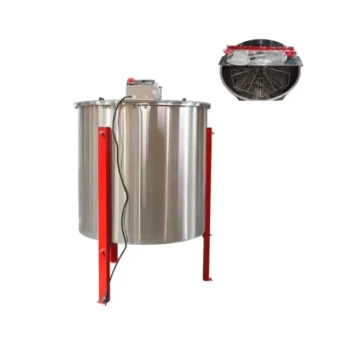
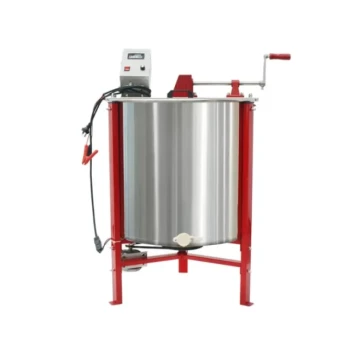
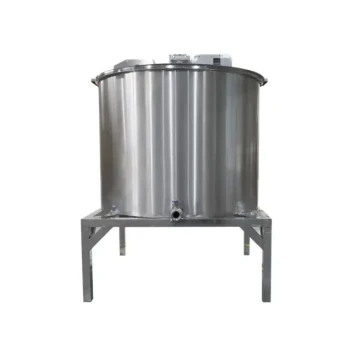
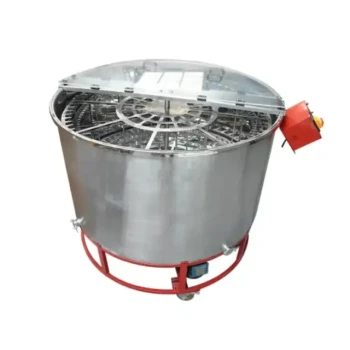
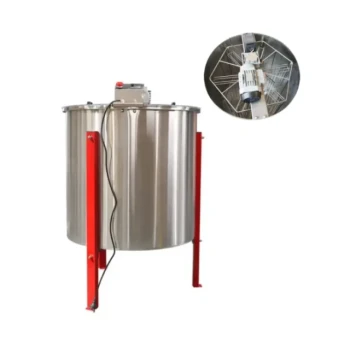
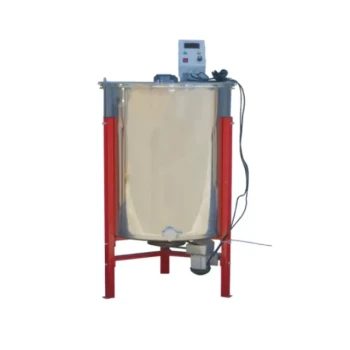
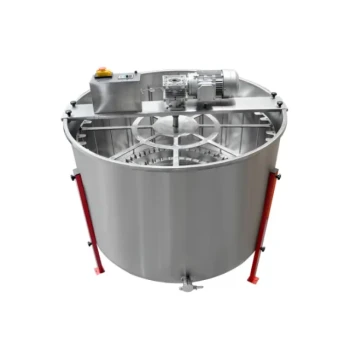
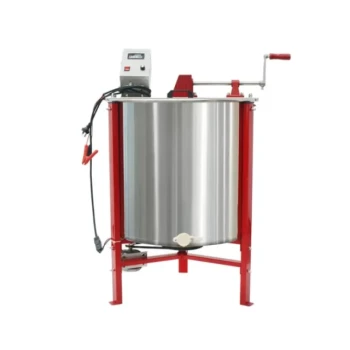
The primary function of geared motors in honey extractors is to automate the spinning of honeycombs, utilizing variable speed control to generate the precise centrifugal force required for extraction. These motors replace manual labor with a system capable of handling varying rotation speeds, ensuring the process is efficient, effective, and safe for the comb.
Geared motors provide the reliability and variable speed regulation necessary to extract honey thoroughly without damaging the wax frames, making them essential for larger production volumes where consistency and durability are paramount.
The Role of Controlled Rotation
Generating Centrifugal Force
The fundamental mechanism of any honey extractor is centrifugal force. The motor spins a central basket holding the frames, pushing the honey out of the comb and against the extractor's outer wall.
In radial extractors, where frames are positioned with the top bar facing outwards, this force acts on both sides of the frame simultaneously. The geared motor provides the sustained power needed to maintain this force until the frames are empty.
The Importance of Variable Speed
A critical feature of geared motors in this application is the capability for varying speeds. You cannot simply spin the frames at maximum velocity immediately, as the heavy weight of the honey could rupture the wax comb.
The motor allows the operator to start slowly and gradually increase the speed. This controlled acceleration ensures the structural integrity of the honeycomb is preserved while still achieving a thorough extraction.
Durability and Operational Efficiency
Built for Volume
Geared motors are valued specifically for their reliability and durability. Unlike manual methods, which rely on user stamina, these motors are designed to withstand the repetitive stress of spinning heavy, unbalanced loads.
Time-Saving Automation
For professional beekeepers or those with larger harvests, time management is critical. Automatic extractors powered by these motors allow the operator to uncap the next set of frames while the current batch is spinning.
This simultaneous workflow significantly increases production volume compared to manual hand-cranking, which requires the operator's full attention during the spin cycle.
Understanding the Trade-offs
Complexity vs. Simplicity
While geared motors offer efficiency, they introduce mechanical complexity. Manual extractors are simpler devices that rely on a hand crank, making them easier to repair and maintain in the field.
Dependency on Power
Geared motors require a power source. If you operate in a remote apiary without electricity or a generator, the reliability of the motor becomes irrelevant. In these scenarios, the manual method retains a distinct advantage despite the increased physical effort.
Making the Right Choice for Your Goal
To determine if a geared motor extractor is necessary for your operation, consider your volume and resources:
- If your primary focus is commercial production or high volume: Choose a geared motor extractor for its time-saving capabilities and ability to handle continuous use reliably.
- If your primary focus is small-scale hobbyist beekeeping: Consider a manual extractor, which is cost-effective and sufficient for processing a small number of frames without needing electricity.
Ultimately, the geared motor transforms honey extraction from a labor-intensive chore into a scalable, precise industrial process.
Summary Table:
| Feature | Manual Extraction | Geared Motor Extraction |
|---|---|---|
| Mechanism | Hand-cranked labor | Automated geared motor |
| Speed Control | Inconsistent/Manual | Precision variable speed |
| Comb Safety | Higher risk of damage | Controlled acceleration for safety |
| Efficiency | Labor-intensive & slow | High-volume, time-saving workflow |
| Power Need | None (Operates anywhere) | Requires electricity/generator |
| Best Use | Small-scale hobbyists | Commercial apiaries & distributors |
Scale Your Honey Production with HONESTBEE
Elevate your beekeeping operations with professional-grade machinery designed for durability and precision. HONESTBEE specializes in supporting commercial apiaries and wholesale distributors with a comprehensive range of equipment, including high-performance honey extractors, hive-making machines, and automated honey-filling systems.
Whether you are looking to source high-volume industry consumables or specialized beekeeping hardware, our team is ready to provide the expertise and tools your business needs to thrive. Contact us today to explore our wholesale solutions and see how our technology can streamline your harvest.
Related Products
- Spare Crank Gear Drivetrain Assembly for Manual 4 Frame Honey Extractor
- Vertical Motor Kits for 2 3 4 Frame Electric Honey Extractors
- Commercial Electric 12 Frame Honey Extractor Spinner Motorized Honey Extractor
- 8-Frame Electric Self-Reversing Honey Extractor Spinner for Commercial Honey Extraction Equipment
- HONESTBEE 6 Frame Three Use Electric Honey Extractor for Beekeeping
People Also Ask
- Are manual honey extractors effective at extracting honey? Master Small-Scale Harvesting with Precision Control
- What are the physical demands of a manual honey extractor? A Guide to Effort vs. Reward
- Who typically uses manual honey extractors? Ideal for Small-Scale & Hobbyist Beekeepers
- What are the advantages of a manual honey extractor? Control, Cost, and Independence
- What is the typical frame capacity of a manual honey extractor? Find the Right Size for Your Apiary