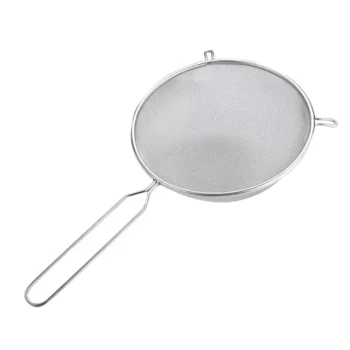
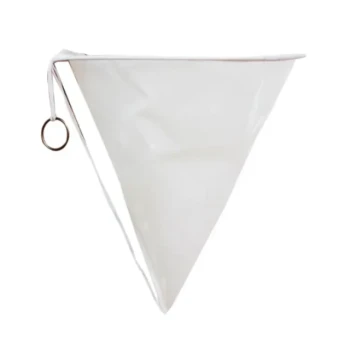
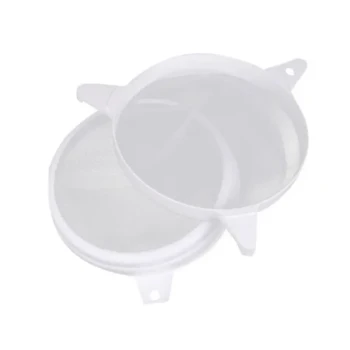
High-performance filters serve a critical dual purpose in honey pretreatment: ensuring sample homogeneity for accurate analytical results and protecting sensitive laboratory instrumentation from physical damage. By effectively removing particulate matter such as wax debris, pollen clumps, and suspended micro-impurities, these filters transform raw honey into a stable solution suitable for high-precision physicochemical and spectral analysis.
Core Takeaway Filtration is not merely a cleaning step; it is a foundational requirement for data integrity. It standardizes the sample's optical properties for accurate measurement while acting as a fail-safe barrier that prevents solid particulates from destroying the delicate injection systems of advanced analytical instruments.
Enhancing Sample Homogeneity and Data Accuracy
Improving Optical Measurement Precision
Raw honey contains suspended solids that scatter light, which can skew results in optical analysis. High-performance filtration removes these coarse particles and wax debris.
This clarification enables accurate readings for color and refractive index, ensuring the physicochemical profile reflects the honey's liquid matrix rather than its impurities.
Reducing Signal Interference
In spectral analysis, micro-impurities can create noise that obscures the target signal. Filtration minimizes this background interference.
A cleaner sample matrix ensures high repeatability of results, allowing for consistent data comparison across different batches or harvest periods.
Facilitating Microscopic Analysis
While some pollen analysis requires retention of particulates, high-definition analysis often requires a "clean base." Filtration removes non-pollen debris like bee remains and dust.
This allows for clearer visualization and identification of specific pollen types without the visual clutter of random hive debris.
Protecting Precision Instrumentation
Safeguarding Injection Systems (ICP-OES)
Instruments like Inductively Coupled Plasma Optical Emission Spectrometers (ICP-OES) rely on nebulizers to turn liquid samples into a fine mist.
High-performance filters prevent nebulizer clogging by catching particles that are too large to vaporize, ensuring smooth sample introduction and preventing expensive hardware failures.
Preserving Chromatography Columns (HPLC)
High-Performance Liquid Chromatography (HPLC) uses columns packed with extremely fine material. Even microscopic solids can permanently block these columns.
Using microporous membrane filters (typically 0.22 µm or 0.45 µm) eliminates suspended micro-particles before injection. This protects the column from irreversible damage and maintains correct system pressure.
Understanding the Trade-offs
Risk of analyte Loss
While filtration protects equipment, over-filtration can inadvertently remove valuable markers. If the pore size is too small, you risk filtering out large molecular weight compounds or specific pollen grains intended for origin tracing.
Filter Saturation
Honey is viscous and particulate-heavy. Using a high-performance membrane without a preliminary "rough" filtration step (like a sieve) can lead to rapid filter clogging.
This increases sample preparation time and consumable costs. It is often necessary to use a graded approach, starting with physical separation or centrifugation before applying high-performance membrane filters.
Making the Right Choice for Your Goal
To select the appropriate filtration strategy for your honey analysis, consider your primary objective:
- If your primary focus is Instrumental Protection (HPLC/ICP): Prioritize microporous membrane filters (0.22 µm or 0.45 µm) to strictly eliminate all suspended solids that could damage columns or nebulizers.
- If your primary focus is Physicochemical Basics (Color/Refractive Index): Focus on removing coarse wax and pollen clumps to ensure optical clarity without needing sterile-grade filtration.
- If your primary focus is Origin Tracing (Pollen Analysis): Ensure your filtration method does not remove the pollen grains required for microscopic identification; a coarser mesh or sieve may be more appropriate than a membrane filter.
Effective pretreatment strikes the balance between protecting your equipment and preserving the chemical truth of your sample.
Summary Table:
| Filtration Objective | Recommended Filter Type | Key Benefit |
|---|---|---|
| Instrument Protection | Microporous Membrane (0.22-0.45 µm) | Prevents clogging in HPLC columns and ICP nebulizers. |
| Optical Precision | Coarse Particle Filter / Sieve | Ensures accurate color and refractive index measurements. |
| Data Integrity | High-Performance Gradient Filter | Reduces signal noise and light scattering for stable results. |
| Pollen Analysis | Targeted Mesh Sieve | Removes hive debris while retaining pollen for origin tracing. |
Maximize Your Lab’s Efficiency with HONESTBEE
At HONESTBEE, we understand that high-precision analysis starts with superior sample preparation. As a specialized partner for commercial apiaries and distributors, we provide a complete spectrum of beekeeping tools, specialized machinery, and honey-processing consumables designed to maintain the highest industry standards.
Whether you need advanced hive-making technology or reliable filtration solutions for your quality control lab, our wholesale offerings are tailored to scale your operations and protect your equipment investment.
Ready to upgrade your honey processing capabilities? Contact HONESTBEE today to discuss our wholesale equipment solutions!
References
- Ioannis K. Karabagias, Chara Papastephanou. Characterization and Botanical Differentiation of Monofloral and Multifloral Honeys Produced in Cyprus, Greece, and Egypt Using Physicochemical Parameter Analysis and Mineral Content in Conjunction with Supervised Statistical Techniques. DOI: 10.1155/2018/7698251
This article is also based on technical information from HonestBee Knowledge Base .
Related Products
- Professional Stainless Steel Honey Filter with Support Handle
- Professional Honey Filter with Tripod Support Stand
- Electric Double Wall Honey Filtering Machine Purifier Equipment for Honey Processing Plant
- Professional Stainless Steel Honey Filtering Machine with Water Bath Heating for Beekeeping
- Professional Cone-Shaped Honey Filter with Reinforced Steel Ring
People Also Ask
- Why are stainless steel filters essential during the initial purification phase of honey processing? Ensure Purity
- What are the benefits of using a high-quality honey filter? Elevate Purity and Preserve Natural Flavor
- What is the primary purpose of honey filters? Achieve Professional Clarity & Pure Honey Quality
- What micron filter should I use for honey? Choose the Right Filter for Sales or Competitions
- Why do people filter honey? For Clarity, Stability, and Consumer Appeal