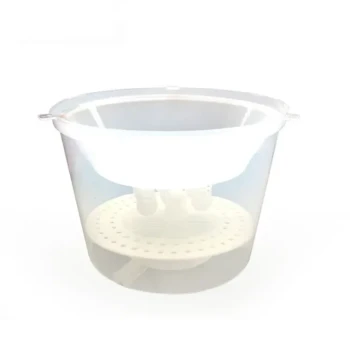
High-precision pollen traps serve as the primary diagnostic interface for assessing the nutritional status of a honeybee colony. Installed at the hive entrance, these devices mechanically intercept pollen loads from returning foragers, allowing beekeepers to accurately quantify protein intake and evaluate the capacity of the surrounding landscape to support colony survival.
By isolating and measuring pollen input, these traps transform abstract environmental conditions into concrete data, enabling the direct correlation between protein availability and a colony’s ability to survive critical overwintering periods.
The Mechanics of Nutritional Assessment
Quantifying Protein Intake
The primary function of the pollen trap is to measure the volume of protein entering the hive. As foraging bees pass through a specialized screen, pollen pellets are dislodged from their legs and collected.
This collection process provides a tangible metric for the colony's nutritional reserves. Since pollen is the colony's main source of protein, this data is essential for assessing brood development potential.
Evaluating Landscape Carrying Capacity
Pollen traps act as a sensor for the external environment. By analyzing the collected volume, beekeepers can determine if the local flora provides sufficient nutrition.
This assessment is critical for understanding "landscape support." It reveals whether the immediate agricultural or natural environment is rich enough to sustain the apiary's population density.
Predicting Overwintering Survival
The data derived from these traps is specifically used to forecast colony viability during winter. The primary reference highlights that quantifying protein intake is key to evaluating influence on survival rates.
A colony that fails to store adequate protein reserves in autumn will struggle to thermoregulate and rear brood in the spring. High-precision traps provide the early warning needed to intervene.
Operational Principles for Monitoring
Controlled Interception
Unlike harvest-focused equipment, monitoring traps are often designed for balance. They utilize a physical grid structure to intercept pollen without sealing off the hive.
Supplementary data suggests effective monitoring traps may be designed to retain a specific portion (approximately 10%) of the total yield. This ensures data collection does not inadvertently starve the colony or disrupt normal hive operations.
Clean Sample Collection
For accurate health monitoring, the purity of the sample is paramount. Bottom-mounted traps are engineered to collect "clean" pollen by preventing bees from re-accessing and consuming specific batches.
This isolation is the first step in ensuring a consistent raw material supply for subsequent physicochemical analysis in a laboratory setting.
Understanding the Operational Trade-offs
Risk of Nutritional Deficit
While valuable for data, these traps physically remove food from the colony. If left installed too long or during a nectar dearth, they can create an artificial protein shortage.
Disruption of Entrance Traffic
The installation of screens at the entrance alters the physical architecture of the hive. This can temporarily slow down foraging efficiency as bees navigate the barrier, potentially impacting intraday weight dynamics.
Integrating Pollen Traps into Your Management Strategy
To effectively utilize high-precision pollen traps, align their usage with your specific management objectives.
- If your primary focus is Colony Health and Survival: Prioritize the quantification of protein intake in late summer to accurately predict and prepare for overwintering success.
- If your primary focus is Environmental Analysis: Use the traps to sample pollen types continuously, allowing you to map the diversity and quality of forage in your specific agricultural landscape.
- If your primary focus is Commercial Production: Leverage the clean collection capabilities to transition into a multi-product matrix, harvesting pollen and propolis to enhance economic efficiency.
Successful bee health monitoring relies not just on collecting data, but on using that data to ensure the protein reserves match the colony's survival needs.
Summary Table:
| Key Function | Monitoring Benefit | Operational Impact |
|---|---|---|
| Protein Quantification | Measures hive nutritional reserves | Directly correlates to brood development |
| Landscape Assessment | Evaluates carrying capacity of flora | Determines if local environment supports apiary density |
| Survival Prediction | Forecasts overwintering viability | Provides early warning for nutritional intervention |
| Controlled Interception | Collects ~10% of yield for data | Balances data collection with colony health |
| Clean Sampling | Prevents sample contamination | Ensures high-quality material for lab analysis |
Maximize Your Apiary Productivity with HONESTBEE
At HONESTBEE, we specialize in empowering commercial apiaries and distributors with the high-precision tools needed for advanced colony management. From industrial-grade pollen traps and hive-making machinery to sophisticated honey-filling systems, our comprehensive wholesale range covers every aspect of your operation.
Why partner with us?
- Comprehensive Equipment: Access the full spectrum of beekeeping hardware and essential industry consumables.
- Commercial Scale: We cater specifically to large-scale operations and distributors seeking reliable, high-volume supply.
- Expert Support: Benefit from a portfolio that includes both specialized machinery and honey-themed cultural merchandise.
Ready to optimize your bee health monitoring and scale your business? Contact HONESTBEE today to explore our wholesale solutions and strengthen your competitive edge.
References
- Matthew Smart, Marla Spivak. Linking Measures of Colony and Individual Honey Bee Health to Survival among Apiaries Exposed to Varying Agricultural Land Use. DOI: 10.1371/journal.pone.0152685
This article is also based on technical information from HonestBee Knowledge Base .
Related Products
- High-Efficiency Diamond Maze Bee Escape for Clearing Supers
- 30 cm Plastic Entrance Hole Bee Pollen Trap and Collector
- Removable Plastic Pollen Trap With Ventilated Tray for Bees Pollen Collector
- Plastic Bee Pollen Trap Strips Comb Catcher Collector
- Professional Multi-Component Bucket Wasp Trap
People Also Ask
- How can a bee escape be adapted for use in a Warre hive? Effective Customization Methods for Successful Harvesting
- How can bees be cleared off honey supers in a Langstroth hive? Use a Gentle Bee Escape
- What is a bee escape and why is it used in beekeeping? A Guide to Gentle Honey Harvesting
- What are some common types of bee escapes and how are they typically mounted? Optimize Your Honey Harvest Efficiency
- What is the primary function of a bee escape? Simplify Your Honey Harvest with Stress-Free Hive Management