Honey processing equipment functions as a multi-stage separation system designed to purify crude honey by removing solid contaminants. This process utilizes a sequence of barriers—sieves, strainers, and filter cloths—to progressively eliminate wax cappings, physical debris, and fine particulates. The objective is to achieve visual clarity and food safety standards while preserving the honey's natural character.
The primary goal of these tools is to separate physical impurities like wax and debris to enhance clarity, yet the process must be controlled to ensure pollen—a critical marker of honey quality—remains in the final product.
The Hierarchy of Separation
Effective honey processing moves from coarse to fine separation. This stepwise approach prevents clogging and ensures efficient purification.
Coarse Sieving
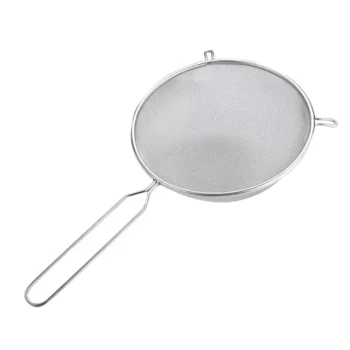
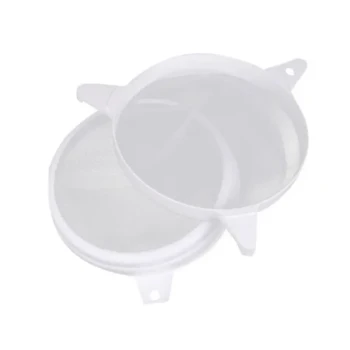
The first line of defense is the coarse sieve. Its function is to trap the largest solids found in crude honey immediately after extraction. This step primarily removes large pieces of wax cappings and other significant debris derived from the hive.
Intermediate Straining
Following the coarse sieve, honey is passed through a strainer. This device features narrower openings designed to capture materials that passed through the first stage. The strainer specifically targets and removes finer wax particles that are suspended in the liquid.
Fine Filtration
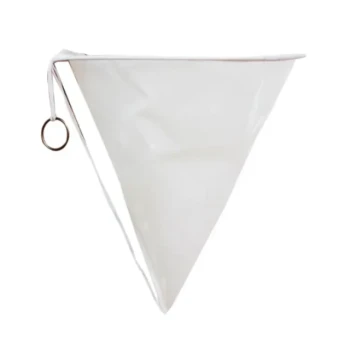
The final stage involves a filter cloth with very fine openings. This barrier is responsible for trapping grains and other minute particulates to polish the honey. This step is critical for achieving the high visual clarity and purity required for market appeal.
The Critical Role of Pollen
While the removal of debris is necessary for food safety and aesthetics, there is a biological limit to filtration.
Preservation of Quality
The primary reference explicitly states that pollen must not be filtered out. Pollen is a crucial component that defines the quality and botanical origin of the honey.
Balancing Clarity and Biology
High-precision filters utilize fine physical barriers to remove residues, but they must be calibrated correctly. If the mesh is too fine, it risks stripping the honey of its essential pollen content, effectively downgrading the product's quality classification.
Operational Considerations
Filtration is rarely a standalone process; it often works in conjunction with other processing methods to maximize efficiency.
Gravity Settling
Before mechanical filtration, honey is often placed in a settling tank. Here, gravity allows larger particles and air bubbles to naturally rise or settle. This pre-clearing step reduces the load on finer mesh filters downstream.
Temperature Management
Honey is viscous, which can slow down filtration. Systems often employ mild heat to lower the honey's viscosity. This allows the honey to flow more easily through filter cloths and helps prevent immediate crystallization.
Pressure Assistance
To increase the rate of filtration, high-pressure pumps may be used to force honey through the filtration media. This enhances purification speed but requires equipment capable of withstanding significant physical forces.
Understanding the Trade-offs
When configuring a filtration system, you must navigate specific risks to maintain the integrity of the honey.
The Risk of Over-Filtration
The most significant pitfall is using a filter medium that is too dense. While this results in ultra-clear honey, removing pollen strips the honey of its nutritional identity and biological markers. You must distinguish between cleaning the honey (removing debris) and ultra-filtration (removing pollen).
Thermal Degradation
Using heat to assist filtration is common, but it is a double-edged sword. Excessive heat can damage the biological activity of enzymes and flavor compounds. Thermal application must be kept mild strictly to aid flow, not to pasteurize or degrade the product.
Making the Right Choice for Your Goal
Selecting the right combination of sieves and filters depends on your end-product requirements.
- If your primary focus is Raw Honey Quality: Prioritize coarse sieves and gravity settling, ensuring your finest strainer is wide enough to let all pollen pass through.
- If your primary focus is Commercial Market Appeal: Utilize a multi-stage system ending with fine filter cloths to maximize visual clarity, but verify the mesh size retains pollen.
- If your primary focus is Processing Speed: Implement high-pressure pumps and mild heating to reduce viscosity, ensuring the filtration equipment is rated for the increased physical stress.
The ultimate function of this equipment is to refine the product's appearance without compromising the biological essence that makes honey valuable.
Summary Table:
| Equipment Type | Primary Function | Target Contaminants | Key Benefit |
|---|---|---|---|
| Coarse Sieve | Initial Separation | Large wax cappings, hive debris | Prevents downstream clogging |
| Intermediate Strainer | Secondary Refinement | Fine wax particles, suspended solids | Enhances liquid consistency |
| Fine Filter Cloth | Polishing | Minute particulates, grains | Achieves high visual clarity |
| Settling Tank | Pre-clearing | Air bubbles, heavy sediment | Reduces load on mechanical filters |
Elevate Your Honey Production with HONESTBEE
Maximize your apiary's efficiency and product value with professional-grade processing solutions. As a dedicated partner to commercial apiaries and distributors, HONESTBEE provides a comprehensive wholesale range of beekeeping tools, machinery, and essential consumables.
Whether you need precision honey-filling machines, specialized hive-making hardware, or high-performance filtration systems that balance clarity with biological integrity, we have the expertise to scale your operation.
Ready to upgrade your honey processing? Contact our specialists today to discover how our tailored equipment and honey-themed cultural merchandise can drive your business growth.
Related Products
- Stainless Steel Double Layer Honey Strainer Sieve Filters
- Stainless Steel Triangle Support Honey Strainer and Filters
- Professional Stainless Steel Honey Filter with Support Handle
- Professional Cone-Shaped Honey Filter with Reinforced Steel Ring
- Professional Honey Filter with Tripod Support Stand
People Also Ask
- What are some typical mesh size combinations found in double sieve honey strainers? Expert Guide to Honey Filtration
- How is a double-layer honey filter used for monitoring Varroa mite infestation? Achieve Precise Pest Control Data
- How do double-layer honey filters and white blotting paper function together in Varroa mite detection? Expert Guide
- What mesh sizes are commonly used in double sieve honey strainers? Achieve Clean, Raw Honey Efficiently
- How does a double sieve honey strainer work? Achieve Crystal Clear Honey with Professional Two-Stage Filtration