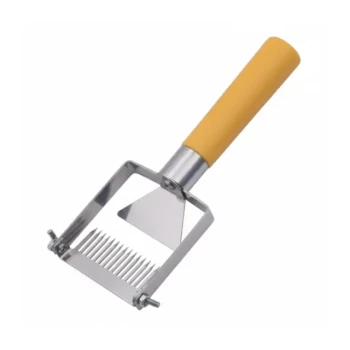
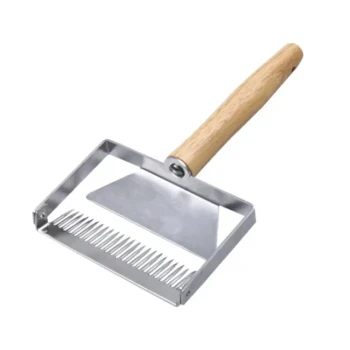
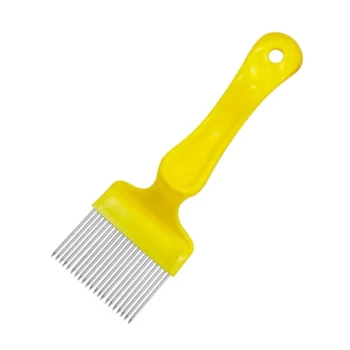
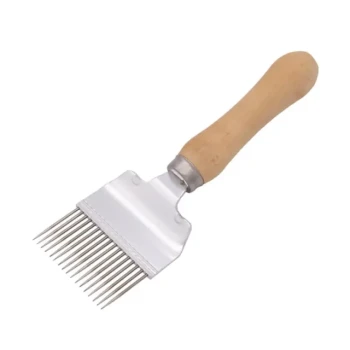
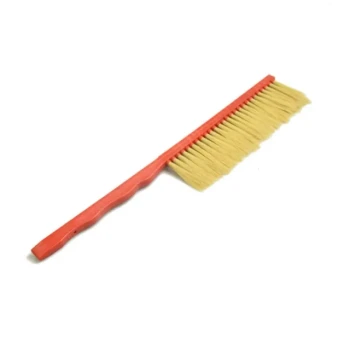
Precision Beekeeping Tweezers are specialized instruments designed for the high-fidelity extraction of biological samples. Their primary function is to delicately peel open the operculated (capped) brood cells found in the oldest comb layers and to facilitate the accurate transfer of specific individuals—such as two-day-old bees—without crushing their soft, newly emerged bodies.
The critical value of these tweezers lies in their ability to mitigate physical trauma. By enabling the surgical opening of cells and the gentle handling of soft-bodied insects, they ensure that experimental samples remain intact and viable for study.
The Mechanics of Extraction
Accessing the Brood Chamber
The first function of these tweezers is mechanical access. In the experimental sample collection phase, researchers must access bees that are still enclosed within the comb.
These tweezers are precise enough to peel open the operculated brood cells located on the oldest layers of the comb. This allows the handler to expose the bee without destroying the surrounding architecture of the hive structure.
Targeting Specific Individuals
General beekeeping tools are designed for mass manipulation, but research requires specificity. Precision tweezers allow for the accurate picking of specific individuals.
The primary reference notes their use in isolating two-day-old bees, a stage where the insect is distinct yet vulnerable. This selectivity is essential when an experiment demands a cohort of bees at the exact same developmental stage.
Preserving Specimen Integrity
Handling Soft-Bodied Insects
Newly emerged stingless bees possess exoskeletons that have not yet fully hardened. They are extremely susceptible to crushing injuries.
The defining function of these tweezers is to apply sufficient pressure to lift the bee while preventing damage to delicate bodies. This ensures that the bee remains biologically viable after transfer.
Operational Considerations
The Trade-off: Speed vs. Accuracy
Using precision tweezers is an inherently manual, high-focus process. While they offer superior sample integrity, they are not efficient for mass collection.
Users must accept that "peeling" individual cells is time-consuming. This tool is optimized for quality of the sample, not quantity of production.
Specificity of Use
These tools are specialized for brood cells in older comb layers.
They are likely ill-suited for general hive maintenance or manipulating harder, older worker bees where more robust tools would be more efficient. Attempting to use them for heavy-duty hive tasks may damage the fine tips of the tweezers.
Making the Right Choice for Your Goal
To determine if these tweezers are necessary for your work, consider your specific objective:
- If your primary focus is experimental research: These are essential for ensuring that age-specific samples (like two-day-old bees) are not compromised by physical trauma during collection.
- If your primary focus is general colony propagation: Standard tools may suffice, as the high-precision peeling of individual cells is likely unnecessary for broad population management.
Precision in extraction is the only way to guarantee the validity of your biological data.
Summary Table:
| Feature | Precision Beekeeping Tweezers | Standard Beekeeping Tools |
|---|---|---|
| Primary Function | Delicate individual cell extraction | Mass hive manipulation |
| Target Specimen | Soft-bodied, newly emerged bees | Mature worker bees/hardened insects |
| Mechanism | Peeling operculated (capped) brood cells | Prying frames and scraping wax |
| Integrity Risk | Low (Prevents crushing) | High (Potential for trauma) |
| Speed/Volume | Low (Manual, high-focus) | High (Efficient for mass tasks) |
| Best Use Case | Scientific research & aging cohorts | General propagation & maintenance |
Elevate Your Apiary Operations with HONESTBEE
Precision is the backbone of successful commercial beekeeping and scientific research. At HONESTBEE, we understand the unique demands of commercial apiaries and distributors. We provide a comprehensive wholesale range of high-fidelity beekeeping tools, specialized hardware—including hive-making and honey-filling machinery—and a wide array of essential industry consumables.
Whether you are scaling up production or outfitting a research facility, our portfolio offers everything from precision instruments to honey-themed cultural merchandise. Contact us today to discuss your wholesale needs and discover how our expertise can streamline your operation and protect your valuable colonies.
References
- Ayrton Vollet-Neto, Vera Lúcia Imperatriz-Fonseca. Newly emerged workers of the stingless bee Scaptotrigona aff. depilis prefer stored pollen to fresh pollen. DOI: 10.1007/s13592-016-0464-4
This article is also based on technical information from HonestBee Knowledge Base .
Related Products
- Wooden Bee Brush with Triple Row Artificial Fiber for Beekeeping
- HONESTBEE Advanced Ergonomic Stainless Steel Hive Tool for Beekeeping
- HONESTBEE 15-in-1 Beekeeper Multi-Tool with Hammer and Pliers for Beekeeping
- HONESTBEE Professional Mini J-Hook Hive Tool for Beekeeping
- Classic Wooden Bee Brush with Double-Row Boar Bristles
People Also Ask
- What is the specific function of a bee brush? Ensure Pure Harvests and Colony Welfare During Honey Extraction
- What are the key characteristics of the bristles on a bee brush? Master Gentle and Efficient Bee Removal
- What is the purpose of using a bee brush during the inspection of hive components? Safe & Precise Hive Management
- What problem does a bee brush solve? Protect Your Colony with Gentle Precision Tools
- Why is a bee brush necessary when extracting honeybee hive frames that contain larvae? Protect Your Brood and Colony