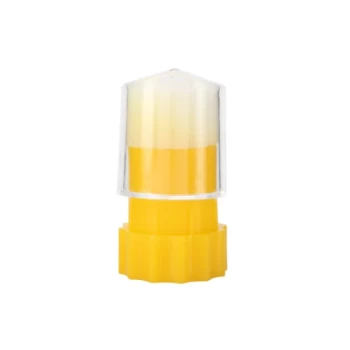
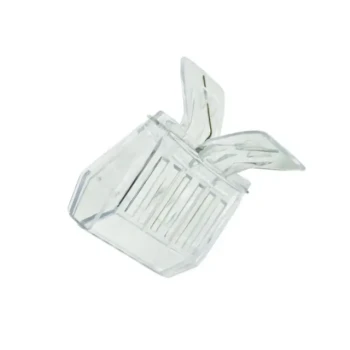
Professional field capture tools are precision instruments designed to isolate individual worker bees directly from floral sources for scientific analysis. Unlike general beekeeping equipment, tools like catching tubes and collection nets allow researchers to secure specific floral-source samples away from the hive environment, ensuring the biological integrity required for genetic studies.
Core Takeaway The primary function of these tools is to guarantee sample purity for genetic diversity research. By collecting bees individually from flowers, researchers prevent cross-contamination between colonies and physically protect the thoracic muscle tissue essential for high-quality DNA extraction.
Ensuring Genetic Data Integrity
Isolation from the Hive Environment
To study honeybee genetic diversity accurately, samples must often be taken outside the chaotic environment of the hive.
Professional field tools allow for the precise isolation of worker bees directly from flowers. This method acquires samples based on their floral source rather than their colony affiliation alone.
Prevention of Cross-Contamination
A major risk in genetic sampling is the mixing of genetic material between different colonies, which can occur in crowded apiaries.
By capturing bees in the field using tubes or nets, researchers effectively prevent cross-contamination between different bee colonies. This ensures that the genetic data derived from the sample represents a specific lineage or population without interference from neighboring hive drifts.
Preservation of Biological Samples
Protecting Tissue Structure
The physical method of capture significantly impacts the quality of subsequent laboratory analysis.
Field capture tools are designed to secure the bee without crushing or damaging vital anatomy. This ensures that the thoracic muscle tissue remains structurally intact.
Enabling DNA Extraction
Intact muscle tissue is the primary source for extracting high-quality DNA in honeybees.
By preserving the structural integrity of the thorax during capture, these tools ensure the sample is suitable for biochemical analysis and DNA extraction once it reaches the laboratory.
Understanding the Trade-offs
Field Capture vs. Hive Entrance Traps
While field tools offer precision for individual genetics, they are labor-intensive compared to other methods.
Supplementary tools like funnel-type flight collectors or plastic capture containers are installed at the hive entrance. These are better suited for capturing large quantities of foragers or specific behavioral stages (such as departing bees) without opening the hive, but they lack the floral-specific isolation of field tools.
Scientific Precision vs. Commercial Efficiency
Field capture tools are distinct from commercial beekeeping tools like smokers or specialized product extractors.
Commercial tools focus on yield, hygiene, and efficiency for products like honey, royal jelly, or venom. In contrast, field capture tools prioritize data quality and sample preservation for scientific research, often at the expense of speed and volume.
Making the Right Choice for Your Goal
To select the appropriate collection method, you must define the end goal of your sample analysis.
- If your primary focus is genetic diversity and DNA quality: Use field capture tools (tubes/nets) to isolate individuals from flowers, ensuring intact thoracic tissue and zero colony cross-contamination.
- If your primary focus is large-scale population sampling: Use hive entrance traps (funnels/containers) to efficiently collect large numbers of foragers with high physiological activity without disturbing the colony.
- If your primary focus is commercial product purity: Use specialized extraction tools and standard hygiene protocols to harvest raw materials like honey or royal jelly while minimizing environmental pollutants.
Ultimately, the value of field capture tools lies in their ability to turn a chaotic natural environment into a controlled source of high-purity genetic data.
Summary Table:
| Tool Type | Primary Function | Key Benefit | Target Metric |
|---|---|---|---|
| Field Capture Tools (Tubes/Nets) | Individual isolation from flowers | Prevents cross-contamination | DNA/Genetic Purity |
| Hive Entrance Traps (Funnels) | Bulk collection of foragers | High volume sampling | Population Activity |
| Extraction Tools | Harvesting bee products | Minimizes pollutants | Commercial Yield/Hygiene |
Elevate Your Beekeeping Operation with HONESTBEE
Whether you are conducting precise scientific research or managing a large-scale commercial apiary, HONESTBEE provides the high-quality equipment you need to succeed. As a leading supplier for commercial apiaries and distributors, we offer a comprehensive wholesale range of beekeeping tools, specialized machinery—including hive-making and honey-filling machines—and essential industry consumables.
From field-grade precision to industrial-scale efficiency, our portfolio is designed to enhance your productivity and product purity. Contact us today to discover how our professional hardware and honey-themed cultural merchandise can add value to your business and meet your specific beekeeping requirements.
References
- A. Knoll, T. Urban. Assessing Genetic Diversity and Population Structure of Western Honey Bees in the Czech Republic Using 22 Microsatellite Loci. DOI: 10.3390/insects16010055
This article is also based on technical information from HonestBee Knowledge Base .
Related Products
- Plastic Queen Bee Catcher Marker Tube Holder for Queen Marking Bottle
- One Hand Yellow Queen Marking Catcher Tube Cage Beekeeper Tool Accessory for Queen Bee
- Plastic Long Marker Device for Catching and Marking Bees Queen Bee Marking Tube and Cage
- Transparent Plastic Bee Catcher Queen Marker Tube Cage Beekeeping Tool Equipment
- Queen Bee Catcher Plastic Bee Marker Bottle with Piston Marking Tube
People Also Ask
- How does a queen marking tube facilitate the marking process? Enhance Safety and Precision in Your Apiary
- What tools are available for safely marking queens? A Guide to Secure and Efficient Queen Marking
- Where on the queen bee's body should the mark be applied? Master the Art of Safe Queen Identification
- What tools can be used to safely secure a queen bee while marking her? Top Solutions for Professional Beekeepers
- What are the primary objectives for marking a queen bee? Master Hive Management and Data Tracking