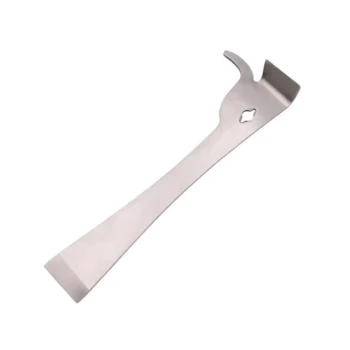
The hive tool acts as the primary mechanical lever for the beekeeper. Its main function is to serve as a "mini crowbar" to separate hive boxes and lift frames that have been glued together by the bees. It is the essential key to accessing the interior of the hive without damaging the woodenware or the colony.
The Core Insight Honey bees instinctively seal their home with propolis, a sticky resin that acts like high-strength glue. Consequently, a hive tool is not just an accessory; it is a mechanical necessity required to break these resin bonds, allowing you to manipulate hive components with the precision and gentleness required for a successful inspection.
Breaking the Propolis Seal
Separating Hive Components
Bees coat the interior of the hive, including the gaps between boxes (supers), with propolis. This resin hardens and fuses the wooden components together.
You must use the flat end of the hive tool to gently pry these boxes apart. Attempting to do this by hand is clumsy and often impossible due to the strength of the bond.
Opening the Inner Cover
The crownboard (or inner cover) is frequently glued shut by the bees.
Using the tool allows you to crack this seal efficiently. This provides access to the colony while minimizing the vibrations and shocks that can agitate the bees.
Managing Hive Frames
Loosening Attached Frames
Frames inside the hive are rarely loose; they are usually cemented to the frame rests with propolis and wax.
Before lifting a frame, you must use the tool to lever the "ears" of the frame to break this bond. This creates the space necessary to move them.
Lifting for Inspection
Once loosened, the tool assists in lifting the frame vertically.
The hook end (common on standard tools) is specifically designed to grab the frame and lift it. This leverage prevents you from having to pull excessively with your fingers, which can damage the wooden frame or cause you to lose your grip.
Maintenance and Versatility
Scraping Debris
Bees often build "burr comb"—unwanted wax bridges—between frames or boxes.
The sharp edge of the hive tool acts as a scraper to remove this wax, as well as excess propolis, from frame edges and floorboards to keep the hive tidy.
Emergency Utility
The tool is a versatile instrument for unexpected tasks during an inspection.
It can be used to scrape a bee stinger out of your skin without squeezing the venom sac. It is also sturdy enough to bang loose nails back into boxes or pry open a jammed bee smoker.
Common Pitfalls to Avoid
Applying Excessive Force
While the tool is a crowbar, it should not be used with sudden, violent force.
Prying too aggressively can cause the hive components to "pop" apart loudly, startling the colony. Always apply gentle, steady pressure to separate components slowly.
Damaging the Woodenware
The hive tool is made of hardened steel, which is significantly harder than the wooden hive parts.
If you leverage against the soft wood incorrectly, you can gouge the boxes or frame rests. Ensure your fulcrum point is solid to preserve the integrity of your equipment.
Making the Right Choice for Your Goal
To get the most out of your hive tool, match your technique to your immediate objective:
- If your primary focus is Colony Inspection: Prioritize using the tool to create space between frames before lifting; this prevents "rolling" (crushing) bees as you pull the frame out.
- If your primary focus is Equipment Maintenance: Use the flat edge of the tool to regularly scrape burr comb and propolis off the contact points of your boxes, ensuring a tighter fit for the future.
Mastering the hive tool is the first step toward handling your bees with confidence and care.
Summary Table:
| Function | Primary Use Case | Key Benefit |
|---|---|---|
| Prying & Levering | Separating hive boxes and inner covers | Breaks tough propolis seals without agitating bees |
| Frame Management | Loosening and lifting frames | Prevents frame damage and avoids crushing bees |
| Scraping | Removing burr comb and excess wax | Maintains clean equipment and tight box fits |
| Cleaning | Clearing frame rests and floorboards | Improves hive accessibility and long-term durability |
| Emergency Utility | Stinger removal or minor hardware repair | Provides versatile on-site solutions during inspections |
Elevate Your Beekeeping Operations with HONESTBEE
At HONESTBEE, we understand that professional beekeeping requires precision tools that stand up to the rigors of the field. Whether you are managing a large-scale commercial apiary or acting as a distributor for quality supplies, our comprehensive wholesale portfolio has you covered.
We provide everything from hardened steel hive tools and protective gear to advanced hive-making and honey-filling machinery. Partner with us to access high-quality beekeeping equipment, essential industry consumables, and unique honey-themed cultural merchandise designed to add value to your business.
Ready to scale your apiary or stock your shelves with the best?
Contact HONESTBEE Today for Wholesale Inquiries
Related Products
- HONESTBEE Professional Long Handled Hive Tool with Precision Cutting Blade
- Professional Multi-Function Stainless Steel Hive Tool
- HONESTBEE Premium Italian Style Hive Tool with Hardwood Handle
- Ergonomic Plastic Frame Spacer Tool for Rapid Hive Management Beekeeping
- Professional Grade Foldable Beehive Handles
People Also Ask
- Why are professional hive tools considered indispensable? Master Beekeeping Maintenance with Precision Leverage
- What is the role of professional hive tools in routine apiary maintenance? Expert Tips for Hive Health and Longevity
- What is a bee hive tool? Discover Why It’s the Most Essential Hand Tool for Every Beekeeper
- How do hive tools and queen rearing equipment facilitate the bee colony splitting process? Restore Your Apiary Faster
- Why are professional hive tools & observation equipment necessary for queen rearing evaluation? Master Your Quality