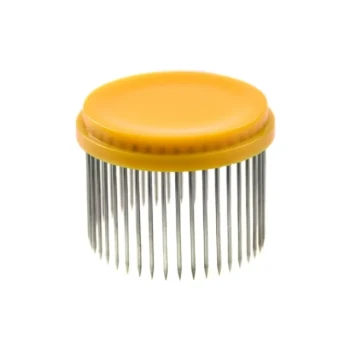
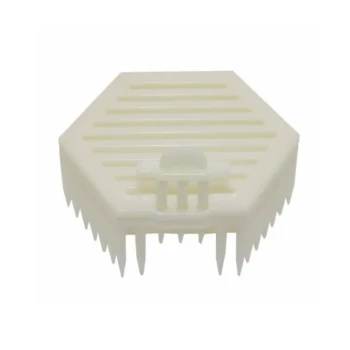
Professional queen mailing cages function as both secure shipping containers and essential acclimation tools. primarily designed to ensure the biological survival of a mated queen during transit and her subsequent acceptance into a new hive. These devices provide necessary ventilation and physical protection during shipping, while simultaneously acting as a temporary barrier inside the hive to safely integrate the queen's pheromones before direct contact with the colony occurs.
The primary value of a queen mailing cage is that it decouples physical presence from chemical introduction. By allowing the queen's scent to disperse while preventing physical contact, the cage mitigates the natural aggression of an established colony, significantly increasing the success rate of re-queening.
The Role in Distribution and Transport
Maintaining a Stable Micro-Environment
During distribution, the immediate function of the cage is to sustain life. Specialized mailing cages create a protected micro-environment that shields the queen and her attendant worker bees from physical crushing and environmental fluctuations.
Ensuring Physiological Integrity
The design of these cages includes ventilation systems that minimize physiological stress during long-distance transit. By maintaining a consistent environment—often supplemented by built-in candy troughs for energy—the cage preserves the queen’s reproductive vitality and biological integrity until she reaches her destination.
Facilitating Safe Colony Introduction
The Physical Barrier Against Aggression
The most critical function during the introduction phase is protection. The cage acts as a secure physical barrier, preventing hostile worker bees in the receiving colony from attacking or killing the new queen, who they initially perceive as a foreign intruder.
Controlled Pheromone Integration
Success in re-queening relies on chemistry, not just proximity. The cage allows the queen's pheromones to be released slowly throughout the hive. This gradual exposure enables the colony to adapt to her specific scent signature and accept her status as their new monarch without immediate contact.
Preventing Escape and Injury
Beyond protection from others, the cage protects the queen from her own instincts. It serves as temporary confinement that prevents the queen from flying away or becoming injured while she settles into the new environment. An escape during this phase would necessitate restarting the entire process, wasting valuable time and resources.
Understanding the Trade-offs
The Necessity of Patience
The cage is a tool of delay, and this is its primary trade-off. It deliberately slows down the hive's operations to ensure long-term stability. Rushing the release before the colony has fully acclimated to the pheromones—despite the queen appearing healthy in the cage—can result in immediate rejection or "balling" (killing) of the queen upon release.
Ventilation vs. Exposure
While ventilation is crucial for survival, it exposes the queen to the ambient conditions of the hive or shipping container. If the external environment is not properly managed (e.g., extreme temperatures during shipping), the open design of the cage cannot protect the queen from thermal shock.
Making the Right Choice for Your Goal
To maximize the effectiveness of queen mailing cages, align your approach with your specific objective:
- If your primary focus is Logistics and Distribution: Prioritize cages with robust structures and integrated food stores (candy troughs) to ensure high survival rates during transit.
- If your primary focus is Colony Re-queening: Rely on the cage as a slow-release mechanism, ensuring the colony has ample time to normalize to the queen's pheromones before releasing her.
The professional queen mailing cage is not merely a container; it is a biological bridge that safely transitions a queen from isolation to the center of a thriving colony.
Summary Table:
| Function Category | Key Benefit | Technical Purpose |
|---|---|---|
| Logistics & Transport | Survival & Protection | Provides ventilation, physical shielding, and candy troughs for energy. |
| Colony Introduction | Pheromone Integration | Creates a physical barrier allowing the colony to acclimate to the queen's scent. |
| Behavioral Control | Risk Mitigation | Prevents hive aggression, queen injury, or accidental flight during release. |
| Biological Integrity | Reproductive Vitality | Maintains a stable micro-environment to preserve the queen's health. |
Maximize Your Apiary Productivity with HONESTBEE
For commercial apiaries and distributors, the survival and successful integration of queen bees are critical to maintaining hive health and operational efficiency. HONESTBEE specializes in professional-grade beekeeping equipment, providing the durable queen mailing cages, specialized hardware, and honey-processing machinery you need to scale your business.
From industrial-scale hive-making machines to essential industry consumables, our comprehensive wholesale offering ensures you have the tools to succeed. Contact us today to discuss our volume discounts and let us help you build a more resilient beekeeping operation.
References
- Miriam Bixby, M. Marta Guarna. Honey Bee Queen Production: Canadian Costing Case Study and Profitability Analysis. DOI: 10.1093/jee/toaa102
This article is also based on technical information from HonestBee Knowledge Base .
Related Products
- Professional Multi-Compartment Queen Cage with Sliding Lid
- Professional Queen Cage with Sliding Gate and Feeder Plug
- Professional Queen Bee Introduction and Transport Cage
- Durable Galvanized Steel Spring Queen Bee Cage
- Professional Round Push-In Queen Cage with Metal Tines
People Also Ask
- Why are specialized queen bee cages used for the banking of mated queen bees? Maximize Commercial Apiary Storage Efficiency
- What is the mechanism of action for using temporary queen bee cages? Master Successful Queen Introduction
- How are queen cages used to protect newly hatched queens? Secure Your Virgin Queens During Development
- Why are queen cages or grid cages used in bee studies? Achieve Precise Biological Data for Research
- What technical precaution must be taken regarding the mesh or grill side of a queen bee cage? Ensure Queen Survival