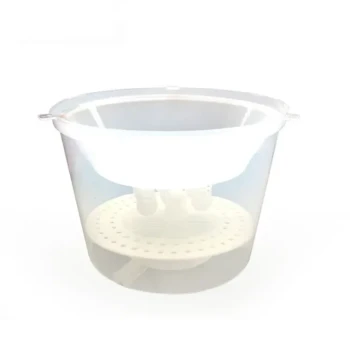
Specialized pollen traps function as a selective mechanical filter installed at the entrance of a beehive. Their primary purpose is to physically intercept foraging worker bees as they return to the hive, stripping the pollen pellets from their hind legs using precisely sized apertures. This allows beekeepers to harvest raw pollen efficiently without harming the bees or manually interfering with the internal hive structure.
Core Takeaway Pollen traps are designed to balance industrial efficiency with biological safety, utilizing a grid-based barrier to harvest commercial-grade pollen externally. By collecting pollen before it enters the hive, these devices ensure high purity and allow for scalability, provided they are managed carefully to avoid depriving the colony of essential nutrition.
The Mechanics of Interception
The Physical Barrier
The core mechanism of a pollen trap is a grid or plate containing precisely designed apertures. These holes are engineered to be just large enough for a worker bee to squeeze through, but too narrow to accommodate the pollen pellets stored in the "pollen baskets" on their hind legs.
The Stripping Process
As the bee forces its way through the aperture, the edges of the grid gently scrape or strip the pollen clusters off the bee's legs. This process relies heavily on the accuracy of the hole diameter; it must remove the payload without causing physical injury or stress to the insect.
Collection and Storage
Once stripped, the pollen pellets fall through a separate screen into a designated collection tray or box located beneath the main entrance. This isolates the harvested pollen immediately, protecting it from traffic and preventing the bees from retrieving it.
Ensuring Quality and Efficiency
Maximizing Purity
By intercepting pollen at the entrance, traps minimize environmental impurities and internal hive contaminants. Pollen collected inside the hive can be mixed with wax, propolis, or other debris. Traps ensure the raw material remains clean, providing a high-quality foundation for processing or botanical analysis.
Industrial Scalability
High-performance traps are optimized to maximize annual yield, with some designs capable of harvesting up to 36kg of pollen per colony annually. This efficiency makes them a critical component for commercial operations requiring large volumes of standardized product.
Understanding the Trade-offs
While pollen traps are essential for harvesting, they introduce specific biological and management challenges that must be weighed carefully.
Nutritional Deprivation
The trap's function is effectively a form of resource restriction. By removing a significant portion of incoming protein (pollen), the colony's natural nutritional intake is reduced. In scientific settings, this is sometimes done intentionally to force bees to consume substitute diets for pesticide testing. In commercial settings, however, overuse can stunt colony development.
Physical Risk to Bees
If the aperture precision is off—even slightly—the trap becomes a hazard. Holes that are too tight can damage the bees' wings or legs. Conversely, holes that are too loose will fail to strip the pollen, rendering the trap useless.
Timing Considerations
To mitigate negative impacts, traps are often deployed only during peak foraging periods, such as between 6:00 AM and 11:00 AM. Continuous use without breaks can threaten the colony's survival by starving the brood of necessary protein.
Making the Right Choice for Your Goal
When integrating pollen traps into your apiary management, your strategy should dictate your usage pattern.
- If your primary focus is Commercial Yield: Prioritize high-performance traps with optimized aperture designs to maximize the volume of clean, raw pollen, aiming for benchmarks like 36kg per colony.
- If your primary focus is Colony Health: Limit trap usage to peak morning foraging hours (6:00 AM – 11:00 AM) to allow the colony sufficient time to collect the pollen required for their own brood development.
- If your primary focus is Research or Standardization: Utilize the trap to control the colony's dietary intake, ensuring uniformity in exposure dosages for nutritional or toxicological studies.
Success with pollen traps relies not just on the hardware, but on the precise balance between harvesting a commodity and sustaining the workforce that produces it.
Summary Table:
| Feature | Function & Impact | Key Benefit |
|---|---|---|
| Selective Apertures | Precisely sized holes strip pollen from legs | High-purity harvest without harming bees |
| Collection Tray | Isolates pellets in a separate compartment | Minimizes wax, debris, and contamination |
| Scalable Design | Capable of yields up to 36kg per colony | Maximizes commercial production efficiency |
| Managed Access | Selective deployment during peak hours | Ensures colony nutrition while harvesting |
Maximize Your Apiary’s Output with HONESTBEE
Elevate your commercial beekeeping operation with HONESTBEE’s professional-grade harvesting solutions. As a dedicated partner to commercial apiaries and distributors, we provide a comprehensive wholesale catalog ranging from high-precision pollen traps and hive-making machinery to honey-filling systems and essential consumables.
Whether you are scaling your honey production or looking for specialized beekeeping hardware, our team delivers the tools and industrial expertise needed to drive your success.
Ready to optimize your yield? Contact HONESTBEE today to discuss our wholesale offerings and how we can support your business growth.
References
- Simona Nardoni, Francesca Mancianti. Occurrence of moulds from bee pollen in Central Italy – A preliminary study. DOI: 10.5604/12321966.1196862
This article is also based on technical information from HonestBee Knowledge Base .
Related Products
- Removable Plastic Pollen Trap With Ventilated Tray for Bees Pollen Collector
- 30 cm Plastic Entrance Hole Bee Pollen Trap and Collector
- Plastic Bee Pollen Trap Strips Comb Catcher Collector
- High-Efficiency Diamond Maze Bee Escape for Clearing Supers
- Professional Bucket Style Wasp and Moth Pheromone Trap
People Also Ask
- What are the design principles and advantages of pollen traps in the collection of bee pollen? Boost Your Apiary Yield
- What is the function of professional pollen traps in evaluating honey plants? Quantifying Pollination and Crop Potential
- What functions do pollen traps serve for bee bread production? Optimize Your Raw Material Collection
- What maintenance and pest prevention measures should be taken for pollen traps? Protect Your Hive and Harvest Quality
- How does the use of pollen traps in honeybee hives enhance crop fertilization? Boost Your Yield Through Induced Activity