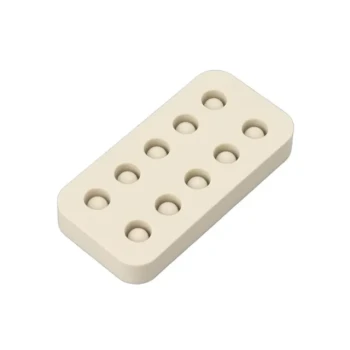
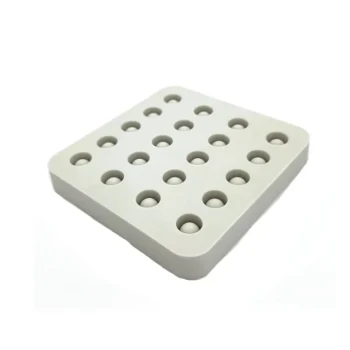
Specialized Queen Cups act as the fundamental physical interface between the beekeeper’s grafting technique and the colony’s biological response. Specifically, they serve as standardized, artificial carriers for transferred larvae, mimicking the natural base of a queen cell. This structure provides the necessary stability for worker bees to build out the cell and secrete royal jelly, making these cups the critical consumable for scalable, high-quality queen production.
Specialized Queen Cups provide a standardized geometric foundation that triggers the colony’s natural rearing instincts, transforming a delicate grafting procedure into a scalable production system for fertile queens.
The Engineering of Biological Mimicry
Simulating Natural Architecture
To the colony, a grafted larva is only a potential queen if it is housed correctly. Specialized Queen Cups are engineered to mimic the natural base structure of queen cells found during swarming or supersedure. This precise geometry and scale signal the worker bees to accept the larva and begin the rearing process.
Facilitating Vertical Orientation
Natural queen cells hang downwards to accommodate the developing queen's larger body size. These artificial cups feature a downward-facing orientation and dimensions larger than standard worker cells. This ensures the larva has ample space to grow without the physical constraints of a honeycomb cell.
Driving Nutritional Investment
The internal volume of the cup is a decisive factor in queen quality. A correctly sized cup maximizes the storage capacity for royal jelly. This ensures the larva is submerged in abundant nutrition, which is directly correlated with the vitality and size of the resulting virgin queen.
Standardization and Scalability
Enabling Mass Production
In a natural setting, a hive produces very few queens at once. Specialized Queen Cups allow beekeepers to bypass this limit by creating a standardized carrier system. This converts queen rearing from a rare natural event into a predictable, repeatable industrial process.
Research and Environmental Testing
Beyond breeding, these cups serve as controlled vessels for scientific study. Because the cups are artificial and standardized, researchers can coat the inner walls with specific substances. This allows for precise toxicological studies to evaluate how environmental factors, such as wax contamination, impact queen development.
Understanding the Trade-offs
The Volume Sensitivity
While standardization is beneficial, the specific design of the cup dictates the biological outcome. The internal volume is not just a container size; it is a biological limit. If a cup is too small, it physically restricts the amount of royal jelly worker bees can store, potentially leading to undernourished, lower-quality queens despite successful grafting.
The Acceptance Barrier
The cup is merely a foundation; it does not guarantee success. Even with a perfect cup, the transition relies on the grafting of larvae at the precise age. If the larva is damaged during transfer to the cup or is too old, the colony will reject the artificial cell regardless of its structural perfection.
Making the Right Choice for Your Goal
To maximize the effectiveness of your rearing program, select your approach based on your specific operational needs:
- If your primary focus is Commercial Yield: Prioritize cups that are compatible with standardized grafting frames to maximize the density of larvae per colony.
- If your primary focus is Queen Vitality: Select cups with optimized internal volumes to maximize the storage capacity for royal jelly, ensuring superior nutrition.
- If your primary focus is Scientific Research: Utilize cups that allow for surface modification or coating to isolate specific environmental variables during development.
Success in queen rearing ultimately relies on providing a physical structure that the colony cannot distinguish from its own natural creation.
Summary Table:
| Feature | Biological/Operational Function | Impact on Queen Quality |
|---|---|---|
| Natural Mimicry | Triggers worker bees' rearing instincts | Increases acceptance rates of grafted larvae |
| Vertical Orientation | Provides ample space for larger queen bodies | Prevents physical constraints during development |
| Internal Volume | Maximizes storage capacity for royal jelly | Directly correlates with queen size and vitality |
| Standardization | Enables repeatable, mass-production systems | Allows for commercial scalability and yield control |
| Coatable Surface | Facilitates scientific toxicological testing | Isolates environmental variables for research |
Elevate Your Apiary’s Productivity with HONESTBEE
At HONESTBEE, we specialize in empowering commercial apiaries and distributors with the high-performance tools needed for success. Whether you are scaling your queen rearing operations or seeking a reliable wholesale partner for essential consumables, we offer a comprehensive portfolio tailored to your needs—from specialized queen cups and hive-making machinery to honey-themed cultural merchandise.
Our Value to You:
- Industry-Leading Wholesale: Access a full spectrum of beekeeping machinery and equipment.
- Scalable Solutions: Professional-grade tools designed for industrial efficiency.
- Global Distribution: Reliable supply chains for all your beekeeping hardware and consumables.
Ready to optimize your production and increase your commercial yield? Contact HONESTBEE today to discuss your wholesale requirements!
References
- Leslie A. Holmes, Shelley E. Hoover. Requeening queenright honey bee colonies with queen cells in honey supers. DOI: 10.1093/jisesa/iead091
This article is also based on technical information from HonestBee Knowledge Base .
Related Products
- Brown Nicot Queen Cell Cups for Breeding Queen Bees Beekeeping
- JZBZ Type Wide Base Plastic Queen Cell Cups for Base Mounting and Queen Rearing
- 10-Cell Silicone Beeswax Bee Queen Cups Forming Mold
- Clear Black Plain Polystyrene Queen Bee Grafting Cell Cups No Lug for Bee Queen Cup
- JZBZ Push-In Queen Cell Cups for Beekeeping
People Also Ask
- What role do specialized queen rearing tools play in developing mite-resistant honeybee stock? Master Genetic Selection
- What materials are used to make artificial queen cell cups for grafting? Beeswax vs. Plastic Guide
- What roles do specialized queen cell cups play in royal jelly production? Optimize Your Hive's Secretion and Yield
- How does the standardized depth of queen cell cups affect larval acceptance? Boost Success with 6mm Precision
- Why is a diluted royal jelly solution applied to queen cell cups? Boost Acceptance in Artificial Grafting