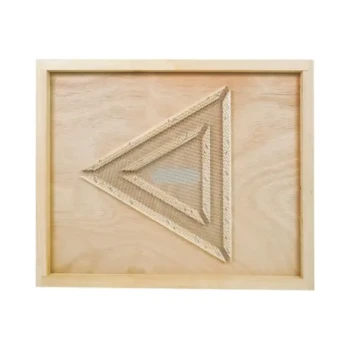
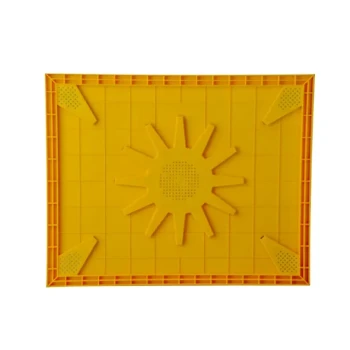
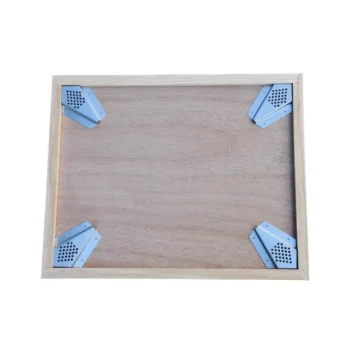
The bottom board functions as the structural foundation and the primary gateway for your honey bee colony. Positioned at the very bottom of the hive stack, it serves as the physical floor of the apiary structure and creates the essential entrance and exit for foraging bees.
While its most visible role is acting as the "front door" for bee traffic, the bottom board is a critical tool for managing the hive's internal environment, sanitation, and defense.
The Core Functions of the Bottom Board
Structural Foundation
The bottom board serves as the base for the entire beehive setup. Because it sits at the bottom of the stack, it must be robust enough to support the considerable weight of the brood boxes, supers, and frames above it.
The Colony "Front Door"
This component creates the main point of access for the colony. The space left open on one side—created when the brood box is stacked on top of the bottom board—allows bees to enter and exit freely.
Takeoff and Landing Platform
The board typically extends beyond the front of the hive boxes. This extension acts as a landing and takeoff apron, giving foragers a dedicated space to touch down before entering the hive.
Controlling the Hive Environment
Regulating Entrance Size
Many commercially available bottom boards are reversible. This design allows you to choose between two different entrance heights—typically 7/8-inch or 3/8-inch—depending on which side of the board faces up.
Moisture Management
The bottom board plays a vital role in keeping the hive dry. Because the front is open, it is standard practice to tilt the entire colony slightly forward. This ensures that rainwater runs out of the hive entrance rather than pooling on the floor.
Understanding the Trade-offs: Materials and Types
When selecting a bottom board, you will generally choose between solid wood and screened designs. Each offers distinct advantages regarding ventilation and pest management.
Solid Wood Boards
These are constructed from wood and serve as a traditional, sealed floor. They provide a solid barrier but offer less passive ventilation than their screened counterparts.
Screened Bottom Boards
These boards use a combination of wood and mesh screen. They are designed to provide superior ventilation, which is particularly beneficial during hot summer months.
Pest Management Capabilities
Screened bottom boards also function as a passive defense system. They can act as a barrier against predators and pests, specifically helping to manage Small Hive Beetles and Varroa Mites by allowing debris and mites to fall through the mesh out of the colony.
Making the Right Choice for Your Goal
To maximize the effectiveness of your bottom board, align your setup with your specific environmental conditions.
- If your primary focus is moisture control: Ensure the bottom board is tilted slightly forward so gravity assists in draining rainwater away from the colony.
- If your primary focus is pest management and ventilation: Utilize a screened bottom board to improve airflow and create a barrier against mites and beetles.
- If your primary focus is entrance management: Use a reversible bottom board to toggle between a 7/8-inch or 3/8-inch opening based on the colony's traffic needs.
By correctly positioning and selecting your bottom board, you establish a stable, dry, and accessible foundation for a thriving hive.
Summary Table:
| Feature | Function & Benefit |
|---|---|
| Structural Foundation | Supports the full weight of brood boxes and honey supers. |
| Entrance & Landing | Acts as the primary gateway and takeoff platform for foragers. |
| Environment Control | Reversible designs allow for adjustable entrance sizes to manage airflow. |
| Moisture Management | Prevents water pooling when tilted forward, keeping the hive dry. |
| Pest Defense | Screened versions help manage Varroa mites and hive beetles via debris drop. |
| Ventilation | Screened boards provide passive cooling during peak summer heat. |
Elevate Your Apiary with HONESTBEE Professional Equipment
As a dedicated partner to commercial apiaries and global distributors, HONESTBEE understands that a thriving colony starts with a superior foundation. Whether you are looking to source high-quality reversible bottom boards, specialized screened mesh systems, or advanced hive-making machinery, we provide the full spectrum of beekeeping tools and industry consumables to scale your operations.
Our wholesale solutions are designed for durability and precision, ensuring your bees are protected and your honey production is optimized. From hardware to honey-themed cultural merchandise, we are your one-stop shop for professional-grade beekeeping supplies.
Ready to scale your business? Contact us today to discuss our comprehensive wholesale offerings and discover how HONESTBEE can deliver the value and quality your apiary deserves!
Related Products
- Langstroth Solid Bottom Board for Beekeeping
- Solid Bottom Board Australian Pine Wood Langstroth Bottom Board for Wholesale
- Langstroth Screen Bottom Board for Beekeeping Wholesale
- HONESTBEE Top Bar & Bottom Bar Forming Machine | Bee Frame Machine
- HONESTBEE Wooden Bee Escape Board with Triangle Mesh Design for Beekeeping
People Also Ask
- What are the functions of solid bottom boards for a beehive? Essential Thermal Protection and Winter Survival Tips
- What is the purpose of a solid bottom board for bee hives? Enhance Hive Health and Winter Survival
- How does climate influence the choice between a solid and screened bottom board? Optimize Your Hive for Local Weather
- What is the primary function of a bottom board in a modern modified beehive system? Essential Foundation Guide
- What are the characteristics of a solid bottom board for a beehive? Boost Colony Health and Thermal Insulation