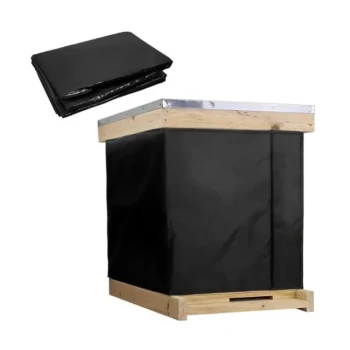
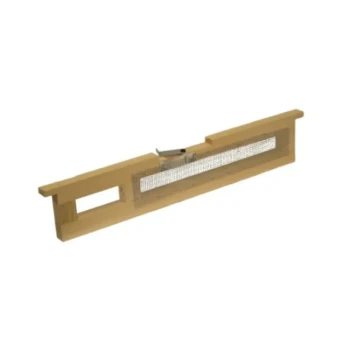
The insulated wooden drawer acts as the system's primary thermal control unit. Installed directly beneath the beehive bottom board, it functions as a specialized carrier that houses heat storage media. Its specific design ensures that collected solar energy is retained and directed upward to the colony rather than dissipating into the surrounding environment.
The drawer utilizes a composite of plywood and high-density foam to isolate heat storage media from the cold ground, effectively forcing thermal energy to flow vertically into the hive.
The Anatomy of the Thermal Carrier
To understand the drawer's function, one must look at its composite construction. It is not merely a container; it is an engineered thermal break.
Composite Construction materials
The drawer is constructed from a combination of plywood and high-density foam.
This hybrid approach allows the unit to maintain the structural integrity required to support weight while providing significant insulation properties.
Housing Heat Storage Media
The physical purpose of the drawer is to serve as a vessel for heat storage media.
By containing this media within a controlled environment, the system creates a concentrated reservoir of thermal energy ready for distribution.
Strategic Location
The drawer is typically installed beneath the beehive bottom board.
This positioning is critical, as it places the heat source at the lowest point of the hive structure, allowing natural physics to aid in distribution.
Controlling Energy Flow
The drawer’s primary value lies in its ability to manipulate the direction of heat transfer.
Creating a Thermal Barrier
The high-density foam component creates an efficient thermal barrier.
This barrier is essential for minimizing energy loss to the immediate surroundings, preventing the heat from simply radiating away into the ambient air.
Preventing Ground Loss
Without this insulated drawer, heat would naturally transfer to the colder surface below.
The insulation specifically minimizes energy loss to the ground, decoupling the thermal storage from the earth.
Directing Energy Upward
By blocking downward and outward escape routes, the drawer forces the energy to travel in one direction: upward.
This ensures that the captured solar energy actually reaches the interior of the hive where the bees are located.
Critical Design Considerations
While the concept is simple, the effectiveness of the system relies on the integrity of the insulation.
Reliance on High-Density Foam
The system's efficiency is entirely dependent on the quality of the high-density foam.
If the foam layer is compromised or insufficient, the "drawer" becomes a simple wooden box, and heat will bleed into the ground rather than warming the hive.
The Structural Compromise
Using a composite material is a necessary trade-off.
Plywood provides the strength needed for a drawer mechanism, but it is a poor insulator; the foam provides insulation but lacks structural durability. Both materials must work in unison for the system to function.
Optimizing Your Hive Heating Strategy
To get the most out of a passive solar heating system, focus on the integrity of this specific component.
- If your primary focus is maximizing heat transfer: Prioritize the quality of the high-density foam to ensure a complete thermal seal against the ground.
- If your primary focus is installation: Ensure the drawer is fitted immediately beneath the bottom board to minimize the distance the heat must travel.
The insulated drawer is the gatekeeper of the system, turning raw solar potential into usable, directional warmth for the colony.
Summary Table:
| Feature | Component/Function | Benefit to Hive System |
|---|---|---|
| Material | Plywood & High-Density Foam | Combines structural strength with superior thermal insulation. |
| Location | Beneath the hive bottom board | Positions the heat source at the lowest point for natural upward distribution. |
| Core Function | Thermal Barrier | Prevents heat dissipation to the ground and surrounding environment. |
| Energy Flow | Unidirectional (Upward) | Forces collected solar energy directly into the bee cluster. |
Elevate Your Beekeeping Operation with HONESTBEE
At HONESTBEE, we specialize in empowering commercial apiaries and distributors with the high-performance tools and machinery required for modern success. Whether you are scaling up production with our honey-filling and hive-making machines or sourcing durable beekeeping hardware and consumables, our comprehensive wholesale offering is designed to meet your volume requirements.
Don't let thermal inefficiency or outdated equipment limit your growth. Partner with a supplier that understands the complexities of the beekeeping industry. Contact HONESTBEE today to discuss your bulk equipment needs and discover how our specialized solutions can enhance your productivity and bottom line.
References
- M. A. Al-Rajhi. Warming Beehives with Solar Energy Stored in Water. DOI: 10.19159/tutad.1126564
This article is also based on technical information from HonestBee Knowledge Base .
Related Products
- Professional Insulated Winter Hive Wrap for Beekeeping
- Inner Beehive Cover for Beekeeping Bee Hive Inner Cover
- Professional Insulated Plastic Bee Hives
- Assembled Wooden Bee Frames with Plastic Foundation for Durability and Convenience by HONESTBEE
- Wooden Bee Hive Frames for Beekeeping and Wholesale
People Also Ask
- What are the steps to properly wrap a beehive for winter? Ensure Your Colony Survives the Cold
- When is the best time to wrap a beehive for winter? A Guide to Perfect Winterization Timing
- How do professional insulation wraps provide protection for bee colonies? Optimize Winter Survival & Energy Efficiency
- What are the technical benefits of using winter wraps for beehive insulation? Boost Colony Survival & Hive Health
- What are the benefits of using insulated covers for hives? Ensure Colony Survival and Health