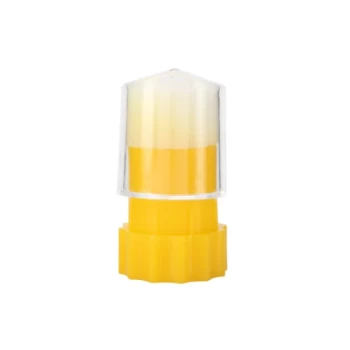
Water-based markers function as a precise tracking mechanism within honeybee research, specifically used to color-code newly emerged worker bees based on age. By applying specific colors to the thorax, researchers can visually distinguish between distinct physiological groups, such as nurse bees and foragers. This segregation is essential for studying Varroa mite behavior, allowing scientists to pinpoint parasitic preferences and analyze how different host bees affect the mite's reproductive success.
Water-based markers allow researchers to transform a chaotic hive environment into a controlled study by visually coding bees by age. This enables precise analysis of Varroa mite preference for nurse bees over foragers, directly linking host physiology to mite reproductive success.
The Mechanics of Population Tracking
To understand Varroa mite behavior, researchers must first establish a controlled population of hosts. Water-based markers are the primary tool for achieving this organization.
Creating Identifiable Cohorts
Researchers apply these markers to the thoraxes of newly emerged worker bees. By assigning specific colors to specific age groups, they create clearly defined cohorts within a single colony.
Distinguishing Physiological Roles
In honeybee colonies, age generally correlates with the bee's role. Younger bees typically act as nurse bees inside the hive, while older bees transition into foragers.
Visual color coding allows researchers to instantly identify a bee's role without needing to observe its specific behavior for extended periods.
Unlocking Varroa Mite Insights
The primary utility of this marking technique is to uncover the parasitic dynamics between the Varroa mite and the honeybee host.
Mapping Parasitic Preferences
By tracking the color-coded bees, researchers can determine which physiological state the mites prefer. Specifically, they can observe if mites target nurse bees more frequently than foragers.
Analyzing Reproductive Impact
The markers enable the study of reproductive success in mites. Researchers can correlate the physiological state of the host bee (nurse vs. forager) with the mite's ability to reproduce effectively.
This data is crucial for understanding the lifecycle of the parasite and how it exploits the colony's division of labor.
Operational Considerations and Safety
While effective, the use of markers requires careful consideration of the materials used to ensure the integrity of the research.
Ensuring Bee Safety
It is critical to use non-toxic pigments that do not damage the insect's cuticle. Water-based markers are preferred because they minimize the risk of harming the bee or altering its natural behavior due to chemical exposure.
Durability vs. Toxicity
The trade-off in selection is finding a marker that is durable enough to last through the study but gentle enough to be safe.
The marker must adhere well to the thoracic tergite and dry quickly to prevent smearing in a crowded hive, ensuring the "visual code" remains readable over time.
Making the Right Choice for Your Research
When selecting a marking strategy for honeybee population management, consider your specific research objectives.
- If your primary focus is behavioral tracking: Prioritize water-based markers with high-contrast colors to quickly distinguish between nurse bees and foragers in a complex hive environment.
- If your primary focus is biological sampling: Ensure the markers are certified non-toxic to prevent chemical interference with the bee's physiology or the mite's reproductive rates.
Effective research relies on the ability to turn a collective superorganism into quantifiable individuals.
Summary Table:
| Feature | Purpose in Honeybee Research |
|---|---|
| Application Site | Thoracic tergite (thorax) of newly emerged bees |
| Tracking Method | Color-coding by age to create identifiable cohorts |
| Key Distinction | Differentiating between nurse bees and foragers |
| Research Goal | Mapping Varroa mite host preference and reproductive rates |
| Safety Standard | Non-toxic, quick-drying, water-based pigments |
| Durability | Long-lasting adhesion without altering bee behavior |
Elevate Your Beekeeping Operation with HONESTBEE
Precision research requires professional-grade tools. At HONESTBEE, we specialize in supporting commercial apiaries and distributors with a comprehensive range of high-quality beekeeping equipment. From essential water-based markers for population management to advanced honey-filling machines and hive-making hardware, our wholesale portfolio is designed to enhance your efficiency and productivity.
Whether you are conducting critical Varroa research or scaling up honey production, our expert team provides the machinery, tools, and industry consumables you need to succeed. Contact us today to discuss our wholesale offerings and discover how HONESTBEE can deliver tailored solutions for your commercial apiary or distribution business.
References
- Vincent Piou, Angélique Vétillard. Impact of the Phoretic Phase on Reproduction and Damage Caused by Varroa destructor (Anderson and Trueman) to Its Host, the European Honey Bee (Apis mellifera L.). DOI: 10.1371/journal.pone.0153482
This article is also based on technical information from HonestBee Knowledge Base .
Related Products
- Queen Bee Marking Pen POSCA Queen Marking Pens for Beekeeping Bee Markers
- Queen Bee Marking Pen UNI Medium Point for Queen and Bee Marking
- Professional Large-Format Hive Number Set for Beekeeping
- Queen Bee Marking Tube Cage Bottle Catcher Holder with Clear Plastic Plunger Marker
- Modern Flat-Mount Hive Number Set for Beekeeping
People Also Ask
- What role do specialized marking pens and color-coding systems play in honeybee tracking? Enhance Research Precision
- Why are specialized marking pens used for stingless bee queens? Essential Tools for Large-Scale Breeding Success
- How should a new paint pen be primed before marking a queen bee? Essential Tips for Safe & Clear Markings
- How should a queen bee marking pen tip be properly primed? Master the Art of Safe Queen Marking
- What specifications are required for a high-quality queen bee marking pen? Ensure Safety and Precision for Your Colony